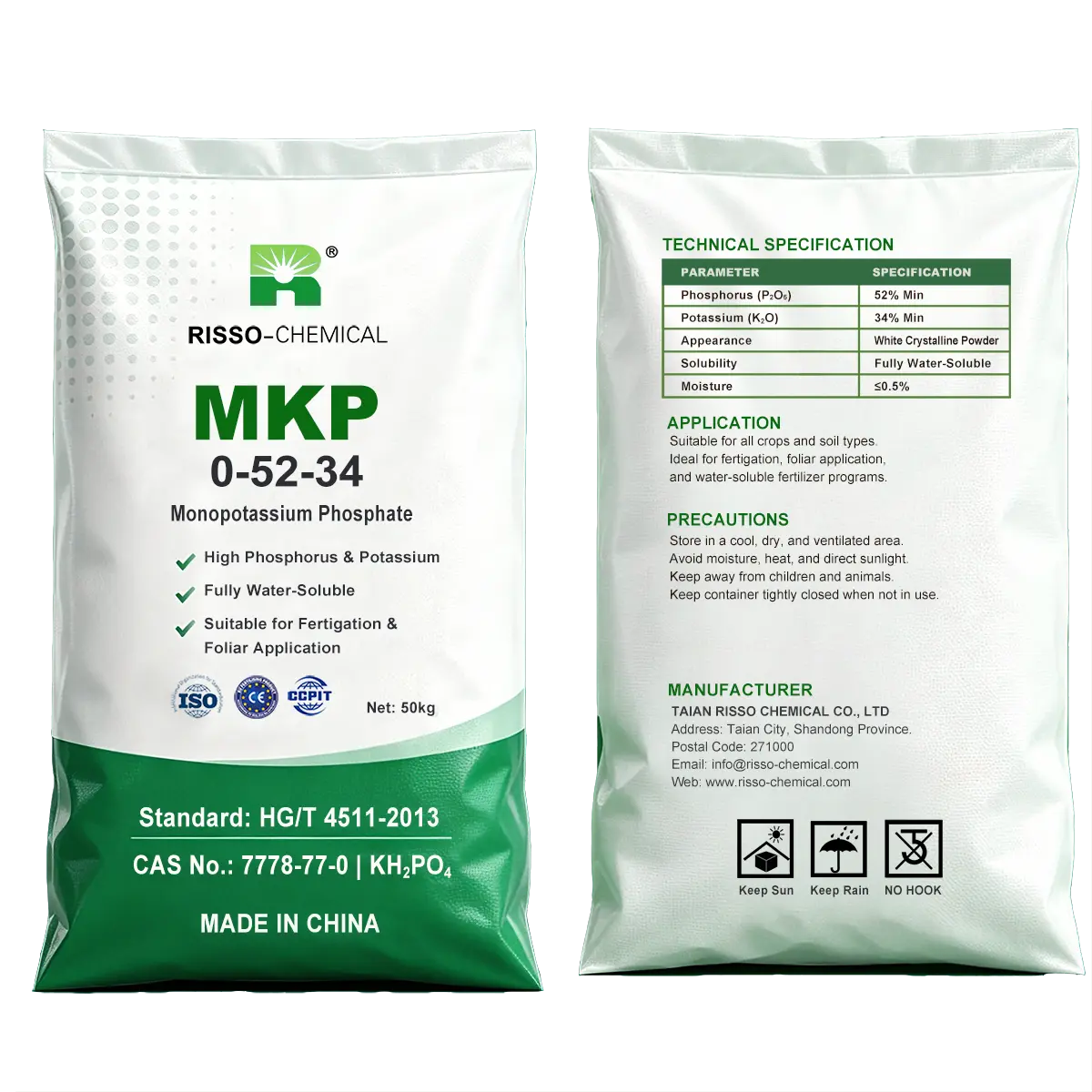
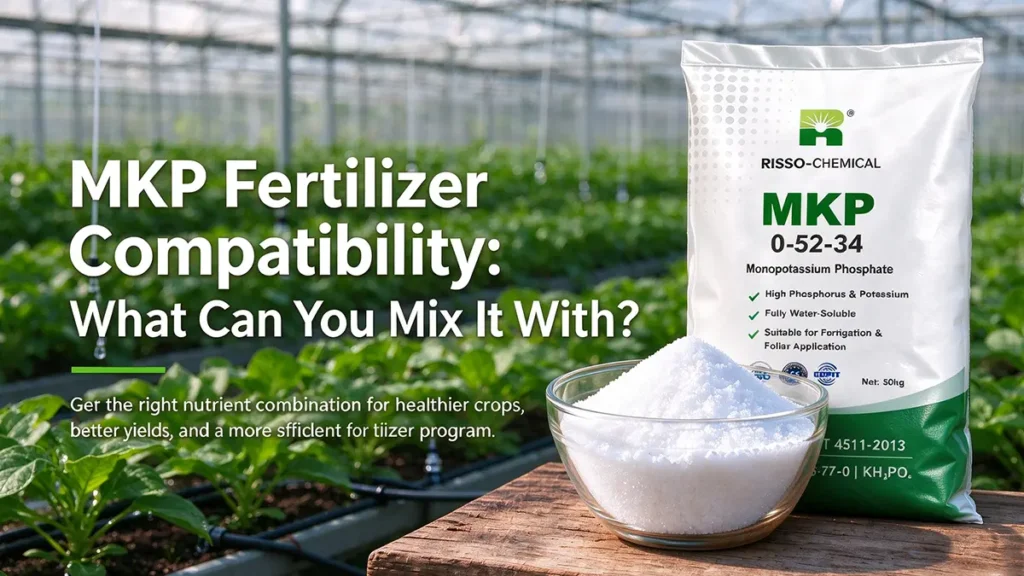
Monopotassium phosphate (MKP) fertilizer, commonly formulated as NPK 0-52-34, is widely used in fertigation, hydroponics, and foliar nutrition because it provides highly soluble phosphorus and potassium without adding nitrogen. However,
MKP fertilizer compatibility depends on the mixing partner, concentration, water quality, pH, and application method.
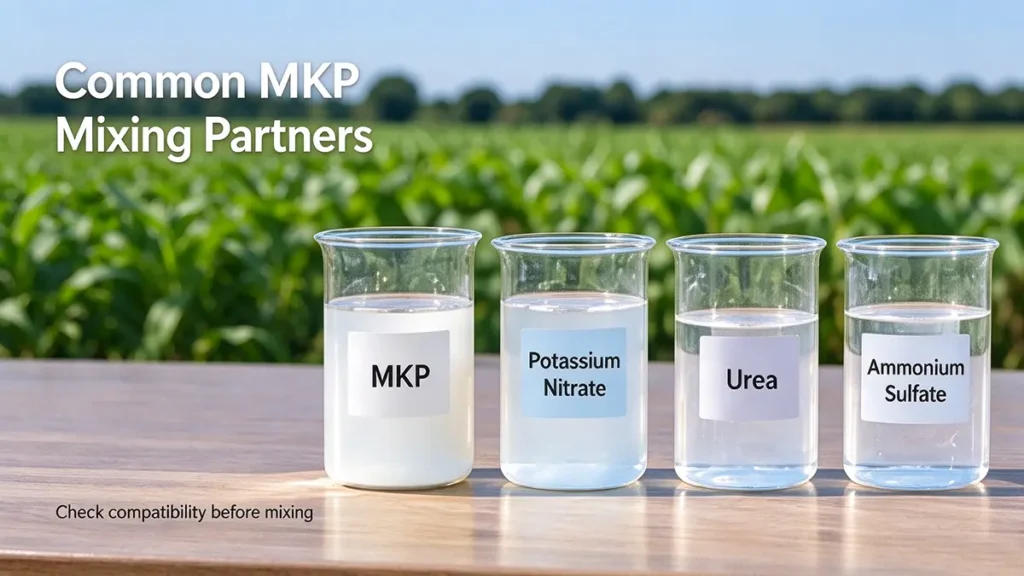
MKP can generally be used with several nitrogen and potassium fertilizers, including potassium nitrate and urea, under suitable conditions. Calcium- and magnesium-containing fertilizers require greater caution, particularly when preparing concentrated stock solutions, because precipitation can reduce nutrient availability and obstruct irrigation equipment.
For growers and distributors evaluating water-soluble fertilizer solutions,
Risso Fertilizer provides a relevant starting point for discussing fertilizer specifications, nutrient combinations, and application requirements. The final mixing decision, however, should always be based on the specific product formulation and intended use.
This guide explains what fertilizers can be mixed with MKP, which combinations should generally be separated, how to assess tank-mix compatibility, and how to reduce the risk of precipitation and crop injury.
1. What Is MKP Fertilizer?
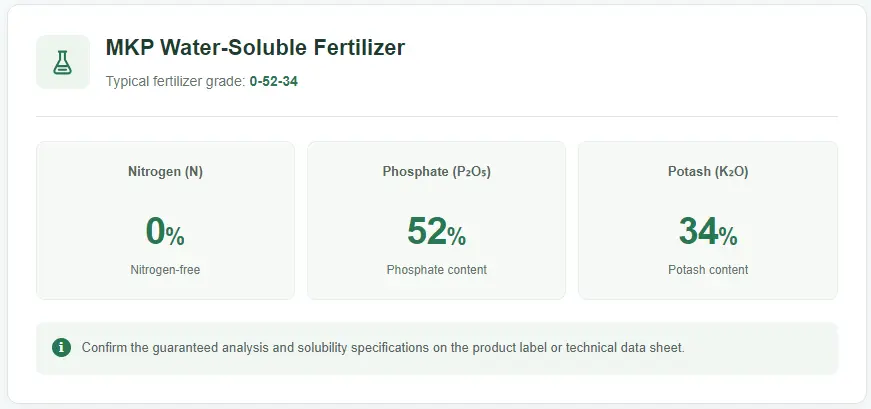
MKP stands for monopotassium phosphate, a water-soluble fertilizer with the chemical formula KH₂PO₄. Its commonly sold fertilizer grade is 0-52-34, indicating 0% nitrogen, 52% available phosphate expressed as P₂O₅, and 34% soluble potash expressed as K₂O.
The elemental nutrient equivalents are approximately 22.7% phosphorus and 28.2% potassium. These values differ from the P₂O₅ and K₂O figures used in conventional fertilizer labeling.
MKP is particularly useful when a crop needs additional phosphorus and potassium without receiving more nitrogen. Depending on the crop, growth stage, and nutrient program, it may be incorporated into fertigation solutions, hydroponic nutrient formulations, or foliar spray programs.
Common applications include:
-
Fertigation: Supplying phosphorus and potassium through drip or other irrigation systems.
-
Hydroponics: Providing phosphorus and potassium as part of a balanced nutrient solution.
-
Foliar feeding: Supplementing crop nutrition when the application rate and formulation are appropriate.
-
Nutrient management: Adjusting the phosphorus-to-potassium supply without adding nitrogen.
MKP’s high water solubility makes it suitable for these applications, but it does not guarantee compatibility with every fertilizer. A product may dissolve completely in water on its own and still precipitate when another fertilizer is introduced.
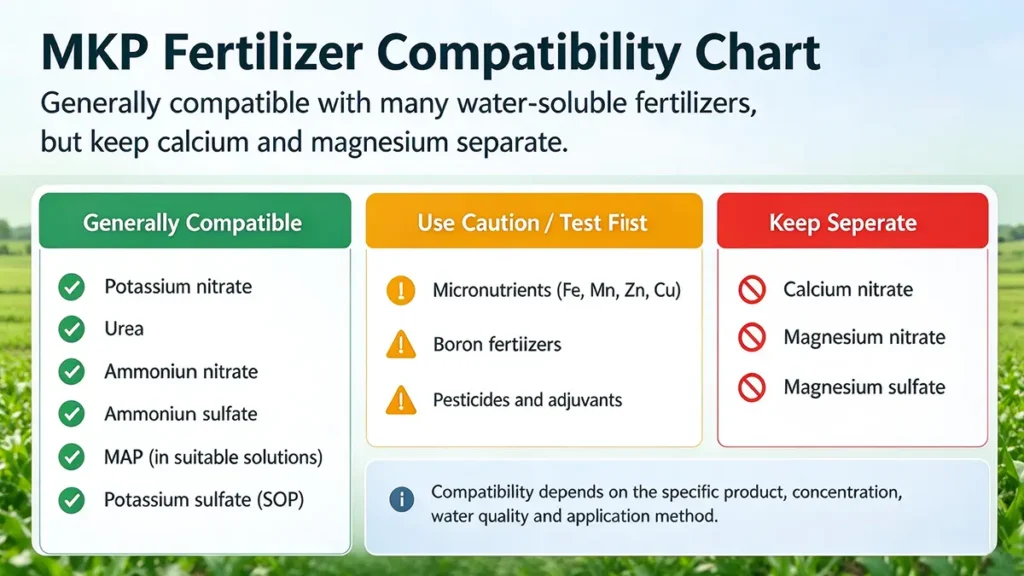
2. MKP Fertilizer Compatibility Chart
The following table summarizes common mixing partners and the precautions required when combining them with MKP.
| Mixing partner |
General compatibility |
Practical recommendation |
| Potassium nitrate |
Generally compatible under suitable conditions |
Check total concentration and water quality. |
| Urea |
Often compatible |
Verify the formulation and intended application rate. |
| Ammonium nitrate |
Often compatible |
Confirm solubility and combined concentration. |
| Ammonium sulfate |
Potentially compatible |
Evaluate the complete formulation and avoid incompatible calcium-containing mixtures. |
| Monoammonium phosphate (MAP) |
Can be compatible in suitable solutions |
Check total phosphate concentration and nutrient requirements. |
| Potassium sulfate (SOP) |
Often compatible under suitable conditions |
Verify solubility, temperature, and water chemistry. |
| Calcium nitrate |
Generally incompatible in concentrated stock solutions |
Use separate tanks or separate applications. |
| Magnesium nitrate |
Requires caution |
Keep separate from concentrated MKP unless compatibility is specifically established. |
| Magnesium sulfate |
Requires caution, especially in concentrated solutions |
Evaluate precipitation risk and use separate stocks as the conservative approach. |
| Chelated micronutrients |
Product-dependent |
Check the chelate, formulation, pH, and label instructions. |
| Boron fertilizers |
Product-dependent |
Verify the boron source and final concentration. |
| Pesticides and adjuvants |
Product-dependent |
Check labels and conduct an appropriate compatibility test. |
This chart is a practical screening guide, not a universal guarantee. Compatibility can change with concentration, water composition, temperature, pH, and other ingredients in the tank.
One distinction is especially important: compatibility in a diluted application solution does not necessarily mean compatibility in a concentrated fertilizer stock solution.
When preparing commercial fertigation formulations, follow the manufacturer’s technical guidance and assess the complete mixture rather than relying solely on the behavior of two individual products.
3. What Fertilizers Can You Mix With MKP?
3.1 MKP and Potassium Nitrate
Potassium nitrate is a common partner for MKP because the two fertilizers supply complementary nutrients.
MKP supplies phosphorus and potassium, while potassium nitrate provides potassium and nitrate nitrogen. Together, they can be used to adjust nutrient ratios in fertigation and other water-soluble fertilizer programs.
This combination may be appropriate for fruiting vegetables, orchards, and other crops that require phosphorus, potassium, and a controlled supply of nitrogen.
However, the correct nutrient ratio depends on crop demand, growth stage, irrigation management, and the contribution of other fertilizers in the program.
Mixing recommendation: MKP and potassium nitrate can generally be combined in suitable solutions, provided the combined concentration remains within the solubility limits. For concentrated stock solutions or unfamiliar formulations, confirm compatibility before large-scale preparation.
3.2 MKP and Urea
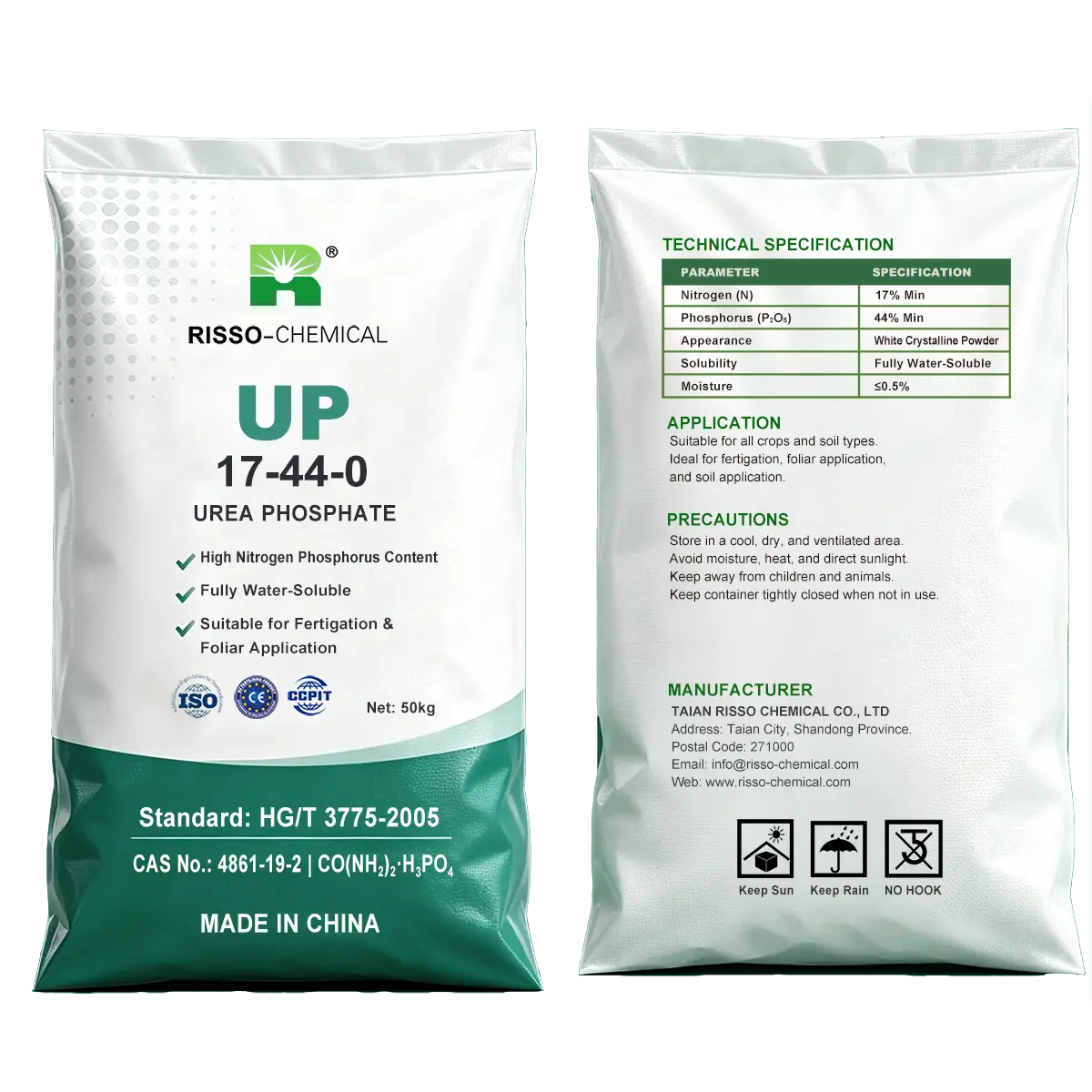
Urea supplies nitrogen, whereas MKP provides phosphorus and potassium. Combining them can therefore provide three major plant nutrients without introducing calcium or magnesium.
This combination may be useful in fertigation or foliar nutrition programs when all three nutrients are required.
For foliar spraying, however, the total concentration of dissolved fertilizer is more important than the individual recommended rate of each product. Combining two fertilizers at their respective maximum rates may produce a solution that is too concentrated for the crop.
Mixing recommendation: Confirm the suitability of the urea grade, calculate the total concentration of the final solution, and follow crop-specific application guidance. A mixture that is physically stable may still cause leaf injury if applied at an excessive concentration.
3.3 MKP and Ammonium-Based Fertilizers
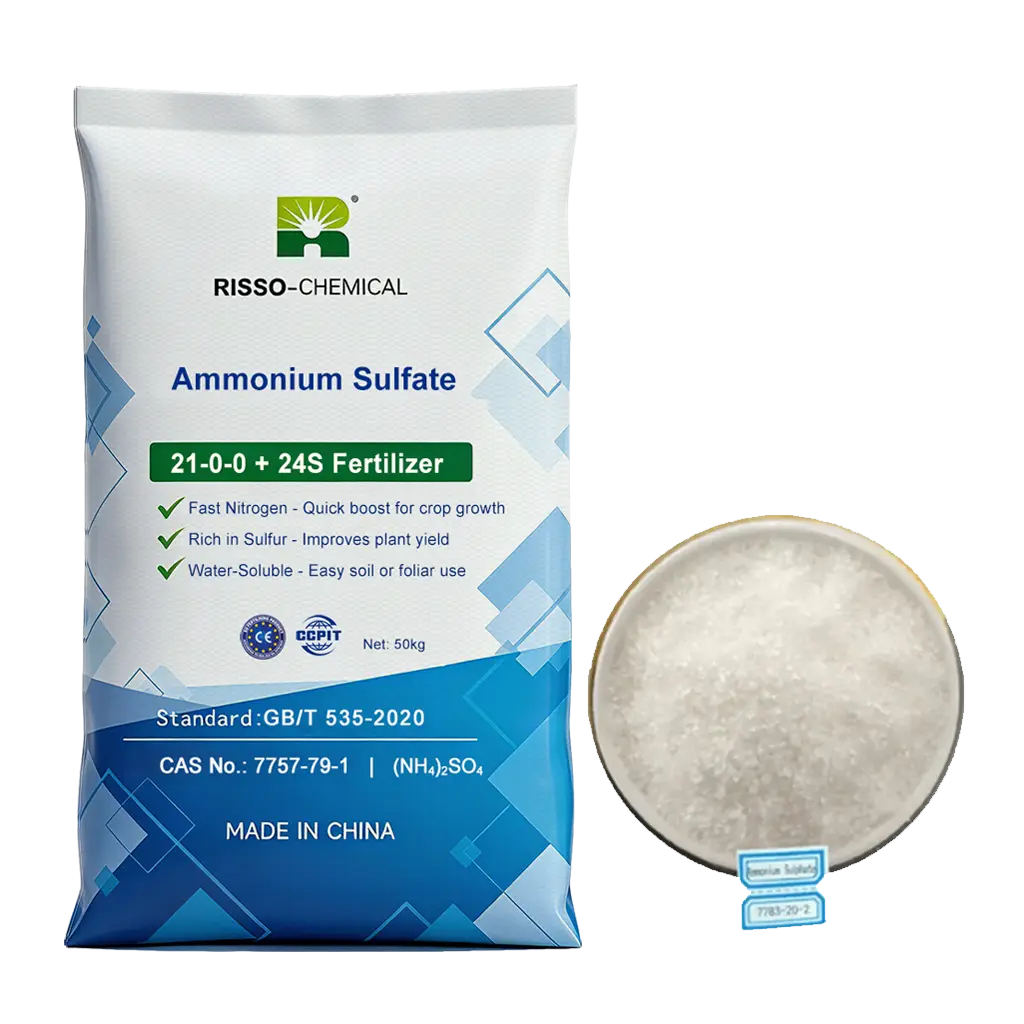
Ammonium nitrate and ammonium sulfate can be useful nitrogen sources in fertilizer programs that also include MKP. The suitability of these combinations depends on the formulation, total dissolved salts, stock concentration, temperature, and source-water chemistry. Ammonium sulfate also supplies sulfate, which may create an additional precipitation concern when calcium-containing products are introduced into the same concentrated solution. Mixing recommendation: Evaluate the complete nutrient recipe, including all fertilizers and the water used for preparation. Do not assume that a formulation will remain compatible simply because each ingredient dissolves separately.
3.4 MKP and Monoammonium Phosphate (MAP)
MAP is a water-soluble fertilizer that supplies nitrogen and phosphorus. MKP supplies phosphorus and potassium, making the combination potentially useful when the nutrient program requires both ammonium nitrogen and additional potassium.
However, combining the two increases the total phosphate concentration. The resulting nutrient ratio should therefore be calculated before preparing the solution.
The combination may be unnecessary when MAP already supplies sufficient phosphorus or when the crop does not require additional potassium.
Mixing recommendation: Check the solubility of the complete solution and calculate the final nutrient analysis. Keep calcium-containing fertilizers out of concentrated phosphate stock solutions unless a validated formulation specifically permits their use.
3.5 MKP and Potassium Sulfate (SOP)
Potassium sulfate supplies potassium and sulfur, while MKP provides phosphorus and potassium. Their combination may be useful when a fertilizer program requires all three nutrients without additional nitrogen.
The main consideration is whether both products can remain dissolved at the intended concentration and temperature.
A mixture that is stable at a low concentration may not remain stable in a concentrated stock solution. Source-water minerals can also affect the final result.
Mixing recommendation: Check the solubility specifications for both fertilizers, account for water quality and temperature, and conduct a compatibility assessment before preparing a large batch.
4. Why Calcium and Magnesium Fertilizers Should Be Separated
Calcium and magnesium fertilizers require particular attention when used with MKP.
Phosphate can react with calcium or magnesium under suitable chemical conditions to form sparingly soluble compounds. These precipitates can reduce the amount of nutrients remaining in solution and may accumulate in filters, pipes, valves, and drip emitters.
The risk depends on factors such as concentration, pH, temperature, and the composition of the irrigation water. It is especially important in fertigation systems that use concentrated stock solutions.
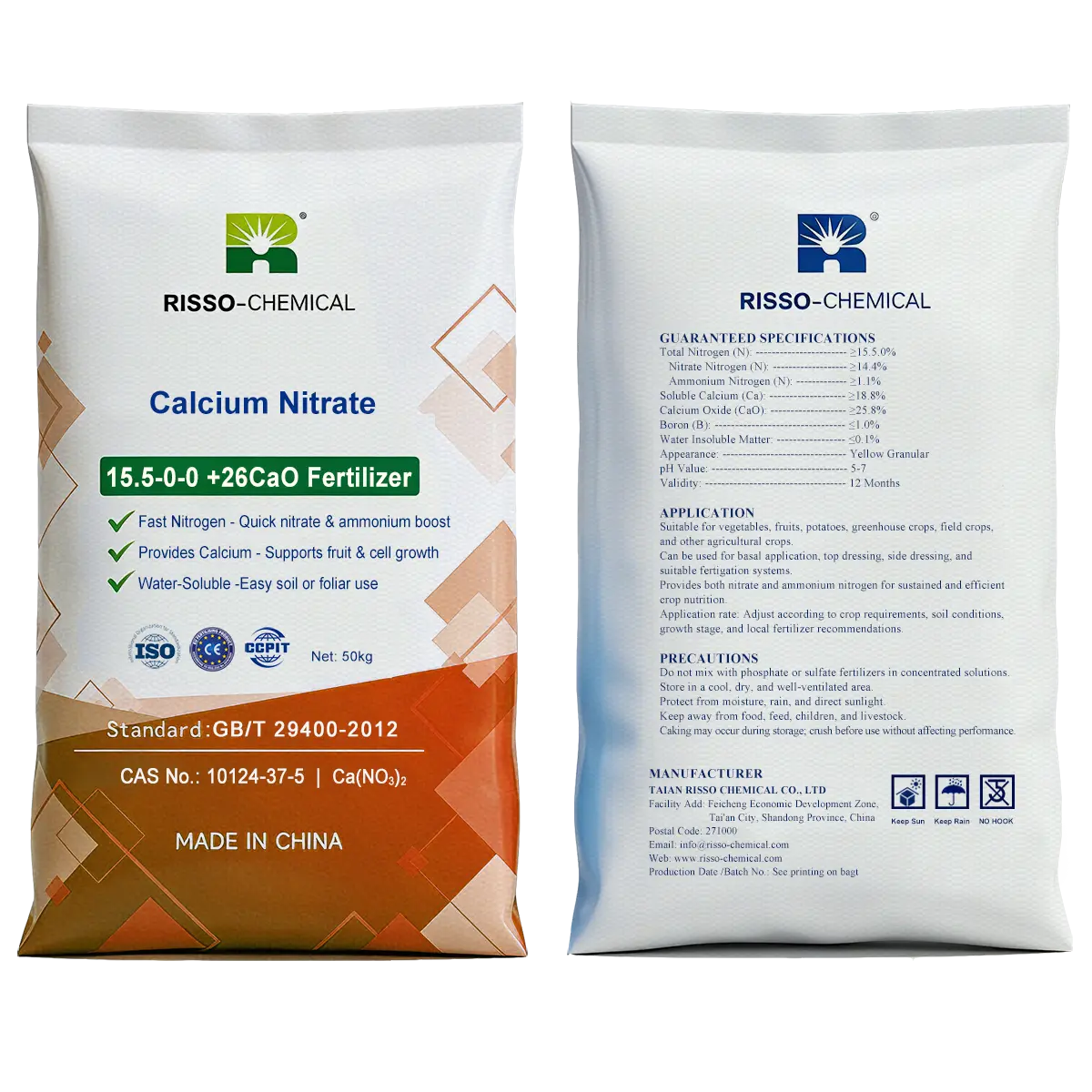
4.1 Can MKP Be Mixed With Calcium Nitrate?
As a general rule,
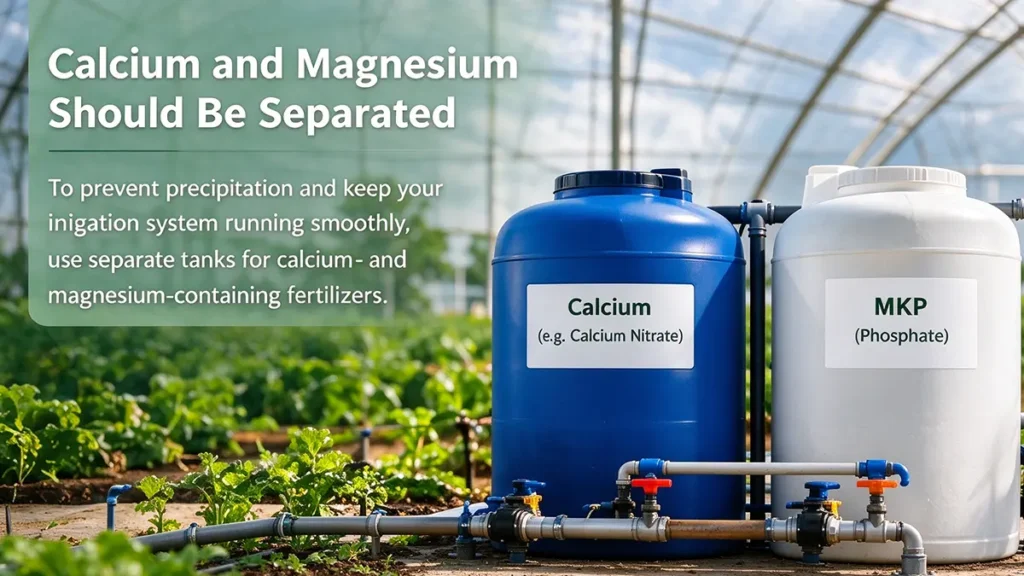
MKP and calcium nitrate should not be mixed directly in the same concentrated stock solution.
Both fertilizers may dissolve readily in water when prepared separately. However, introducing concentrated calcium and phosphate solutions together can create conditions that favor precipitation.
This can cause several problems:
-
Reduced nutrient availability in the prepared solution.
-
Sediment formation in fertilizer tanks.
-
Clogging of filters and drip emitters.
-
Increased maintenance requirements in irrigation systems.
-
Uncertainty about the actual nutrient concentration reaching the crop.
The safest approach for conventional fertigation systems is to prepare calcium-containing fertilizers and phosphate-containing fertilizers in separate stock tanks.
A two-tank system does not necessarily require the nutrients to be applied on different days. It allows compatible nutrient solutions to be delivered during the same irrigation program without storing concentrated calcium and phosphate together.
Where separate injection is unavailable, different application times and a suitable water flush may help reduce the risk. The sequence should be established according to the system design, water chemistry, and fertilizer specifications.
4.2 Can MKP Be Mixed With Magnesium Sulfate or Magnesium Nitrate?
Direct mixing of MKP with magnesium fertilizers should be approached cautiously, especially in concentrated solutions.
Magnesium may react with phosphate to form poorly soluble compounds under certain conditions. Magnesium sulfate also introduces sulfate, which can create additional compatibility issues when calcium is present.
A mixture containing MKP, magnesium sulfate, and calcium nitrate therefore requires particular care because more than one precipitation pathway may be possible.
The exact outcome depends on the chemical composition and concentration of the solution. Some specialized formulations may be designed for particular combinations, but their compatibility should not be assumed to apply to other products.
Practical recommendation: Keep magnesium-containing fertilizers separate from concentrated MKP stocks unless the proposed formulation has been specifically validated. When both nutrients are required, use a suitable tank arrangement or application sequence.
5. Can MKP Be Mixed With Micronutrients and Pesticides?
5.1 MKP and Chelated Micronutrients
MKP may be compatible with certain chelated micronutrient fertilizers, but compatibility depends on the micronutrient’s chemical form and the complete solution chemistry.
Iron, manganese, zinc, and copper can interact with phosphate under certain conditions. Depending on pH, concentration, and formulation, these interactions may reduce nutrient availability or cause precipitation.
Chelated micronutrients are often preferred when formulating phosphate-containing solutions because suitable chelates can help keep the micronutrients soluble. However, chelation does not guarantee compatibility under every condition.
For example, zinc sulfate should not automatically be treated as equivalent to a formulated zinc chelate when mixed with MKP.
Mixing recommendation: Confirm the micronutrient product’s compatibility with phosphate fertilizers. Check the recommended pH range, mixing sequence, and concentration, and test unfamiliar combinations before use.
5.2 MKP and Boron Fertilizers
Boron products vary in their chemical form, concentration, and formulation. Their compatibility with MKP therefore needs to be assessed individually.
Even when the products remain physically stable, the total concentration may exceed the crop’s tolerance. This is particularly important in foliar applications because the margin between an effective boron supply and excessive application can be relatively narrow for some crops.
Mixing recommendation: Follow the boron product label, confirm compatibility with MKP, and calculate the total nutrient concentration before application.
5.3 MKP and Pesticides
Some pesticide products may be used with MKP, but there is no universal compatibility rule for all active ingredients and commercial formulations.
Four factors should be considered:
-
Chemical compatibility: Could the mixture alter the stability or activity of either product?
-
Physical compatibility: Does the solution remain uniform without flakes, sediment, gel, or separation?
-
Crop safety: Could the combined spray concentration or formulation damage leaves, flowers, or fruit?
-
Label compliance: Are both products permitted for the intended tank mix, crop, and application method?
Particular caution is needed with products that are sensitive to pH changes or have specific restrictions on tank mixing.
A jar test can identify many physical incompatibilities, but it cannot confirm pesticide efficacy or crop safety. Always follow the pesticide label and applicable regulations.
Mixing recommendation: Check both labels, conduct a jar test using the actual water source, and perform a small-area crop test where appropriate. Do not use a mixture if either product’s instructions prohibit it.
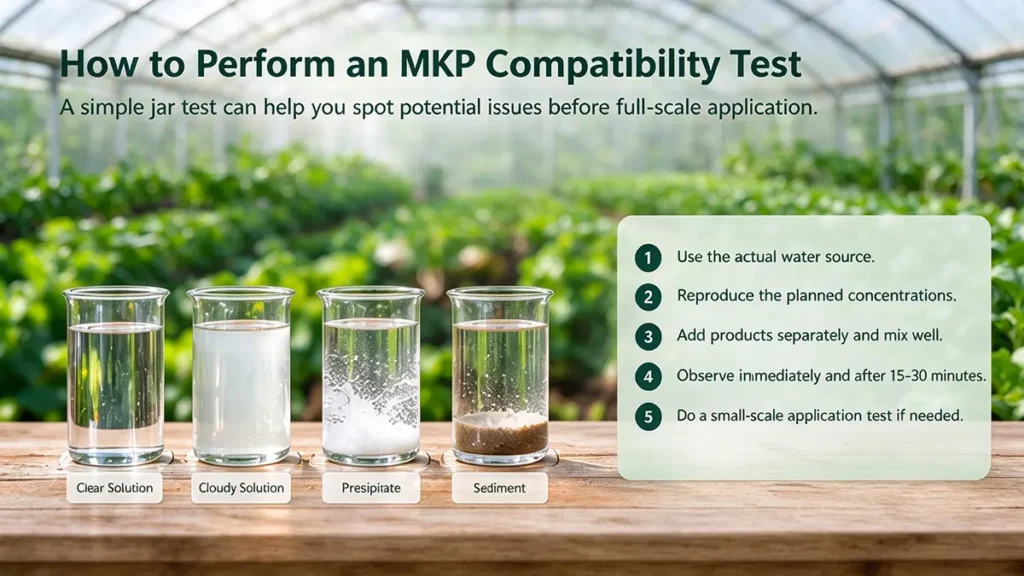
6. How to Perform an MKP Compatibility Test
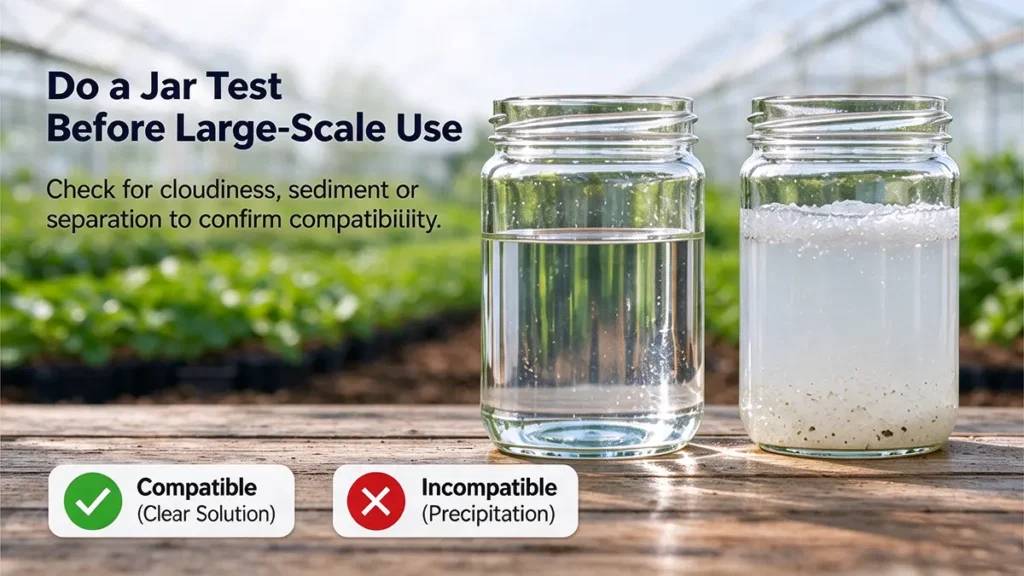
A jar test is a simple preliminary method for identifying physical incompatibilities before preparing a large fertilizer or pesticide tank.
It is particularly useful when changing fertilizer suppliers, introducing a new product, using a different water source, or preparing a new nutrient formulation.
Step 1: Use the Actual Water Source
Collect water from the same source that will be used for irrigation or spraying.
Water hardness, alkalinity, and dissolved minerals can affect fertilizer solubility and precipitation. Testing with distilled water alone may not reproduce the conditions of the actual application.
Step 2: Reproduce the Planned Concentrations
Measure each product in proportion to its intended final application concentration.
For example, if the intended spray contains 1 kg of MKP per 100 L of final solution, a 1 L test sample should contain 10 g of MKP.
Scale the amounts of all other products to the same final volume. Follow the product instructions for the order of addition.
This example demonstrates the calculation only; it is not a universal MKP application rate.
Step 3: Add Products in the Recommended Order
Begin with an appropriate volume of water. Add MKP gradually and allow it to dissolve before introducing the next product, unless the manufacturer’s instructions specify otherwise.
Mix thoroughly after each addition and observe whether the solution remains uniform.
Do not use a jar test to justify directly combining concentrated calcium stock and concentrated MKP stock when the products are intended for separate tanks.
Step 4: Observe the Mixture
Inspect the solution immediately after mixing and again after approximately 15–30 minutes. If the planned operation involves holding the solution before use, assess stability over a representative holding period.
Look for these warning signs:
| Observation |
Possible explanation |
| Cloudiness |
Precipitation, incomplete dissolution, or a chemical interaction |
| Flakes or crystals |
Reduced solubility or formation of a solid compound |
| Sediment or sludge |
Material settling out of the solution |
| Gel formation |
Physical incompatibility between formulations |
| Separation into layers |
Instability or incompatibility of the mixture |
If any of these changes occur, stop and investigate the formulation. More agitation may temporarily disperse a precipitate without resolving the underlying incompatibility.
Step 5: Conduct a Small-Scale Application Test
A physically stable jar test does not prove that a mixture is suitable for every application.
For foliar spraying, test crop tolerance on a limited area under representative conditions before treating a larger area. For fertigation, confirm that the complete solution is appropriate for the irrigation system and intended nutrient concentration.
The compatibility assessment should address physical stability, chemical behavior, crop safety, and product-label requirements separately.
7. Best Practices for MKP Mixing in Fertigation and Foliar Spraying
Fertigation and foliar spraying require different compatibility considerations. A concentrated stock solution is not equivalent to a diluted spray or irrigation solution.
7.1 MKP Mixing for Drip Irrigation and Fertigation
When preparing MKP for fertigation, the objective is to maintain nutrient solubility while delivering the intended nutrient concentration to the crop.
Recommended practices include:
-
Check the specifications. Confirm the MKP grade, solubility data, and mixing instructions.
-
Use suitable water. Consider hardness, alkalinity, dissolved minerals, and temperature.
-
Dissolve MKP properly. Add the fertilizer gradually to water with adequate mixing.
-
Check all mixing partners. Evaluate the complete stock formulation, not only individual pairs of products.
-
Separate incompatible stocks. Keep calcium- and magnesium-containing fertilizers separate from concentrated phosphate solutions unless compatibility is specifically established.
-
Monitor the irrigation system. Check filters, emitters, and solution stability for evidence of precipitation or deposits.
Pay particular attention to total dissolved concentration and water temperature. A fertilizer that dissolves at a lower concentration may not remain fully dissolved in a concentrated stock solution, especially when the water is cold.
Where water hardness or alkalinity is high, obtain a water analysis and review the complete nutrient recipe before preparing large volumes.
7.2 MKP Mixing for Foliar Spraying
Foliar application requires attention to spray concentration, leaf tolerance, weather conditions, and compatibility with other spray products.
Some MKP application guidance uses concentrations around 1% for certain young-leaf applications and up to 2% for mature leaves or more tolerant crops. These are reference examples, not universal rates. The appropriate concentration depends on the crop, formulation, environmental conditions, and product label.
Before preparing a foliar tank mix:
-
Follow the specific fertilizer and pesticide labels.
-
Calculate the total dissolved fertilizer concentration.
-
Confirm that all ingredients are suitable for foliar application.
-
Avoid spraying under conditions that increase crop-injury risk, such as excessive heat or plant water stress.
-
Conduct a jar test and, where appropriate, a small-area crop test.
Do not increase MKP concentration simply because the fertilizer dissolves readily. Water solubility indicates how much material can dissolve; it does not establish the concentration that a plant can safely tolerate on its leaves.
7.3 Selecting MKP for Commercial Fertilizer Programs
For commercial buyers, distributors, and fertilizer formulators, MKP selection should be based on the complete technical specification rather than the NPK grade alone.
Important factors include:
-
Guaranteed nutrient analysis.
-
Water solubility and recommended preparation conditions.
-
Relevant impurity specifications.
-
Suitability for fertigation, hydroponics, or foliar use.
-
Compatibility guidance for the intended mixing partners.
-
Packaging, storage, and handling requirements.
When discussing an MKP-based formulation with Risso, providing the intended application method, mixing partners, source-water information, and target nutrient analysis can help establish which technical specifications need to be confirmed before large-scale use.
Frequently Asked Questions (FAQs)
Conclusion
MKP fertilizer 0-52-34 is a valuable source of water-soluble phosphorus and potassium for fertigation, hydroponics, and foliar nutrition. It can generally be used with several nitrogen and potassium fertilizers, including potassium nitrate and, under suitable conditions, urea, ammonium-based fertilizers, and potassium sulfate.
The most important precaution is to
keep MKP separate from calcium- and magnesium-containing fertilizers in concentrated stock solutions unless a specific formulation has been validated for that use. Precipitation can reduce nutrient availability, create sediment, and obstruct irrigation equipment.
For reliable mixing decisions, evaluate the complete formulation, source-water quality, concentration, temperature, pH, and intended application method. Use jar tests to screen unfamiliar mixtures, assess crop tolerance where necessary, and follow the relevant technical specifications and product labels.
For growers, distributors, and fertilizer formulators,
Risso Fertilizer is a point of contact for discussing fertilizer grades, specifications, and application requirements. Final compatibility decisions should remain grounded in product-specific technical data and the conditions under which the fertilizer will be used.
Fertilizer Related Products
If you want to know other questions about Calcium Nitrate or NPK fertilizers , please contact us and we will provide professional answers.