














Polymer Coated Urea
Controlled-Release Polymer Coated Urea
44–46% Nitrogen | 30–360 Day Release | PCU Fertilizer
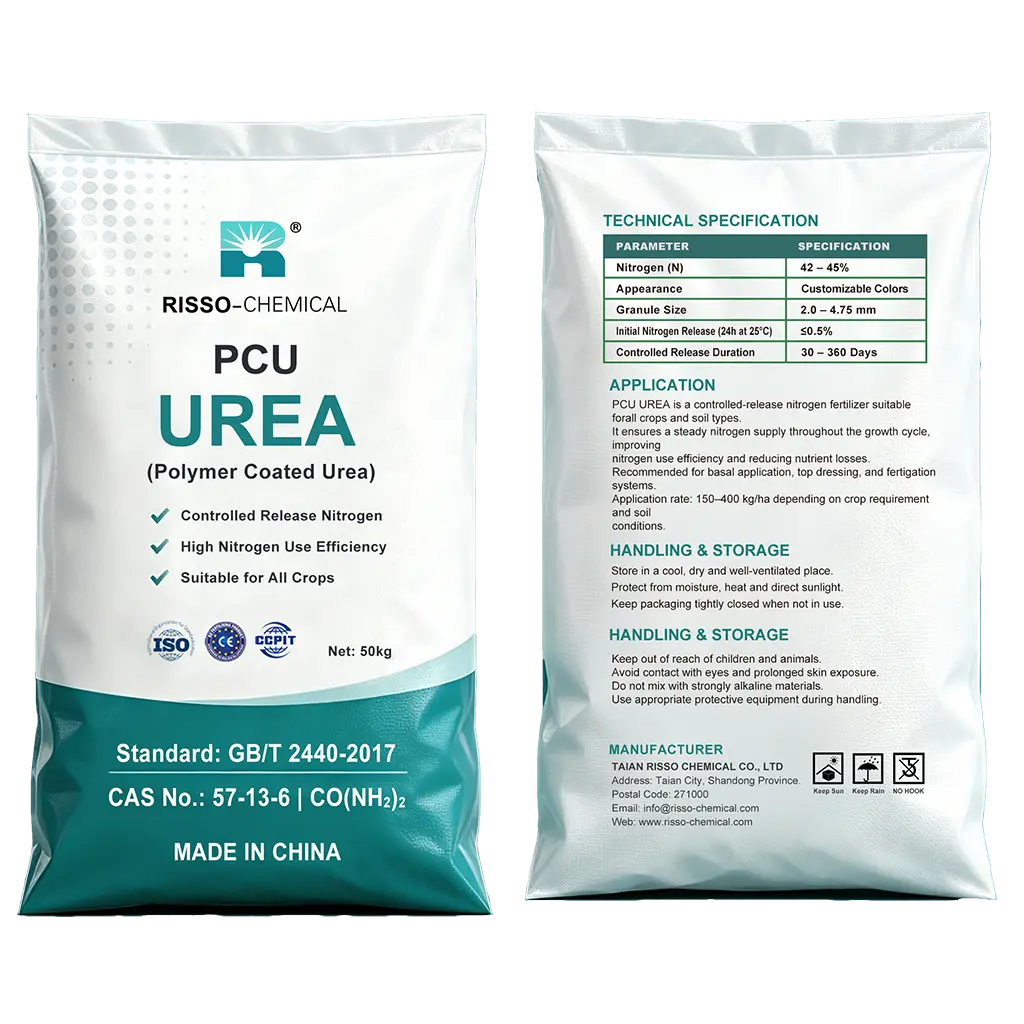
Polymer Coated Urea (PCU) is a controlled-release nitrogen fertilizer in which a polymer coating regulates the release of urea nitrogen. Different coating thicknesses and release periods are available for agricultural crops, turf, landscaping, and commercial applications.
Polymer Coated Urea (PCU)
Polymer Coated Urea (PCU)
Polymer Coated Urea (PCU)
Polymer Coated Urea (PCU)
| Product: | Slow Controlled-Release Nitrogen Fertilizer |
| Category: | Controlled-Release Fertilizers |
| Coating Material: | Polyurethane-Based Polymer |
| Total Nitrogen (N): | Approximately 43.5–45% in listed grades |
| Particle Size: | 2.0–4.75 mm |
| Release Duration: | 30–360 days, depending on formulation |
| Place of Origin: | Shangdong,China |
| MOQ : | 200T (Sample free) |
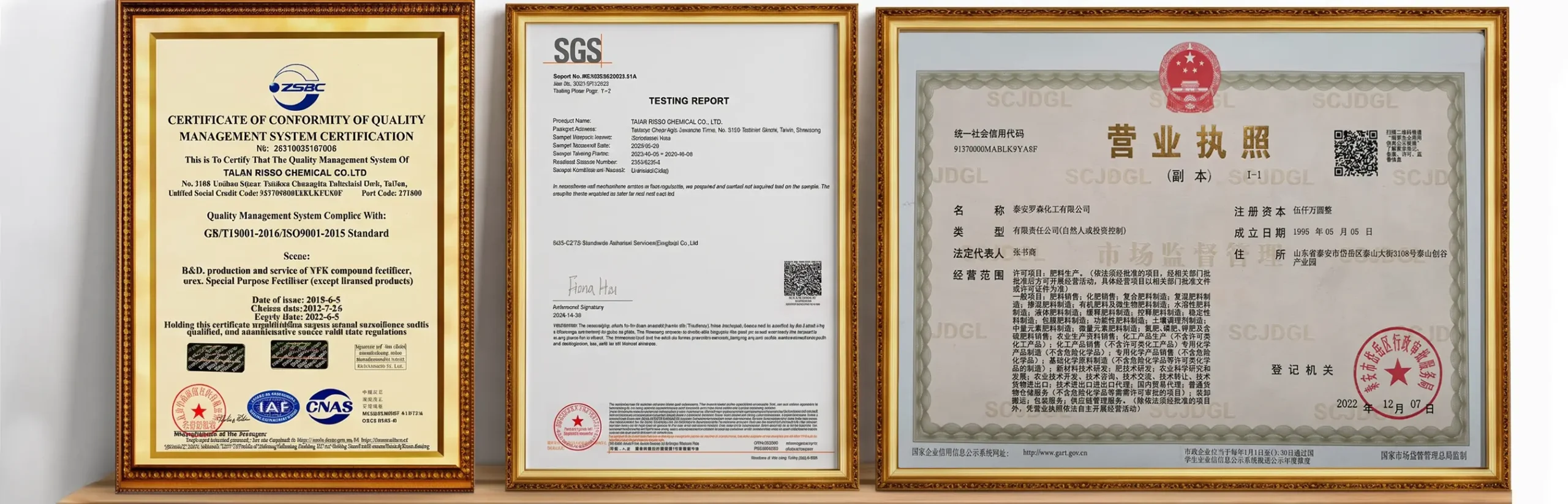
| Certificate: | ISO 22241-1, SGS standards |
Product Details
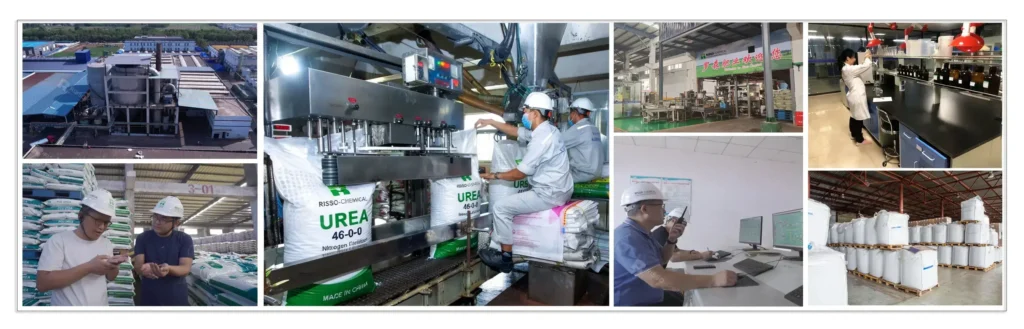
The polymer coated urea (PCU) produced by Risso Fertilizer Factory has national patent technology in China, and the product meets the Q/DYC01-2015 standard.
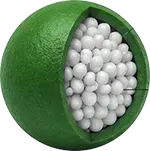
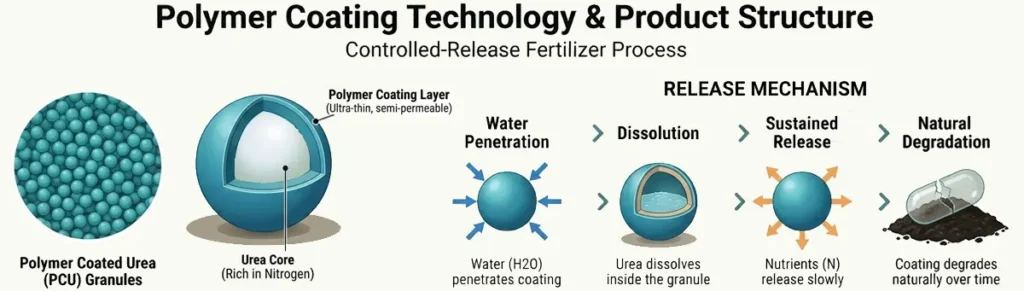
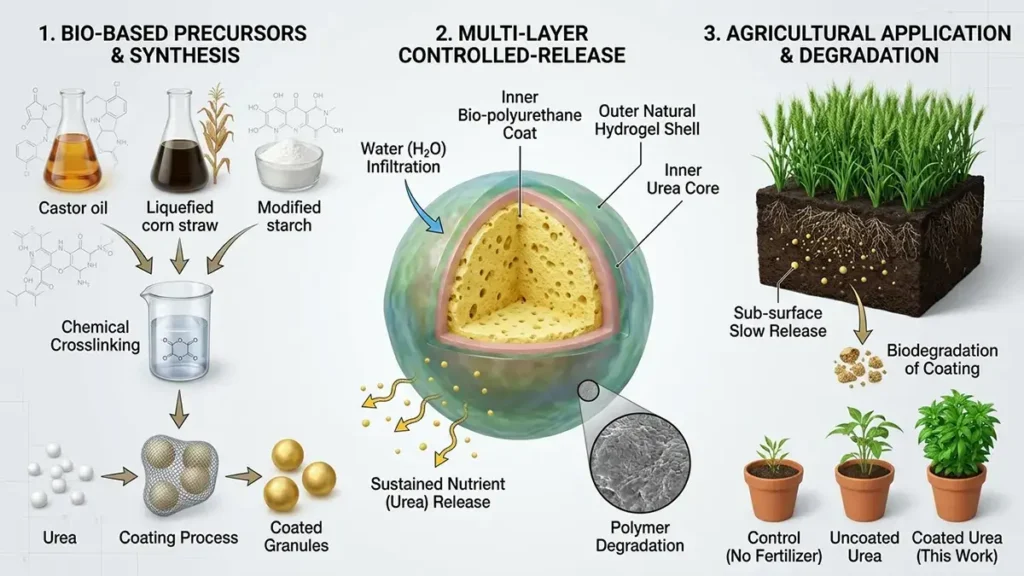
Polymer coated urea (PCU) consists of a core layer and a coating layer. The core layer is granular urea, and the coating layer is two layers. The inner layer is a shrink layer, and the outer layer includes polyurethane and raw materials polymerized by polyols and oil substances with co-bonded double bonds.
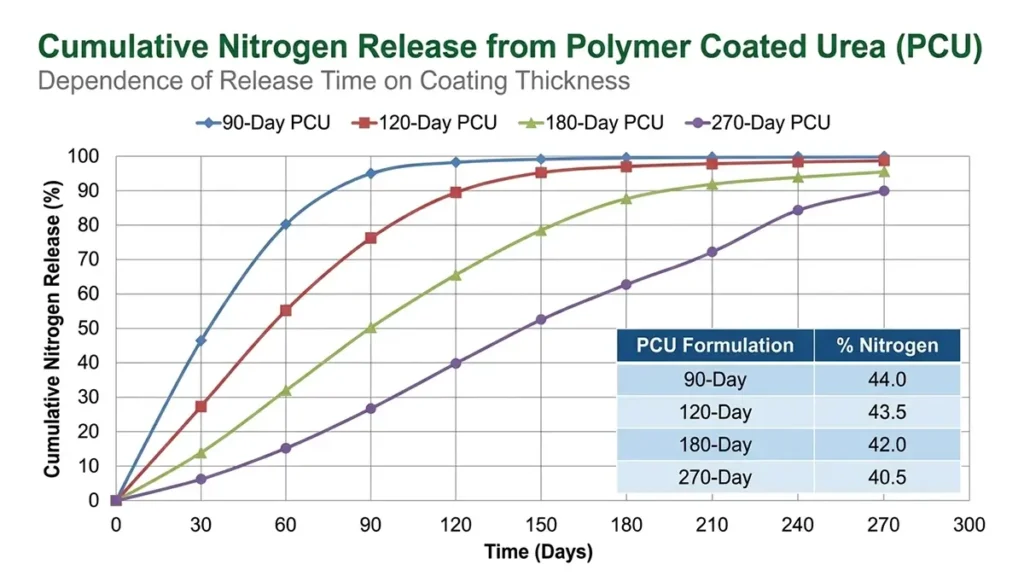
Polymer coated urea (PCU) is a safer and more efficient nitrogen source. Its release rate is mainly determined by temperature and moisture through the micropores in the coating, which is usually called temperature-controlled diffusion and osmotic pressure. It can also be called a smart release nitrogen fertilizer that can provide nutrients to your plants throughout the season. The shelf life of PCU urea is 3-12 months.
Product Specifications
| Technical Parameters | 60 Day | 120 Day | 180 Day | 270 Day |
|---|---|---|---|---|
| Urea Nitrogen | 44% Around | 43% Around | 42% Around | 40%-41% |
| Nominal Release Duration (25°C) | 60 days | 120 days | 180 days | 270 days |
| Initial Release Rate (25°C, Still Water) | ≤15% | ≤12% | ≤10% | ≤5% |
| Estimated Longevity at 15°C Soil Temperature | 75 days | 150 days | 200 days | 320 days— |
| Estimated Longevity at 25°C Soil Temperature | 60 days | 120 days | 180 days | 270 days |
| Estimated Longevity at 30°C Soil Temperature | 45 days | 95 days | 150 days | 240 days |
| Particle Size | 2.0–4.75 mm | |||
| Coating Material | Polyurethane Polymer | |||
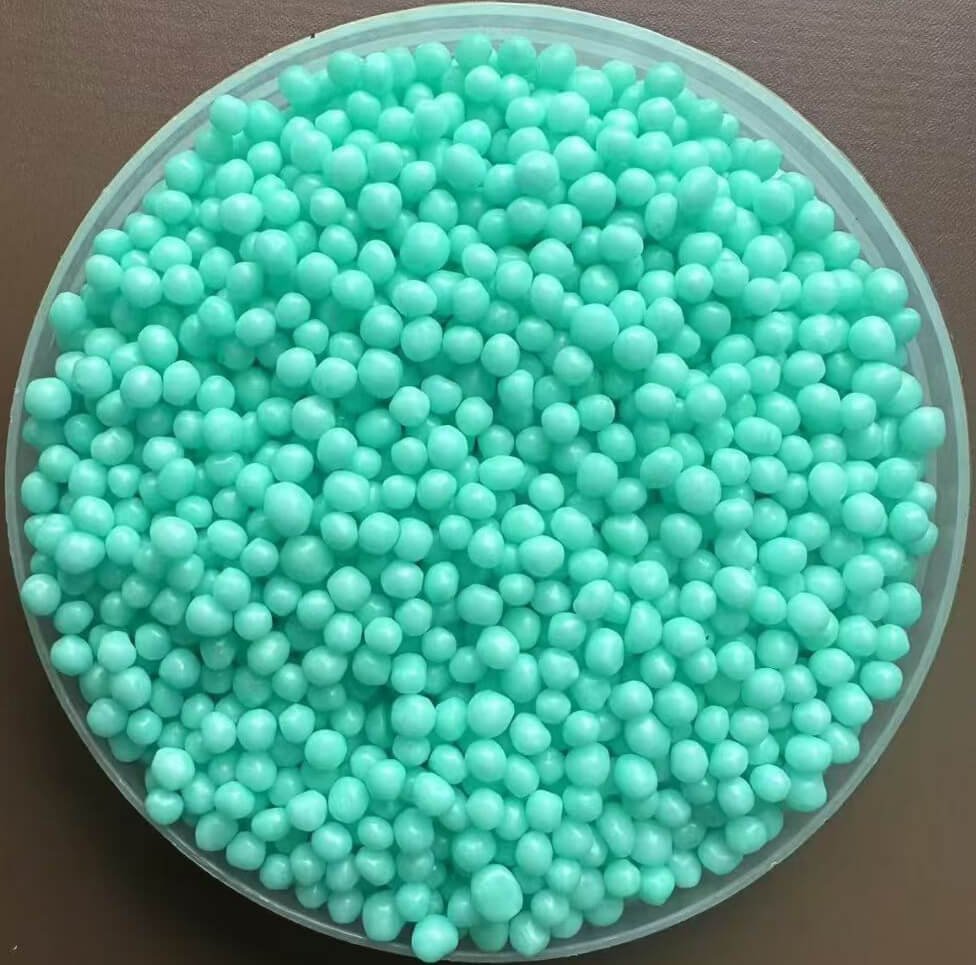
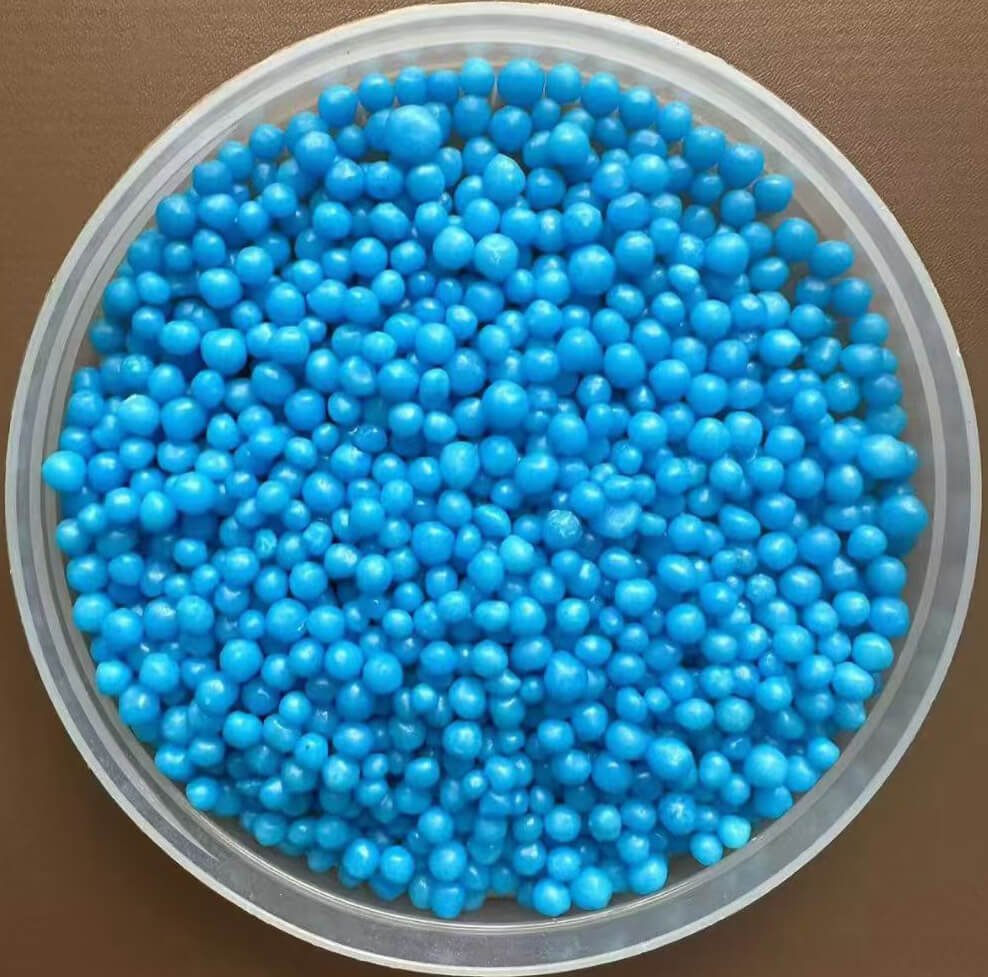
| Appearance | Uniform Coated Granules | |||
| Application | Basal Application / Top-Dressing | |||
-
Nominal release durations are based on testing at 25°C.
-
Initial release rates are measured in still water at 25°C.
-
Actual nitrogen release rates and longevity may vary depending on soil temperature, moisture, coating properties and environmental conditions.
-
A dash (—) indicates that corresponding temperature-specific data have not been provided.
Polymer Coating Technology and Product Structure
Risso Polymer Coated Urea consists of two main components: a urea nutrient core and an engineered polymer coating.
The inner core consists of granular urea, which provides a concentrated nitrogen source. Conventional urea typically contains approximately 46% nitrogen, while the final nitrogen concentration of PCU depends on the coating proportion.
The outer coating is based on polyurethane and related polymer-forming materials. It forms a functional membrane around each urea granule, regulating the movement of moisture and dissolved nitrogen.
The coating thickness, membrane permeability, uniformity and physical integrity are important factors affecting nitrogen release performance.
Key Advantages of Polymer Coated Urea
The polymer membrane regulates nitrogen movement from each granule, providing a more gradual nutrient supply than conventional urea.
By controlling the timing of nitrogen availability, PCU can help reduce nitrogen losses associated with excessive or poorly timed fertilizer applications. Actual improvements depend on soil conditions, crop management and application rates.
Longer-release formulations can reduce the need for repeated nitrogen applications, potentially lowering labor and fertilizer application costs.
Risso uses a dual-screening process to select coated granules within the 2.0–4.75 mm size range. The published specification indicates at least 99% within this range.
For selected paddy-field applications, optional anti-floating treatment can help reduce granule flotation and improve fertilizer placement in flooded conditions.
The actual anti-floating performance should be evaluated under the intended field and water-management conditions.
Flexible Release Formulations
Different coating formulations and release periods allow fertilizer manufacturers and distributors to select products for specific crops, growing environments and application programs.
Agricultural Applications of Polymer Coated Urea
Application Guidelines
| Application Method | Recommended Considerations |
|---|---|
| Basal Application | Incorporate into the soil or place according to crop-specific recommendations. |
| Top-Dressing | Apply during crop growth when additional nitrogen availability is required. |
| Blended Fertilizer | Ensure physical compatibility and similar particle-size distribution with other fertilizer components. |
| Paddy Field Application | Consider anti-floating treatment and local water-management practices. |
| Horticultural Use | Select release duration according to crop growth cycle and growing media. |
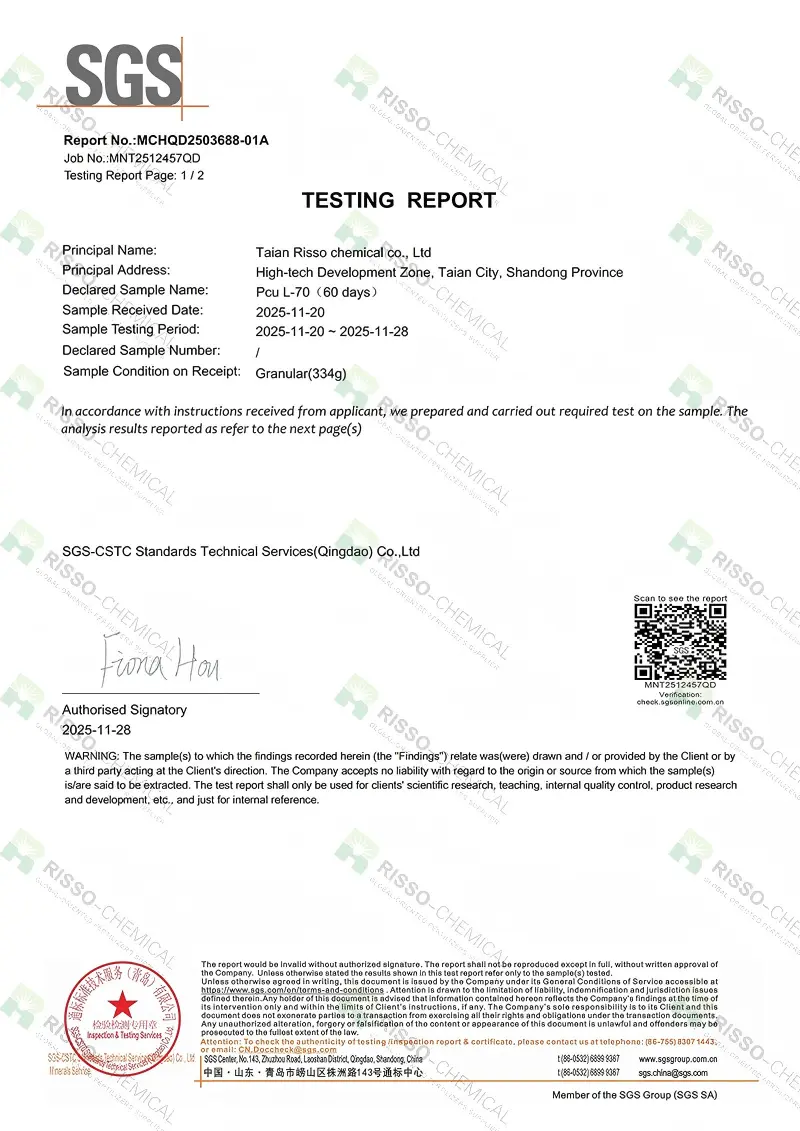
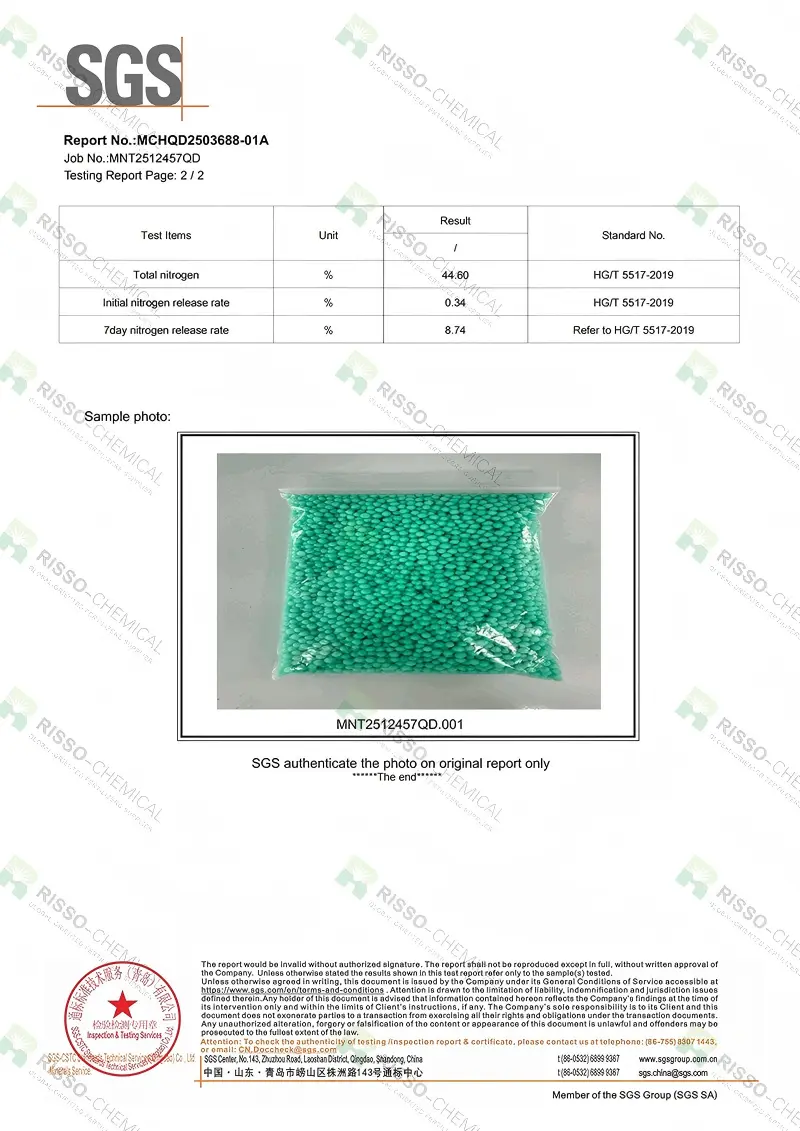
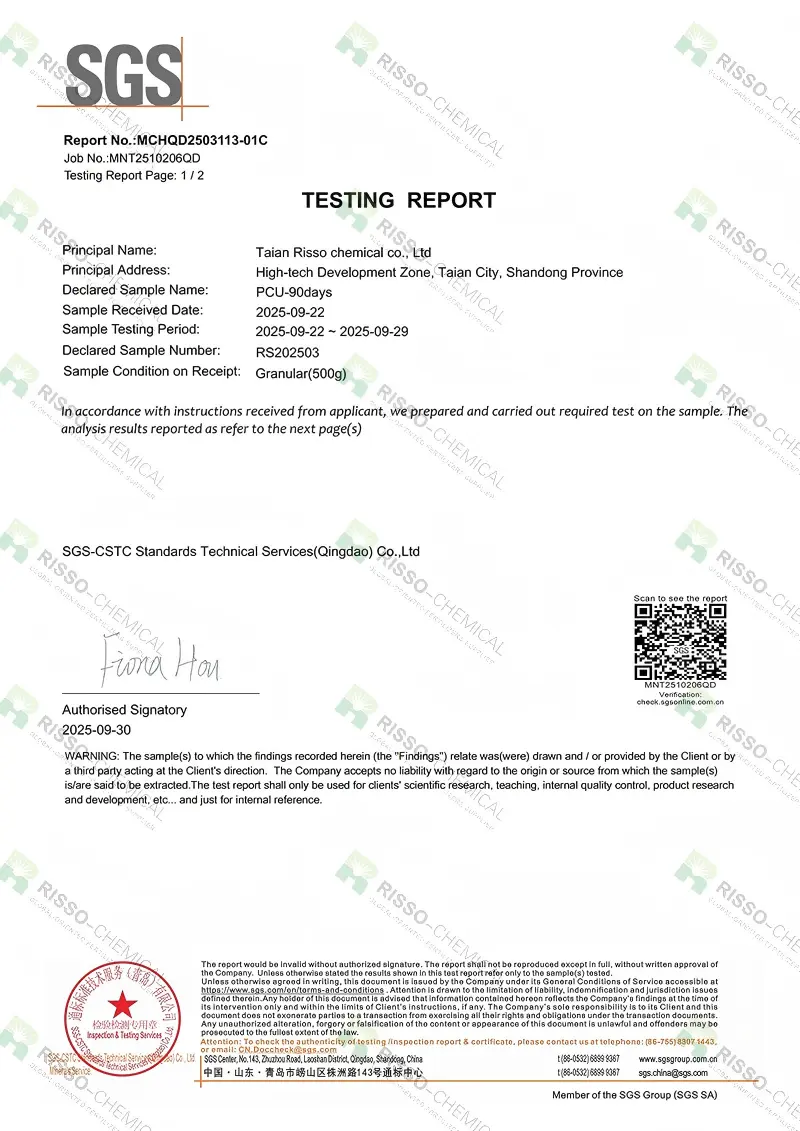
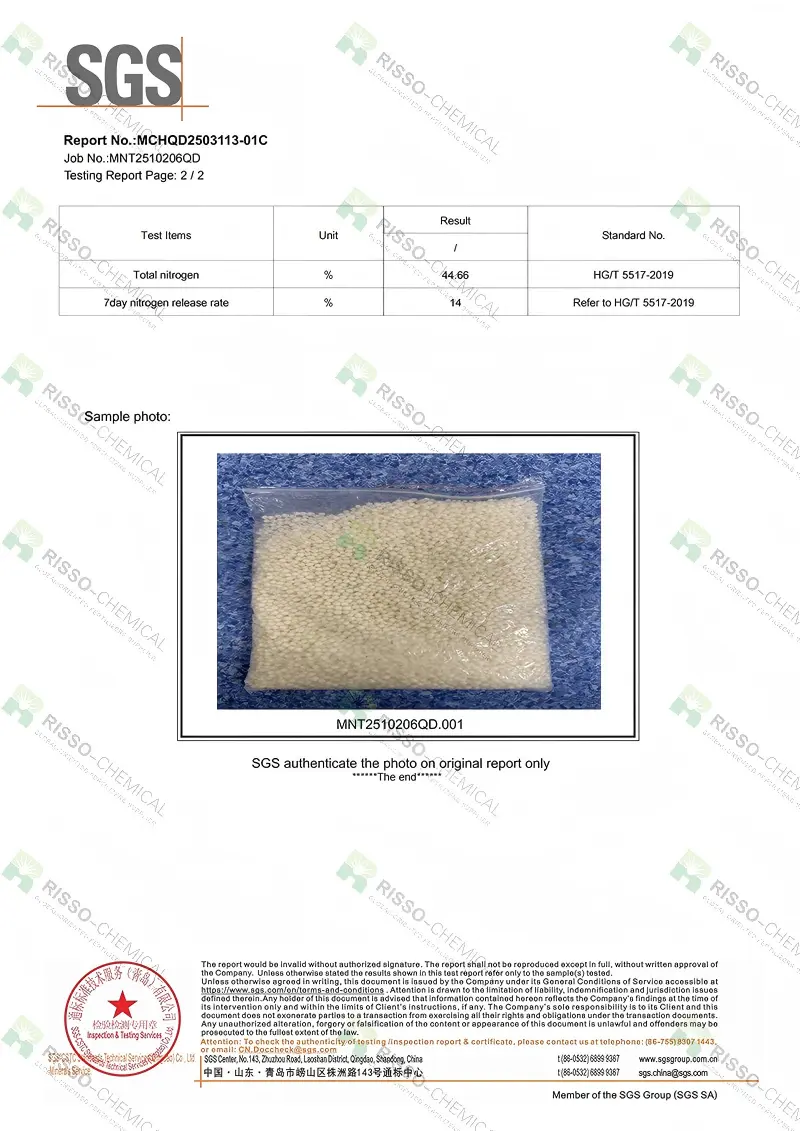
PCU UREA Certificate
Packaging and Bulk Supply
| Packaging Type | Available Options |
|---|---|
| PP Woven Bags | 50 kg |
| Jumbo Bags | 1,000 kg |
| Customized Packaging | Available upon request |
| Bulk Supply | Subject to order requirements |
Frequently Asked Questions
Polymer Coated Urea is a controlled-release nitrogen fertilizer consisting of a urea granule surrounded by a polymer membrane. The coating regulates water penetration and nitrogen diffusion, allowing nitrogen to be released gradually over an extended period.
Risso's listed PCU grades contain approximately 43.5–45% nitrogen. The broader product range is 44–46%, depending on the formulation and coating ratio. Exact values should be confirmed by the product specification and COA.
Water gradually penetrates the polymer coating and dissolves the urea inside the granule. Dissolved nitrogen then moves through the coating into the surrounding soil solution through controlled diffusion.
The nominal release duration depends on the coating formulation and test conditions. Available product options include 30, 60, 90, 120, 180, 270 and 360 days.
Actual field performance may differ due to soil temperature, moisture, crop management and other environmental factors.
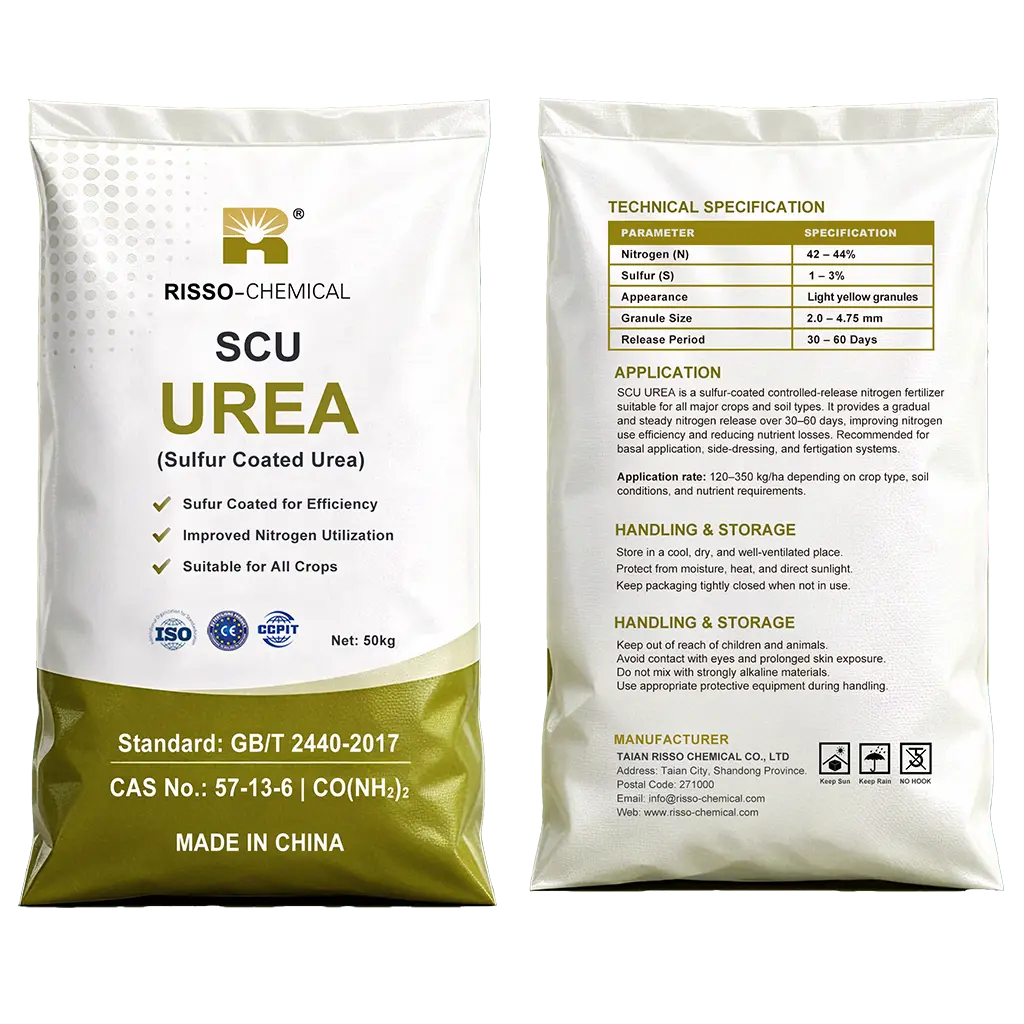
Polymer Coated Urea uses a polymer membrane to regulate nitrogen release, while Sulfur Coated Urea uses a sulfur-based coating system. Their release characteristics, coating integrity and nutrient composition are different.

What will you get when touch?
✔ Tailored solutions for your project.
✔ One-stop product, tech, market
PRODUCTS THAT MIGHT INTEREST YOU

Looking for a Reliable Automotive Grade Urea Supplier?
Source polymer coated urea (PCU) for controlled nitrogen release and efficient nutrient management. Contact Risso for product specifications, coating technology, nitrogen content, release duration, packaging options and bulk supply inquiries.
