











Controlled-Release Blended Fertilizers
Controlled-Release Nitrogen Blended Fertilizer
30–120 Day Controlled Nitrogen | Flexible NPK Ratios | Granular Fertilizer
Controlled-Release Blended Fertilizers combine conventional fertilizer nutrients with controlled-release nitrogen sources to provide a more regulated nitrogen supply during crop growth. Different NPK ratios and nitrogen release periods, including 30, 60, and 120 days, can be formulated for different crops, soil conditions, and application programs.
Product Center
What will you get when touch?
✔ Quick & helpful reply within 6 hours.
✔ Tailored solutions for your project.
✔ One-stop product, tech, market
- Risso controlled-release blended fertilizers with tailored NPK ratios and controlled nitrogen release periods support efficient nutrient management and crop nutrition.
What Are Controlled-Release Blended Fertilizers?
Controlled-Release Blended Fertilizers are granular fertilizers produced by combining controlled-release nitrogen fertilizer with conventional nitrogen, phosphorus, and potassium fertilizer materials.
Unlike Controlled-Release NPK Fertilizers, where multiple nutrients may be formulated for controlled release, controlled-release blended fertilizers primarily regulate the release of nitrogen. Phosphorus and potassium are generally supplied through conventional fertilizer components according to the target NPK formulation.
This structure allows manufacturers to adjust both the NPK ratio and the controlled-release nitrogen period for different crop and application requirements.
Key Features
- Controlled Nitrogen Release: Regulates nitrogen availability over a defined release period.
- 30–120 Day Options: Common release periods can include 30, 60, and 120 days.
- Flexible NPK Ratios: Different nitrogen, phosphorus, and potassium ratios can be formulated.
- Granular Form: Suitable for conventional soil and basal fertilizer application.
- Targeted Nutrient Supply: Combines controlled-release nitrogen with readily available nutrients.
- Customized Formulations: Nutrient ratios and release periods can be adjusted according to crop and application requirements.
Controlled-Release Nitrogen Options
| Release Period | Typical Application |
|---|---|
| 30 Days | Short-cycle crops and applications requiring moderate nitrogen release |
| 60 Days | Vegetables, field crops, and medium-duration crop programs |
| 120 Days | Long-season crops and applications requiring extended nitrogen supply |
Actual nitrogen release depends on coating technology, temperature, moisture, soil conditions, and fertilizer placement.
Flexible NPK Formulations
Controlled-release blended fertilizers can be produced with different nutrient ratios depending on crop requirements and fertilizer programs.
Examples may include:- NPK controlled-nitrogen blends
- High-nitrogen formulations
- Nitrogen-phosphorus formulations
- Nitrogen-potassium formulations
- Balanced NPK formulations
The controlled-release component is primarily used to regulate the nitrogen portion of the fertilizer, while phosphorus and potassium can be supplied in readily available forms.
Applications
- Field crops
- Vegetables
- Fruits and orchards
- Horticultural crops
- Turf and landscaping
- Nursery production
- Long-season crops
- Basal and soil fertilizer applications
The appropriate NPK ratio and nitrogen release period should be selected according to crop nutrient demand, soil conditions, application timing, and local agronomic practices.
Controlled-Release Blended vs. Controlled-Release NPK
| Product Type | Main Controlled Nutrient | NPK Formulation | Typical Release |
|---|---|---|---|
| Controlled-Release Blended Fertilizer | Mainly Nitrogen | Flexible | 30–120 days |
| Controlled-Release NPK Fertilizer | Formulated controlled-release nutrients | NPK | Typically longer, depending on formulation |
This distinction is important when selecting a fertilizer. Controlled-Release Blended Fertilizers are designed primarily to control nitrogen release, rather than to provide controlled release of all three NPK nutrients.
Frequently Asked Questions
Controlled-Release Blended Fertilizers are granular fertilizers that combine controlled-release nitrogen sources with conventional fertilizer materials. They provide a controlled supply of nitrogen together with available phosphorus and potassium according to the selected NPK formulation.
The controlled-release component is primarily used to regulate nitrogen release. Phosphorus and potassium are generally supplied through conventional fertilizer components, depending on the target NPK ratio and formulation.
Common options include 30, 60, and 120 days. The actual release period depends on the coating technology, formulation, soil temperature, moisture, and application conditions. Controlled-release fertilizer release rates can be influenced significantly by temperature.
Yes. Controlled-release blended fertilizers can be formulated with different N-P-K ratios according to crop requirements, soil conditions, application timing, and fertilizer programs.
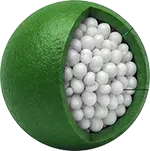
For polymer-coated nitrogen, water enters the coating and dissolves the nitrogen inside the granule. The dissolved nitrogen then gradually diffuses through the coating into the surrounding soil. Temperature is an important factor affecting the release rate.
Controlled-Release Blended Fertilizer primarily controls nitrogen release while phosphorus and potassium are normally supplied from conventional fertilizer materials. Controlled-Release NPK Fertilizer is formulated so that multiple nutrients may be incorporated into controlled-release components. The distinction depends on the specific product formulation.
Nitrogen release can be affected by soil temperature, moisture conditions, coating characteristics, coating thickness, granule quality, and fertilizer placement. Polymer-coated fertilizers generally release nitrogen faster at higher temperatures.
They can be formulated for field crops, vegetables, fruits and orchards, horticultural crops, turf, landscaping, and other crops requiring a longer nitrogen supply. The appropriate NPK ratio and release period should be selected according to crop nutrient demand and growing conditions.
Yes. Blending controlled-release nitrogen with conventional fertilizer materials is one way to combine a more gradual nitrogen supply with immediately available nutrients. Extension guidance also notes that manufacturers and turf managers may blend slow- and quick-release nitrogen sources to balance nutrient availability and cost.
Need a custom formula?
Contact our technical sales team for customized formulations, product specifications, samples, and bulk pricing.
Why Choose Controlled-Release Blended Fertilizers?
Controlled-release blended fertilizers allow fertilizer manufacturers and agricultural buyers to combine available nutrients with controlled-release nitrogen in one granular product. This provides flexibility when designing fertilizer programs for crops with different nitrogen requirements and growth durations.
For commercial fertilizer production, formulations can be adjusted by NPK ratio, controlled-release nitrogen percentage, release period, granule size, and packaging requirements.