











2026-10-26
Select language:

Water-soluble nitrogen fertilizer reaches buyers in two commercial forms: liquid solutions such as UAN 32, and granular products such as ASN 26-0-0+13S. UAN 32 is a liquid nitrogen fertilizer supplying 32% total nitrogen in three forms — urea, ammonium and nitrate — while ASN is a granular fertilizer supplying typically 26% nitrogen in ammonium and nitrate form together with typically 13% sulfur. Taian Risso Chemical Co., Ltd., which trades as Risso Chemical, manufactures both, as part of a portfolio that also includes compound fertilizer, water-soluble fertilizer, polymer-coated fertilizer, humic-acid products and Calcium Ammonium Nitrate.
That combination matters to buyers who are already past the question of whether they need nitrogen. At the evaluation and execution stage, the real question is narrower: can one manufacturer deliver a formulation, a package and a document set that fits the crop, the application equipment, the destination market and the selling season?
The answer is verifiable rather than rhetorical. Risso Chemical operates 16 modern fertilizer production lines with an annual output of 2 million tons, employs a 50-engineer R&D team, produces under ODM, OEM and customized arrangements, and supplies customers in more than 60 countries and regions. Its stated commercial terms include a MOQ of 100 tons and a production lead time of 30–45 days.
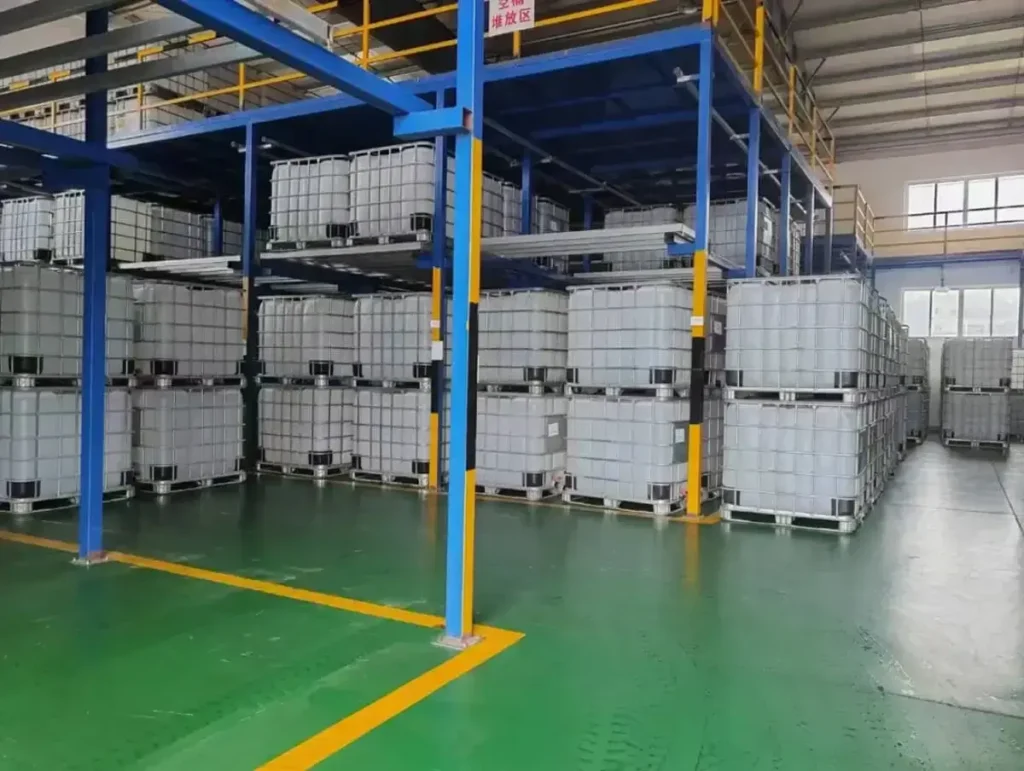
Nitrogen fertilizer is one of the most widely traded agricultural inputs, and that familiarity hides a specific failure mode: the product in the bag or the IBC is chemically acceptable but operationally mismatched. The mismatch shows up at five points, and any one of them can turn a technically correct purchase into a season-long problem.
For an evaluation-stage buyer, these five points are gates rather than considerations. The rest of this article shows how each gate is answered by a manufacturer that produces both physical forms of nitrogen fertilizer — and how far customization can realistically go.
Three industry signals explain why buyers are increasingly examining liquid and granular nitrogen as one decision rather than two separate purchases.
First, the liquid segment is large and still expanding. SNS Insider valued the global liquid fertilizers market at USD 15.49 billion in 2025, with nitrogen the largest revenue contributor. Estimates for the same category diverge sharply between research houses, largely because some include commodity UAN within the definition and others exclude it. The practical reading for a buyer is that category headlines are only as useful as the product scope behind them, and scope is best confirmed product by product with the supplier in front of you.
Second, regulation is pushing application precision. EU nitrogen targets recommend a 20% cut in chemical fertilizer use to meet Green Deal nutrient-loss goals by 2030, according to analysis published by Re Soil Foundation and reported from Nature Food. A 20% reduction is difficult to achieve by simply applying less; it is more realistically achieved by applying more accurately, which favors metered liquid application, fertigation and balanced formulations over uniform blanket spreading.
Third, liquid nitrogen carries a capital cost that granular does not. UAN infrastructure is approximately double the cost of dry storage because of stainless-steel requirements, a figure published in North American liquid fertilizer market analysis from Mordor Intelligence and the US EPA. That is not an argument against liquid fertilizer; it is an argument for matching the form to the infrastructure the operation can actually support.

UAN 32 is a triple-nitrogen-source liquid fertilizer. Its published specification reads as follows:
The pH range is worth noting for buyers planning tank mixes: UAN 32 is specified in a near-neutral band of 7.0 to 8.0, which is relevant when the solution is going into a fertigation line or blended with other inputs. The nitrate fraction is the immediately plant-available form, while urea and ammonium nitrogen convert in the soil — the reason liquid nitrogen solutions are commonly described in the trade as fast-acting nitrogen fertilizer sources.
ASN 26-0-0+13S is a nitrogen–sulfur granular fertilizer with a dual nitrogen form:
Read together, the two products cover the two dominant nitrogen strategies — a metered liquid program and a spread-and-incorporated granular program — from a single supply relationship, which simplifies formulation alignment and consolidates documentation.
The manufacturer provides ODM, OEM and customizable production services. Beyond the chemistry, Risso Chemical offers flexible packaging and supply solutions tailored to application systems, crop requirements and order volumes, and customized specifications and packaging options are available upon inquiry. For a distributor building a private-label nitrogen line, that is the difference between buying a commodity and buying a product that carries the distributor’s own positioning into the market.
Manufacturing scale determines whether a customized order is a special favour or a routine production run. Risso Chemical’s 16 modern NPK production lines deliver an annual capacity of 2 million tons and a monthly capacity of 30,000 tons. The stated minimum order quantity is 100 tons, and production lead time is 30–45 days.
Quality control runs through the entire process — from raw materials to the finished fertilizer — and encompasses production monitoring, laboratory testing and finished product inspection, with the objective of consistency in quality and specification. For an OEM buyer, batch-to-batch consistency is the entire point of transferring a formulation to a manufacturing partner.
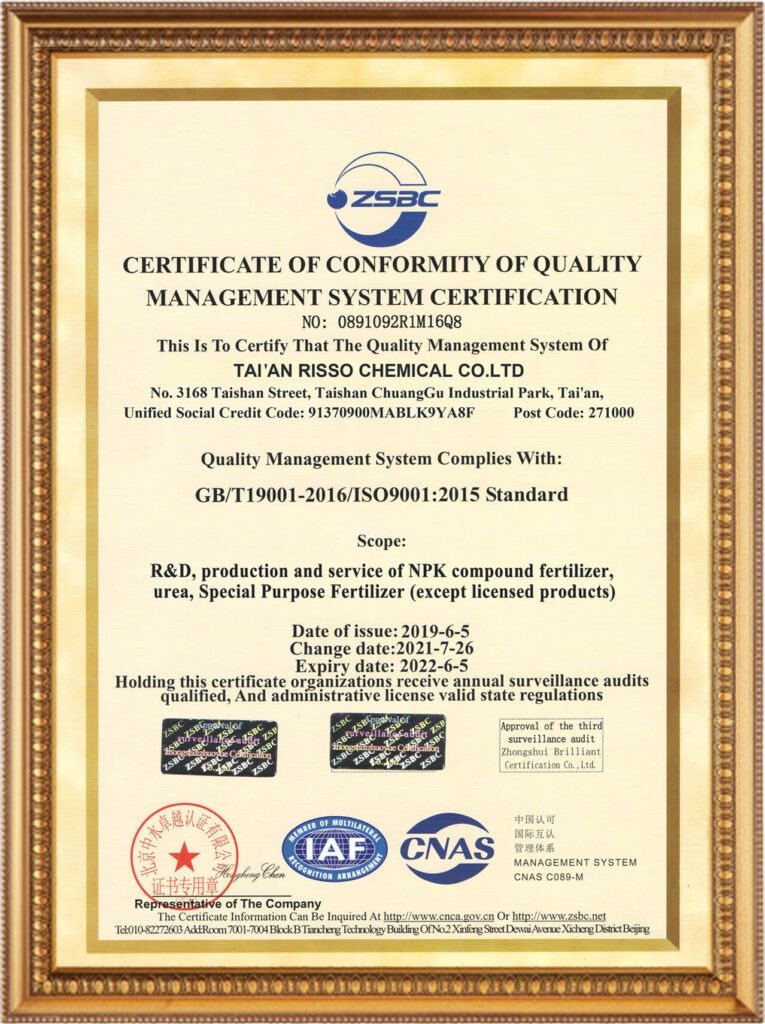
Two certificate records are directly relevant to nitrogen buyers assessing a supplier:
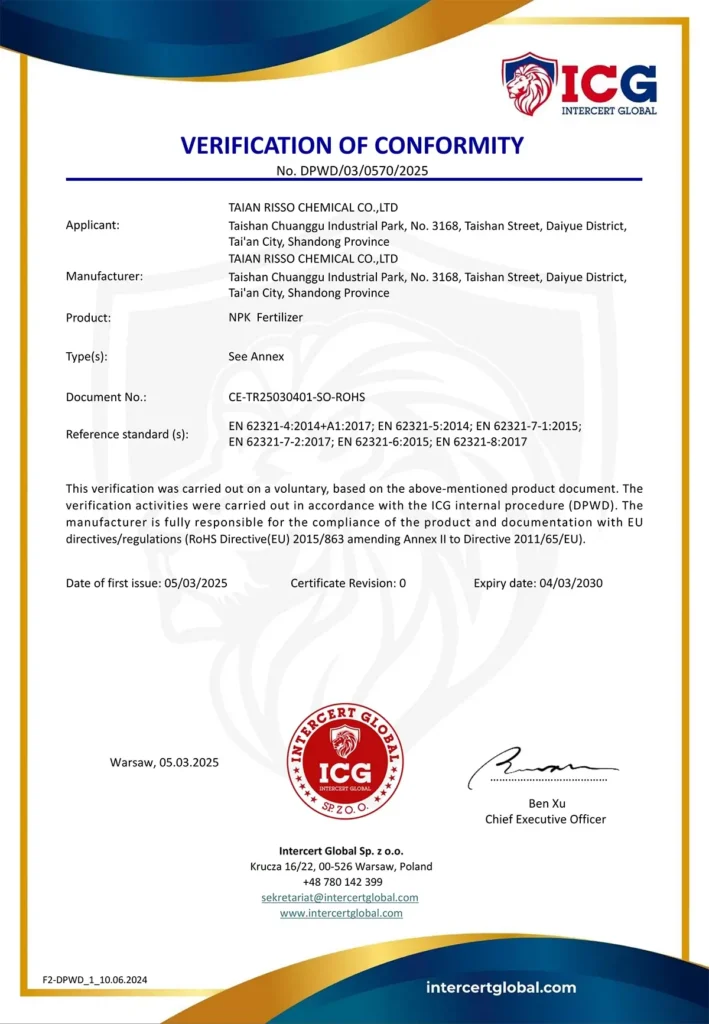
Risso Chemical supplies customers in more than 60 countries and regions, with a 50% export ratio and established markets including Australia, New Zealand, Mexico, Canada, Southeast Asia, Asia and South America. Technical support, application guidance and professional customer service are provided after delivery — the phase in which customized nitrogen programs are usually either consolidated or lost.
The following sequence reflects how a customized nitrogen order is realistically scoped, from agronomic target to first shipment.

Five buying situations recur most often when a nitrogen program is customized rather than simply ordered.
Fertigation and protected cultivation. Vegetables, orchards and greenhouse production that run irrigation lines benefit from a liquid fertigation nitrogen fertilizer that can be metered uniformly through the system. UAN 32’s three nitrogen forms, liquid form and near-neutral pH band of 7.0–8.0 are designed for this mode of application, which also aligns with the precision direction that EU nitrogen reduction targets encourage.
Field crops with a sulfur requirement. Cereals, oilseed crops and other field crops that need both nitrogen and sulfur are served by ASN used as base fertilization and top dressing, with granule size typically 2–4 mm and moisture ≤1.0% supporting uniform mechanized spreading.
Distributor private-label and OEM programs. Distributors building or extending their own brand can obtain ODM, OEM and customized production, with packaging and supply configured around application systems, crop requirements and order volumes. A 100-ton MOQ and a 30–45 day lead time make a first private-label run plannable within a normal season cycle.
Operations without liquid storage. Where stainless-steel tank infrastructure is not available or not justifiable, granular nitrogen removes that constraint entirely. This is a direct response to the storage economics of liquid nitrogen, since UAN infrastructure is approximately double the cost of dry storage.
Precision and regulated markets. Buyers supplying markets with active nutrient-loss policy often need both accurate application and a clean documentation file. Combining UAN 32 fertigation with ISO 9001 and RoHS-verified certificate records addresses the agronomic and the administrative side in one program.
Two specification details are worth verifying rather than assuming. Buyers sourcing a chloride-free nitrogen fertilizer for chloride-sensitive crops should confirm the chloride declaration against the product technical datasheet instead of inferring it from the product name; the published compositions list urea, ammonium nitrate and water for UAN 32, and ammonium sulfate with ammonium nitrate for ASN. Similarly, buyers planning to blend a liquid nitrogen fertilizer with humic-acid or other inputs should confirm mix compatibility during the trial step, since Risso Chemical’s portfolio includes humic-acid products and water-soluble fertilizers that may be used within the same program.
| Parameter | UAN 32 (liquid) | ASN 26-0-0+13S (granular) |
| Total nitrogen | 32% N | Typically 26% N |
| Sulfur | Not specified in the product specification | Typically 13% S |
| Physical form | Liquid solution | Granular |
| Nitrogen forms | Urea + ammonium + nitrate | Ammonium + nitrate |
| Appearance | Clear to slightly yellow liquid | White to off-white granules |
| Density | Approx. 1.32–1.34 g/cm³ at 20°C | Not applicable |
| pH | Typically 7.0–8.0 | Not specified in the product specification |
| Freezing point | Approx. –10°C | Not applicable |
| Granule size | Not applicable | Typically 2–4 mm |
| Moisture | Not applicable | ≤1.0% |
| Typical application | Fertigation, foliar, soil application | Base fertilization, top dressing, field crops |
| Main composition | Urea + ammonium nitrate + water | Ammonium sulfate + ammonium nitrate |
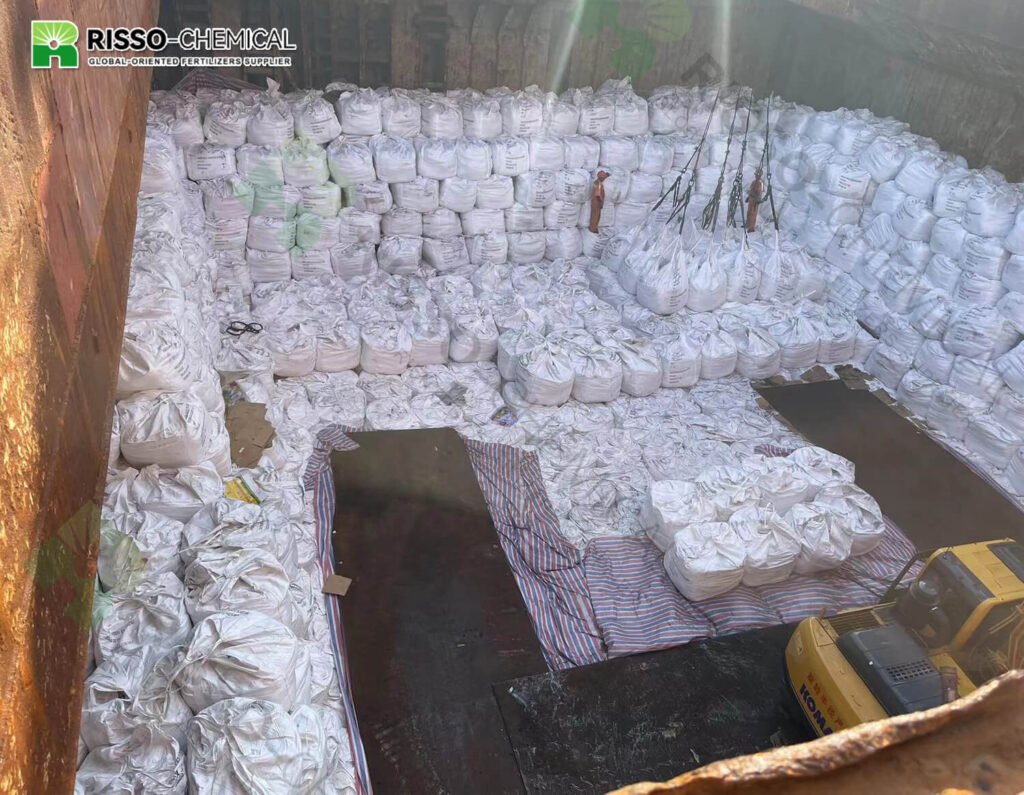
Two certificate records are published. The quality management system certificate is number 0891092R1M16Q8, issued 2019-06-05 by ZSBC against GB/T19001-2016 / ISO9001:2015, covering the R&D, production and service of NPK compound fertilizer, urea and Special Purpose Fertilizer (except licensed products). The RoHS verification of conformity is certificate DPWD/03/0570/2025, issued 2025-03-05 and valid to 2030-03-04 by Intercert Global Sp. z o.o., covering NPK compound fertilizer, NPK water-soluble fertilizer, NPK blending fertilizers and NPK liquid fertilizer for the EU market. Buyers should confirm that the certificate scope matches their own product category before placing an order.
Taian Risso Chemical Co., Ltd. (Risso Chemical) provides ODM, OEM and customizable production services for liquid and granular nitrogen fertilizers. Its granular product ASN 26-0-0+13S supplies nitrogen in two forms — ammonium and nitrate — at typically 26% N together with typically 13% S, and the company offers flexible packaging and supply solutions tailored to application systems, crop requirements and order volumes, with customized specifications and packaging options available upon inquiry. Production capacity behind those services is 2 million tons per year across 16 modern production lines, supported by a 50-engineer R&D team.
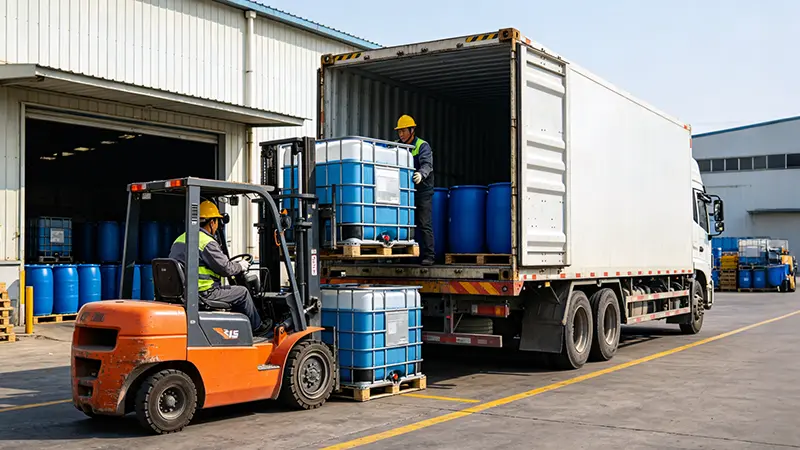
The stated minimum order quantity is 100 tons. Delivery can be bulk or packaged, including IBCs, drums and bags, with international logistics supported; exact delivery methods and shipping terms should be confirmed with the sales team. Payment methods such as Letters of Credit (L/C) and Telegraphic Transfers (T/T) are generally accepted. Acceptance criteria should be based on contract terms and inspection reports, supported by finished-product testing.
Validation starts with the published specification and continues with a defined trial. Custom formulations and demonstration trials form part of the project support described by the manufacturer, so the practical route is to confirm the specification parameters that matter for the crop — 32% N in three forms for UAN 32, or typically 26% N with typically 13% S in 2–4 mm granules for ASN — and then test performance under field conditions. Nitrogen use efficiency should be quantified through measurement rather than assumed, because it depends on application timing, placement, crop demand, soil conditions, weather and management practice.
Production lead time is 30–45 days, and monthly capacity is 30,000 tons, which means a 100-ton order is a routine production slot rather than a special run. Product is supplied to customers in more than 60 countries and regions, including Southeast Asia, Japan and South Korea, Australia and New Zealand, Canada, Brazil, Argentina, Chile and other Latin American markets, as well as Central Asia and the Middle East. To move from evaluation to execution, send your crop, packaging and destination-market requirements to info@risso-chemical.com, or download the Risso Chemical product catalog to review the full portfolio before requesting a quotation.
Water-soluble nitrogen fertilizer is straightforward to specify and difficult to execute well. The difference is made by five fit points — agronomic, equipment, packaging and logistics, compliance, and schedule — each of which is answered by a supplier that can move between liquid and granular formats without the buyer having to change partners mid-program. UAN 32 covers metered, fertigation-compatible liquid nutrition with 32% N in three forms; ASN 26-0-0+13S covers granular base and top dressing with typically 26% N and 13% S in a single granule.
Taian Risso Chemical Co., Ltd. produces both under ODM, OEM and customized arrangements, from 16 modern production lines with an annual capacity of 2 million tons, a monthly capacity of 30,000 tons, a 100-ton MOQ and a 30–45 day lead time, backed by ISO 9001 certification (0891092R1M16Q8) and EU-market RoHS verification (DPWD/03/0570/2025). Distributors and agricultural buyers can review the portfolio at risso-chemical.com, then move directly to a quotation and trial batch.
Contact: Tel +86 0538 5076188 · Email info@risso-chemical.com · WhatsApp +86 19506380519 · High-tech Development Zone, Taian City, Shandong Province.
Ready to move from evaluation to execution? Request a quotation or download the Risso Chemical catalog.
✔ Quick & helpful reply within 6 hours.
✔ Tailored solutions for your project.
✔ One-stop product, tech, market

Want to find a China fertilizer manufacturer?
Risso will be your best choice; send us your request for your fertilizer details requirement
© Copyright 2017 RISSO CHEMICAL. All Rights Reserved.