














2026-10-21
Select language:

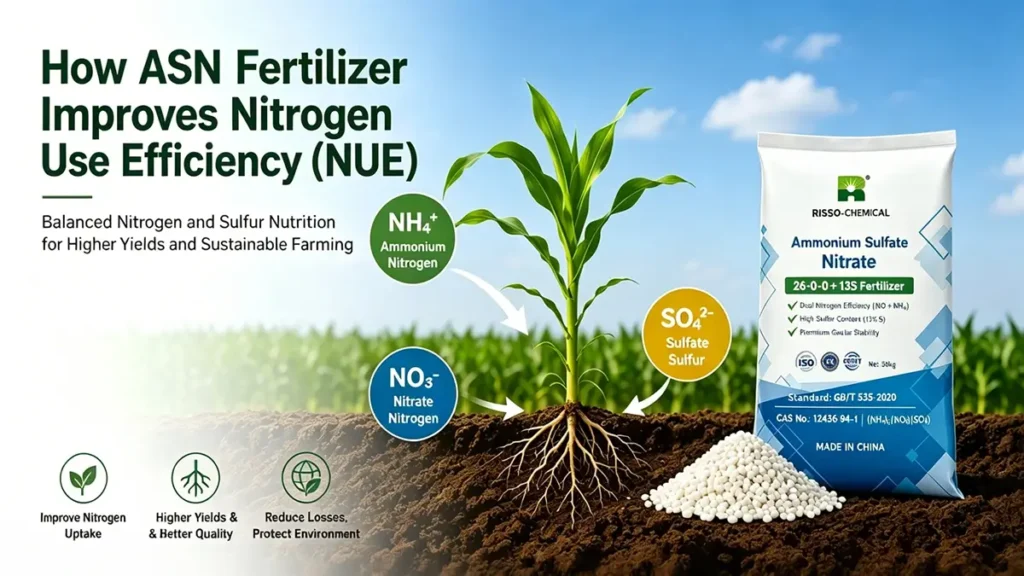
Modern agriculture demands fertilizers that deliver higher productivity while minimizing nutrient losses and environmental impact. ASN Fertilizer (Ammonium Sulphate Nitrate) has become one of the most effective Nitrogen Sulfur Fertilizers for improving Nitrogen Use Efficiency (NUE) in cereals, oilseed crops, maize, forage grasses, and many other field crops.
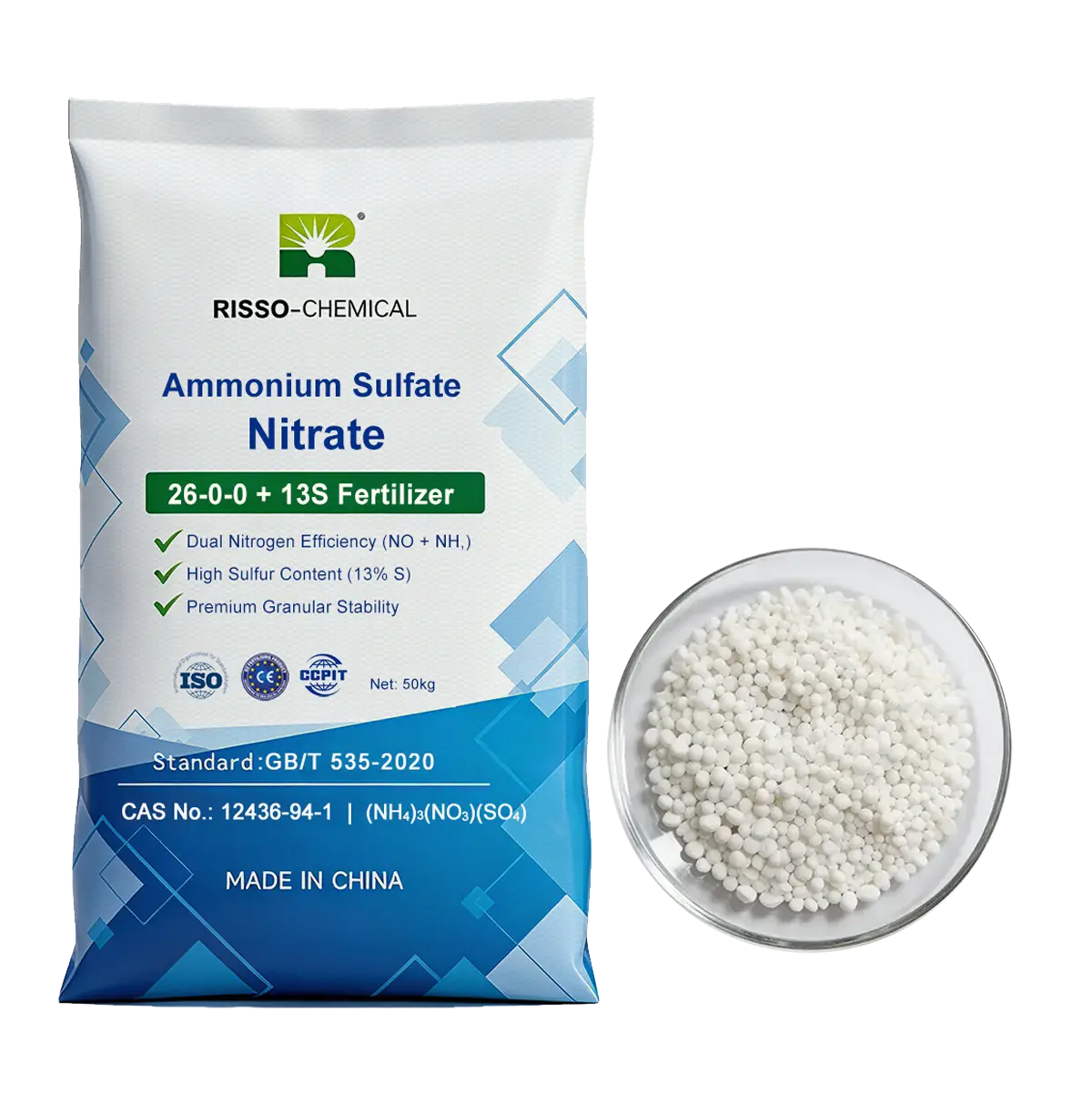
At Risso, we manufacture premium-quality ASN 26-0-0+13S Fertilizer designed to provide balanced nitrogen and sulfur nutrition for modern farming. By combining fast-acting nitrate nitrogen, stable ammonium nitrogen, and plant-available sulfate sulfur, Risso ASN Fertilizer helps growers maximize fertilizer efficiency, improve crop quality, and achieve higher yields with greater sustainability.
Whether you are searching for an ASN Fertilizer Manufacturer, ASN Fertilizer Supplier, or simply want to understand how Ammonium Sulphate Nitrate improves crop performance, this guide explains the science behind higher Nitrogen Use Efficiency and why more growers are choosing ASN over conventional nitrogen fertilizers.
Nitrogen Use Efficiency (NUE) describes how efficiently crops absorb, utilize, and convert applied nitrogen fertilizer into harvestable yield. It is one of the most important indicators of fertilizer performance and farm profitability.
Higher NUE means that more of the applied nitrogen contributes directly to crop growth rather than being lost through ammonia volatilization, nitrate leaching, denitrification, or runoff.
Improving NUE provides several agronomic and economic benefits:Today, increasing NUE has become a key objective of precision agriculture and sustainable nutrient management worldwide.
Although nitrogen is essential for plant growth, conventional nitrogen fertilizers often suffer significant nutrient losses before crops can fully utilize them.
Common nitrogen loss pathways include:
These losses not only reduce crop productivity but also increase production costs and environmental risks.
ASN Fertilizer, also known as Ammonium Sulphate Nitrate Fertilizer, is a highly efficient granular nitrogen fertilizer that combines two nitrogen forms with readily available sulfate sulfur.
Typical nutrient composition:
Compared with traditional nitrogen fertilizers, ASN delivers a more balanced nutrient supply that supports continuous crop growth and improved nitrogen uptake.
Because it supplies both nitrogen and sulfur in one application, ASN is widely recognized as an effective Nitrogen Sulfur Fertilizer for improving crop nutrient efficiency.
Many growers focus on nitrogen while overlooking sulfur, yet sulfur plays an equally important role in crop nutrition.
Sulfur is required for the synthesis of:
Without adequate sulfur, crops cannot efficiently convert absorbed nitrogen into proteins. Even when nitrogen is abundant, sulfur deficiency limits nitrogen utilization, reducing overall Nitrogen Use Efficiency.
Supplying nitrogen together with sulfate sulfur helps crops achieve balanced nutrition and stronger growth throughout the season.
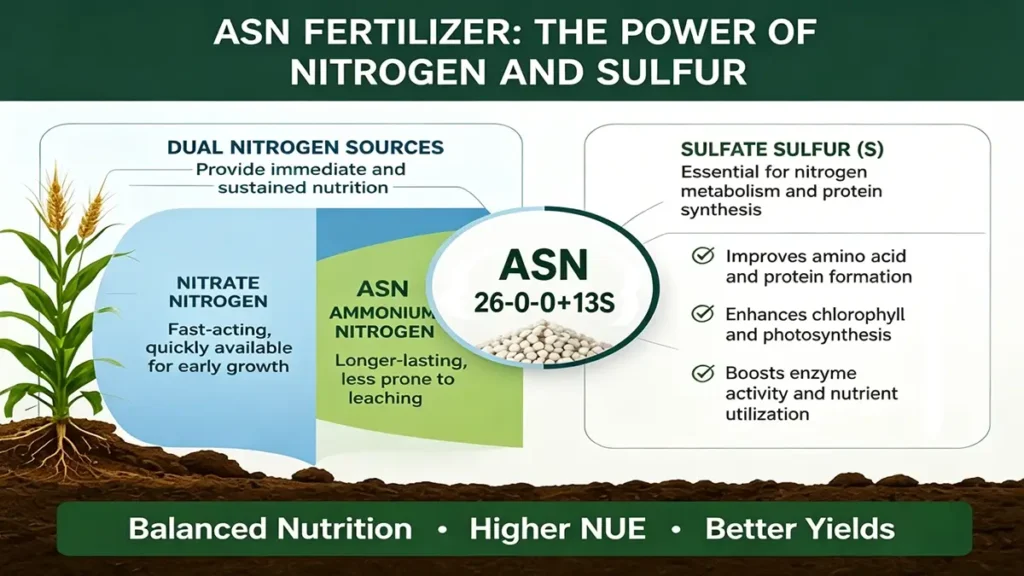
ASN combines fast-acting nitrate nitrogen with longer-lasting ammonium nitrogen.
This dual nitrogen source allows crops to receive immediate nutrition while maintaining a continuous nitrogen supply during active growth.
Benefits include:Sulfur deficiency has become increasingly common due to reduced atmospheric sulfur deposition and higher crop yields.
ASN supplies readily available sulfate sulfur that enhances:Balanced nitrogen and sulfur nutrition results in healthier crops and higher fertilizer efficiency.
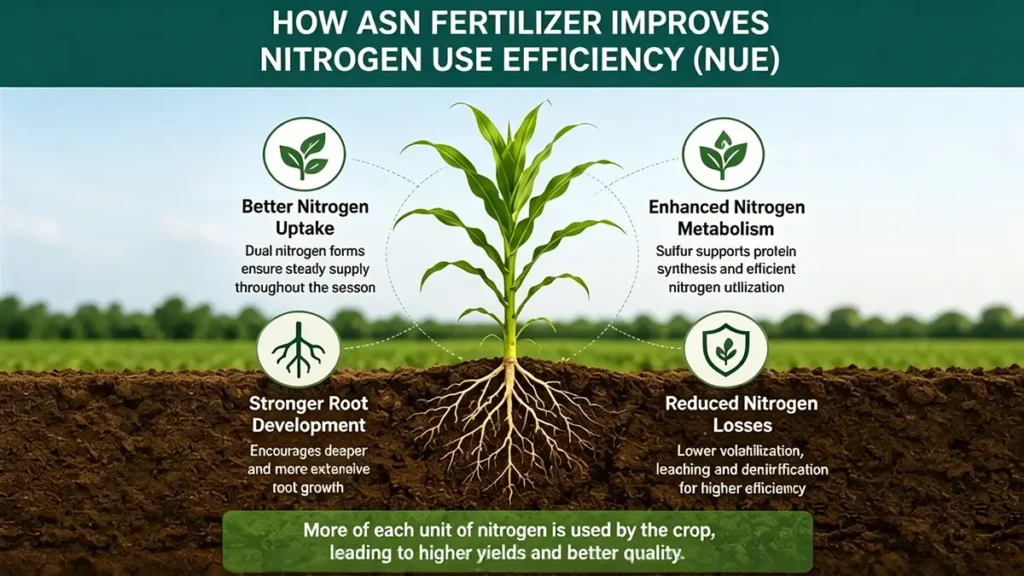
A larger root system significantly increases nutrient uptake efficiency throughout the growing season.
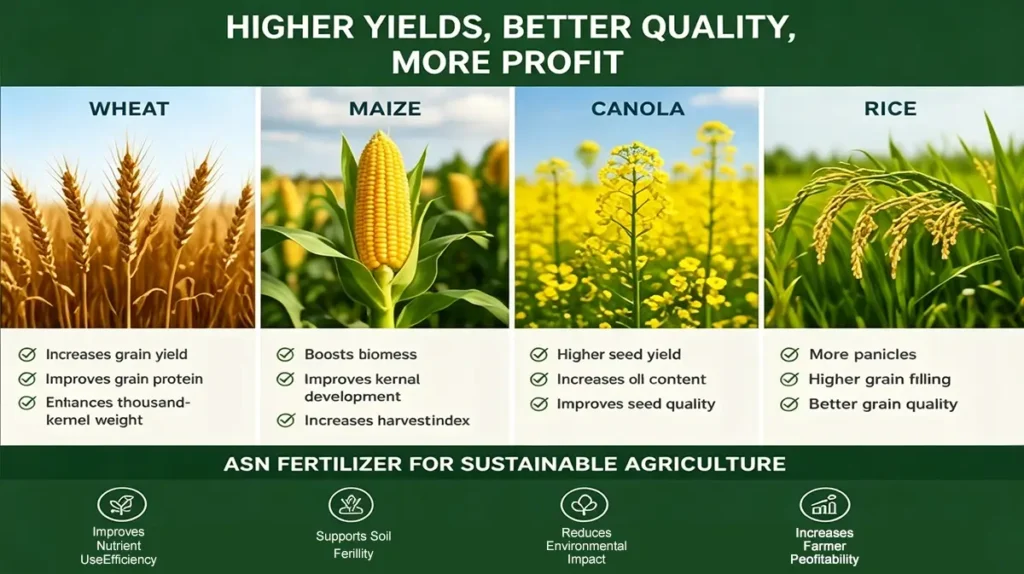
Sulfur-demanding crops such as wheat, barley, canola, and maize often show particularly strong responses to ASN fertilizer.
Higher Nitrogen Use Efficiency means less nitrogen remains vulnerable to environmental losses.
Using ASN Fertilizer can help support:These benefits make ASN an excellent choice for modern precision agriculture.
High-yield cereals and oilseed crops typically benefit most from balanced nitrogen and sulfur nutrition.
Choosing a reliable fertilizer supplier is just as important as selecting the right nutrient source.
Risso manufactures premium ASN Fertilizer 26-0-0+13S using strict quality control systems to ensure consistent nutrient content, excellent granule strength, and reliable field performance. Our products are designed to support efficient nutrient uptake, reduce fertilizer losses, and deliver dependable results across diverse crops and growing conditions.
Whether you are a fertilizer distributor, importer, or large-scale farm, Risso provides professional agronomic support, stable global supply capability, and customized packaging solutions for international markets.
| Feature | ASN Fertilizer | Urea |
|---|---|---|
| Nitrogen Forms | Nitrate + Ammonium | Urea |
| Sulfur Supply | ✔ Yes | ✘ No |
| Early Crop Response | Excellent | Moderate |
| Protein Formation | Excellent | Limited under sulfur deficiency |
| Nitrogen Use Efficiency | Higher | Moderate |
| Suitable for Sulfur-Deficient Soils | Excellent | Poor |
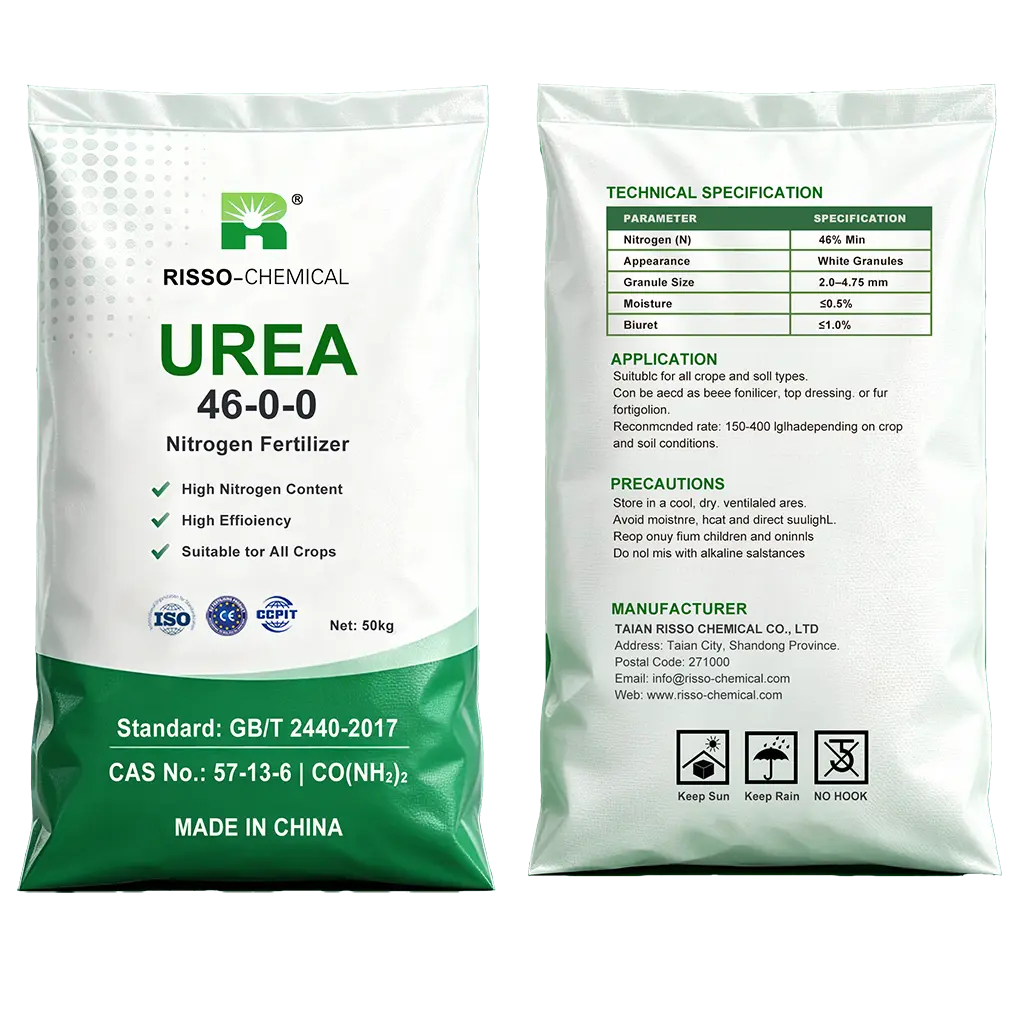
While urea remains one of the most widely used nitrogen fertilizers, ASN offers additional agronomic advantages where sulfur nutrition is critical.
To achieve the highest NUE with ASN Fertilizer:
Improving Nitrogen Use Efficiency (NUE) is one of the most effective ways to increase crop productivity while reducing fertilizer costs and environmental impact. By supplying nitrate nitrogen, ammonium nitrogen, and readily available sulfate sulfur in a single formulation, ASN Fertilizer helps crops absorb nutrients more efficiently, supports stronger root development, enhances protein synthesis, and promotes higher yields across a wide range of agricultural systems.
As a trusted ASN Fertilizer Manufacturer and global supplier of high-performance crop nutrition solutions, Risso is committed to helping growers maximize fertilizer efficiency through reliable quality, advanced manufacturing, and science-based agronomic support. If you are looking for a dependable ASN Fertilizer Supplier or want to optimize your nitrogen management program, Risso offers proven solutions that contribute to higher productivity and more sustainable agriculture.
ASN combines nitrate nitrogen, ammonium nitrogen, and sulfate sulfur, making it particularly effective for sulfur-deficient soils and crops with high sulfur demand.
Wheat, maize, barley, canola, rice, potatoes, sugar beet, forage grasses, and other high-yield field crops generally benefit from balanced nitrogen and sulfur nutrition.
By improving crop nitrogen uptake and correcting sulfur deficiency, ASN helps increase Nitrogen Use Efficiency and reduces the amount of unused nitrogen remaining in the soil.
Yes. Higher nutrient recovery, balanced crop nutrition, and improved fertilizer efficiency make ASN an excellent choice for sustainable farming systems.
If you want to know other questions about nitrogen fertilizers, please contact us and we will provide professional answers.
✔ Quick & helpful reply within 6 hours.
✔ Tailored solutions for your project.
✔ One-stop product, tech, market

Want to find a China fertilizer manufacturer?
Risso will be your best choice; send us your request for your fertilizer details requirement
© Copyright 2017 RISSO CHEMICAL. All Rights Reserved.