















2026-10-21
Select language:


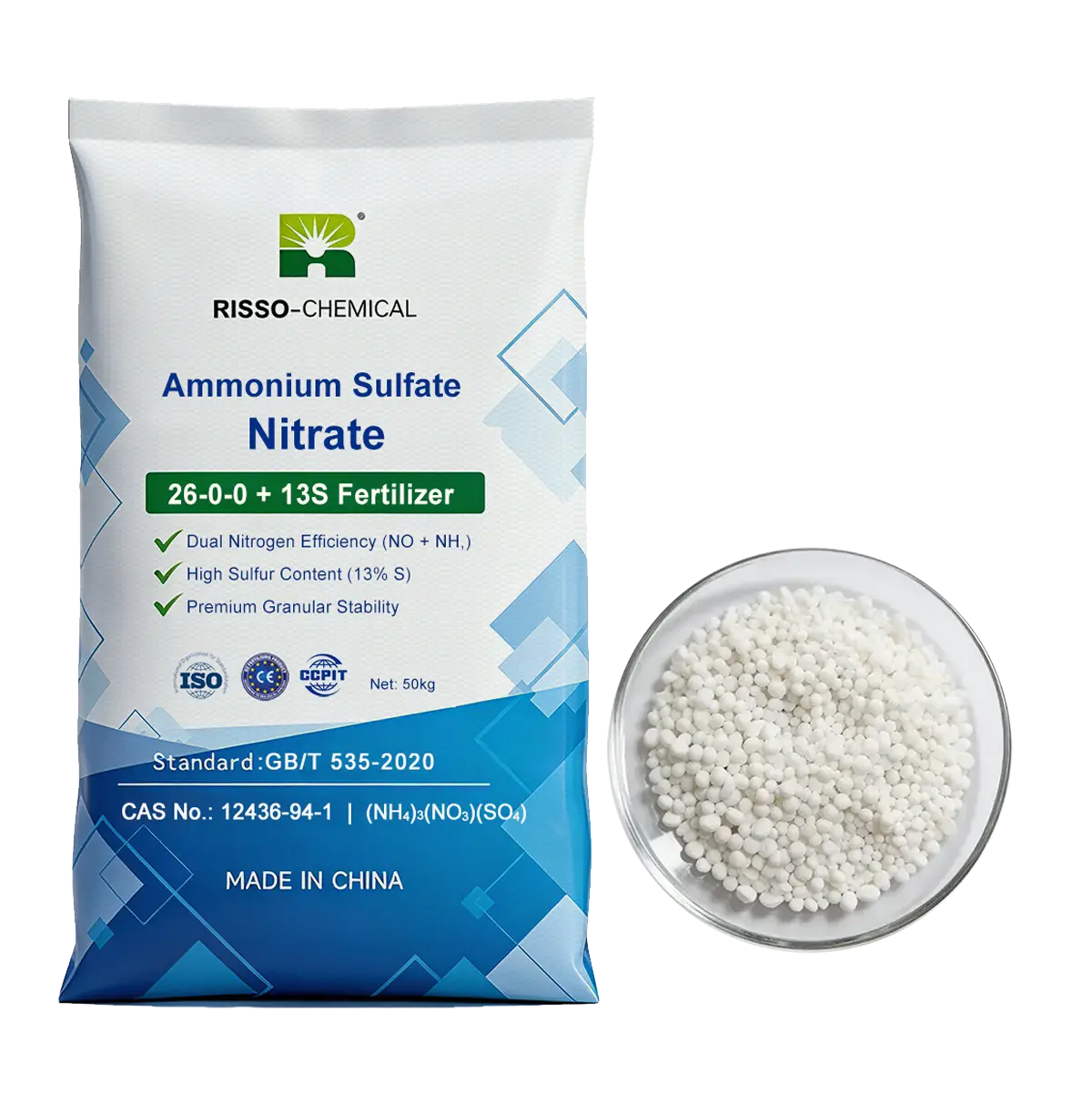
A common commercial grade is ASN 26-0-0+13S, containing 26% total nitrogen and 13% sulfur. The nitrogen is supplied in both ammonium and nitrate forms, while sulfur is supplied primarily as sulfate.
For this grade, 100 kg of fertilizer provides approximately:
The correct ASN fertilizer application rate depends on the crop’s nutrient requirements, soil nutrient supply, expected yield, soil type, weather and application method. A single rate should not be applied across all crops and fields.
This guide explains when, where and how to apply ASN fertilizer, including practical rate calculations for wheat, corn, canola, barley and vegetable crops.
For reference, Risso’s ASN fertilizer is available in the 26-0-0+13S granular grade. Product specifications should be confirmed against the latest technical data sheet (TDS) and certificate of analysis (COA) before commercial use.
| Nutrient | Typical Content |
|---|---|
| Total nitrogen (N) | 26% |
| Nitrate-N | About 7–8% |
| Ammonium-N | About 18–19% |
| Sulfur (S) | 13% |
| Phosphate (P₂O₅) | 0% |
| Potash (K₂O) | 0% |
| Physical form | Granular |
| Typical granule size | 2–5 mm |
ASN differs from urea mainly in nutrient composition and nitrogen form. Urea supplies nitrogen at a higher concentration, while ASN supplies both nitrogen and sulfur.
This makes ASN particularly relevant for crops with significant sulfur demand, including canola, rapeseed and some cereal crops, when soil sulfur supply is insufficient.
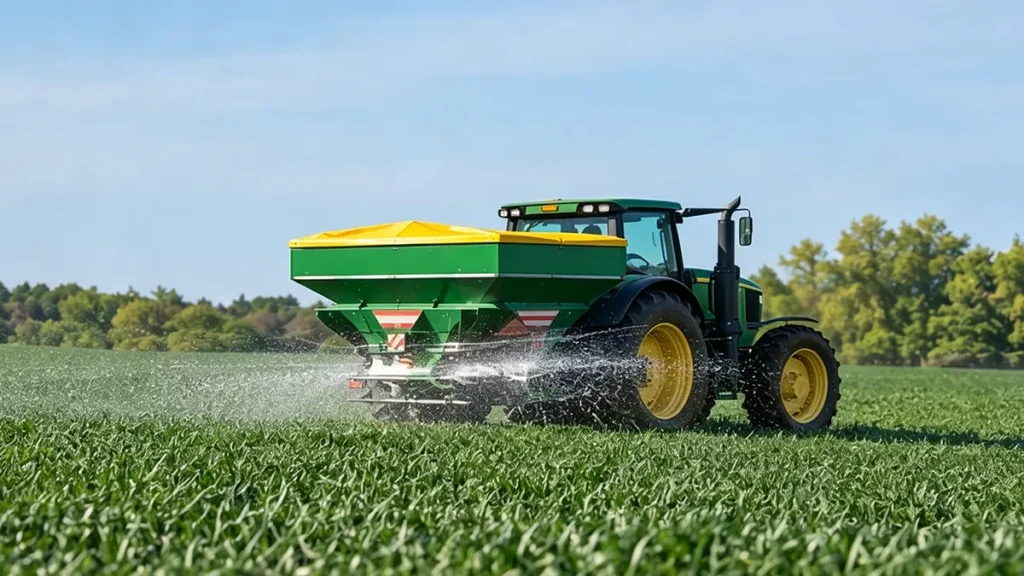
This is important when selecting an ASN rate because increasing the nitrogen supplied by ASN also increases the amount of sulfur applied.
For example, if a field requires 120 kg N/ha and ASN 26-0-0+13S is used as the sole nitrogen source:
120 ÷ 0.26 = 462 kg ASN/ha
That application would also supply approximately:
462 × 0.13 = 60 kg S/ha
If the crop requires substantially less sulfur than this, another nitrogen fertilizer may provide a better nutrient balance.
The appropriate timing depends on crop nutrient demand, soil conditions and the risk of nitrogen or sulfur loss.
It may be suitable when:
However, applying all of the season’s nitrogen too early is not always the best approach.
On sandy soils or fields exposed to heavy rainfall, nitrate and sulfate can move through the soil profile before crop roots fully develop. In these situations, part of the nitrogen may be better applied closer to the period of peak crop demand.
This approach is particularly useful for crops with substantial nutrient demand during active vegetative growth.
For winter wheat, nitrogen uptake increases considerably as the crop moves through spring growth toward stem elongation and heading. University of Minnesota Extension identifies the period from jointing to heading as an important phase for nitrogen uptake.
Top dressing ASN during this period can therefore be considered when additional nitrogen and sulfur are required.
The application should be timed early enough for nutrients to become available before the crop reaches its highest demand.
The best method depends on crop production practices and available equipment.
It is commonly used for:
Uniform spreading is essential.
A fertilizer spreader should be calibrated using the actual ASN product because granule size, density and flow characteristics can affect application rate.
It can improve placement precision and reduce the amount of fertilizer outside the main crop root zone.
However, because fertilizer concentration is higher within the band, placement relative to seed is important.
For starter or near-seed applications, crop-specific recommendations should be followed rather than assuming that a particular ASN rate is safe for all crops.
Rainfall or irrigation can move soluble nitrogen and sulfate into the soil where plant roots can access them.
Weather forecasts should therefore be considered when scheduling the application.
Heavy rainfall immediately after application can increase nutrient movement, especially on coarse-textured soils.
Incorporation can place nutrients closer to the developing root zone, but it is not necessary for every ASN application.
The decision should consider:
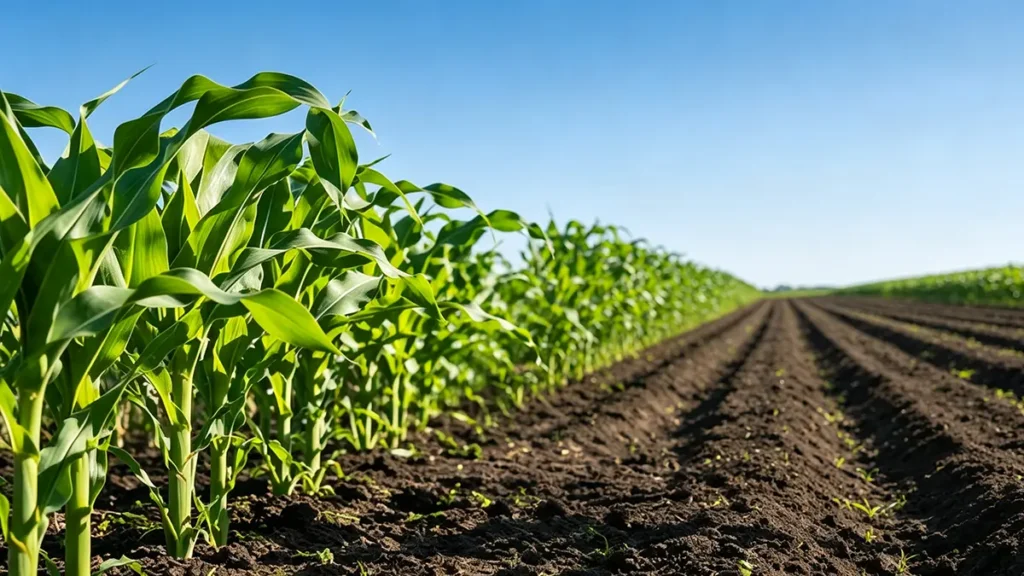
The starting point should always be the crop’s nitrogen and sulfur requirements.
For ASN 26-0-0+13S:
For example, if a crop requires 100 kg N/ha from ASN:
100 ÷ 0.26 = 385 kg ASN/ha
The resulting application supplies approximately:
385 × 0.13 = 50 kg S/ha
Therefore:
385 kg ASN/ha = approximately 100 kg N + 50 kg S
This calculation should then be compared with the field’s actual sulfur requirement.
Consider a wheat field with a total nitrogen requirement of:
150 kg N/ha
Suppose soil nitrogen and other nutrient credits are expected to supply:
60 kg N/ha
The fertilizer program therefore needs:
150 − 60 = 90 kg N/ha
Using ASN 26-0-0+13S:
90 ÷ 0.26 = 346 kg ASN/ha
This provides:
This example shows why an ASN fertilizer application rate per hectare should be calculated from nutrient requirements rather than selected from a generic product rate.
If the field requires 90 kg N/ha but only 20–30 kg S/ha, the sulfur contribution from ASN should be considered when designing the complete fertilizer program.
For winter wheat, spring nitrogen management is particularly important. Nitrogen uptake increases as the crop moves into rapid vegetative growth and reproductive development.
ASN can be used in wheat as:The goal is to provide enough nitrogen for yield formation without applying substantially more sulfur or nitrogen than the crop requires.
Corn has a high nitrogen requirement, but the best application strategy depends strongly on soil and weather conditions.
ASN can be used for:Split application can be useful where nitrogen loss risk is high or where crop demand increases significantly after establishment.
However, field research does not show that split application automatically produces higher yields in every situation. Soil type, rainfall and drainage can influence the response.
For corn, the fertilizer program should therefore be based on field conditions rather than a fixed application schedule.
Sulfur is involved in amino acid and protein formation and is required for normal crop development. Where soil sulfur availability is inadequate, yield and crop quality can be affected.
Canola guidance recommends supplying sulfur early enough to meet crop demand and identifies sulfate fertilizers as readily available sulfur sources.
ASN can be useful in these situations because it supplies both nitrogen and sulfate sulfur.
A practical calculation is:
Determine N requirement → calculate ASN rate → calculate S supplied → compare with S requirement
If the resulting sulfur rate is higher than required, the remaining nitrogen requirement may need to be supplied from another fertilizer source.
This is particularly important for malting barley, where grain protein requirements can differ from those of feed barley.
ASN can be considered where both nitrogen and sulfur are required, but the nitrogen rate should be aligned with the intended end use and local agronomic recommendations.
Vegetable production generally requires careful fertilizer placement because nutrient demand can be high and crop value per hectare can be substantial.
Depending on the production system, ASN may be broadcast and incorporated, banded near the root zone, or applied as a top dressing.
Application rates should be determined from crop nutrient requirements rather than using field-crop rates.
Barley responds to nitrogen, but the optimum rate depends on yield target and end use.
This is particularly important for malting barley, where grain protein requirements can differ from those of feed barley.
ASN can be considered where both nitrogen and sulfur are required, but the nitrogen rate should be aligned with the intended end use and local agronomic recommendations.
Barley responds to nitrogen, but the optimum rate depends on yield target and end use.
This is particularly important for malting barley, where grain protein requirements can differ from those of feed barley.
ASN can be considered where both nitrogen and sulfur are required, but the nitrogen rate should be aligned with the intended end use and local agronomic recommendations.

Nitrate and sulfate are mobile in soil, so heavy rainfall or irrigation can move these nutrients below the active root zone.
For this reason, split applications may be useful on some sandy soils, particularly when rainfall is high.
Sulfate leaching is also more likely in coarse-textured soils.
A single application may be suitable when nutrient loss risk is low, while split applications can still be useful when rainfall or crop demand makes timing important.
Therefore, fertilizer timing should consider drainage and expected rainfall.
Applying large amounts of nitrogen immediately before prolonged saturation is generally undesirable.
But this does not mean that every crop requires additional sulfur.
Sulfur availability depends on:
Sulfate is readily available to plants, while elemental sulfur must first undergo microbial oxidation.
This distinction matters when a crop has an immediate sulfur requirement.
For canola and other sulfur-responsive crops, sulfate-based fertilizers can provide sulfur during the current growing season.
The main disadvantage is additional cost and field operations.
Therefore, split application should be used when field conditions justify it, not as a universal rule.
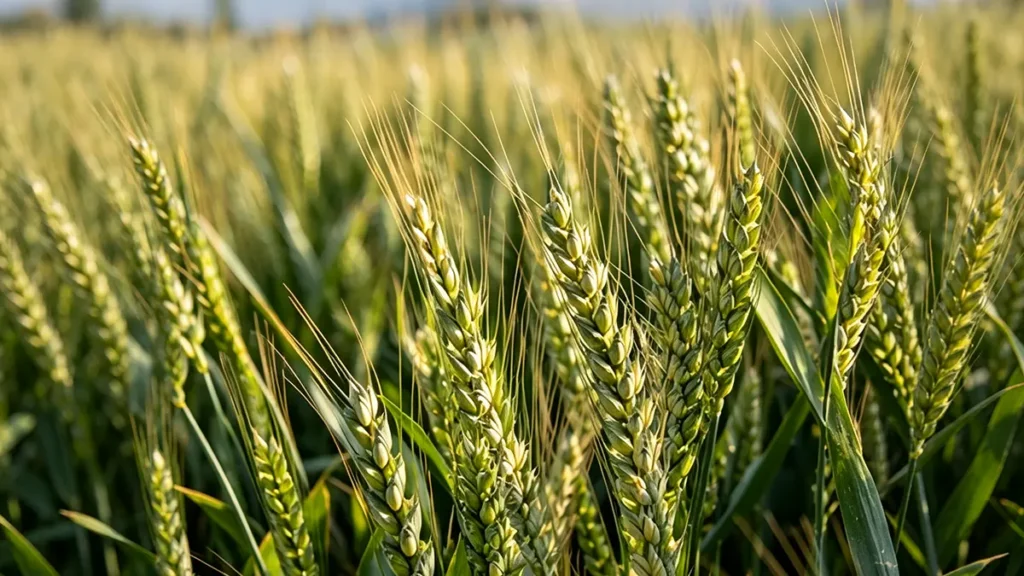
A nitrogen-based calculation should always be followed by a sulfur calculation.
However, this does not mean that 600 kg/ha is appropriate for every crop.
For ASN 26-0-0+13S:
The correct rate depends on the field’s nutrient requirements.
A general reference range for some commercial ASN products is 150–600 kg/ha, but this is not a universal recommendation. The appropriate rate depends on crop nutrient requirements, soil nutrient supply, yield target and the amount of nitrogen and sulfur supplied by other fertilizers.
Every 100 kg of ASN 26-0-0+13S provides approximately 26 kg of nitrogen.
At 13% sulfur, every 100 kg of product provides approximately 13 kg of sulfur.
ASN can be applied before planting, at planting, as a top dressing or in split applications. The best timing depends on crop nutrient demand, soil conditions and the risk of nutrient loss.
Yes. ASN can be used for wheat when both nitrogen and sulfur are required. For winter wheat, spring applications should be timed according to crop development and nitrogen demand.
Yes. ASN can be used as part of a corn nitrogen and sulfur program. Depending on field conditions, it can be applied before planting, early in the season or as a sidedress.
Yes. Canola and rapeseed have relatively important sulfur requirements, making ASN a suitable option where both nitrogen and sulfur are needed.
Yes. Granular ASN can be applied as a top dressing when additional nitrogen and sulfur are required during crop growth.
Neither fertilizer is universally better.
Urea provides a higher concentration of nitrogen, while ASN supplies both nitrogen and sulfur. Where sulfur is required, ASN may simplify the fertilizer program by supplying both nutrients in one product.
The comparison should consider cost per unit of N and S, crop response, application method, soil conditions and nutrient requirements, rather than comparing fertilizer prices per tonne alone.
For ASN 26-0-0+13S:
100 kg ASN = 26 kg N + 13 kg S
The correct application strategy can be summarized in three steps:
1. Determine how much nitrogen and sulfur the crop requires.
2. Calculate how much ASN is needed to supply the required nitrogen.
3. Check whether the resulting sulfur rate matches the crop and soil requirements.
Timing and placement should then be adjusted according to crop development, soil texture, drainage, rainfall and the production system.
For wheat, spring nitrogen demand is an important consideration. For canola and rapeseed, sulfur availability deserves particular attention. For corn, soil and weather conditions can influence whether a single or split application is appropriate.
The important point is that ASN should not be applied according to a fixed kilograms-per-hectare number alone. A technically sound program starts with N requirement, S requirement and existing soil nutrient supply, then selects the fertilizer rate.
For fertilizer importers, distributors and commercial growers, Risso ASN 26-0-0+13S is one available granular ASN specification for consideration. Current product specifications, packaging, quality parameters and COA should be confirmed directly before purchase or field application.
If you want to know other questions about nitrogen fertilizers, please contact us and we will provide professional answers.
✔ Quick & helpful reply within 6 hours.
✔ Tailored solutions for your project.
✔ One-stop product, tech, market

Want to find a China fertilizer manufacturer?
Risso will be your best choice; send us your request for your fertilizer details requirement
© Copyright 2017 RISSO CHEMICAL. All Rights Reserved.