














2026-09-15
Select language:

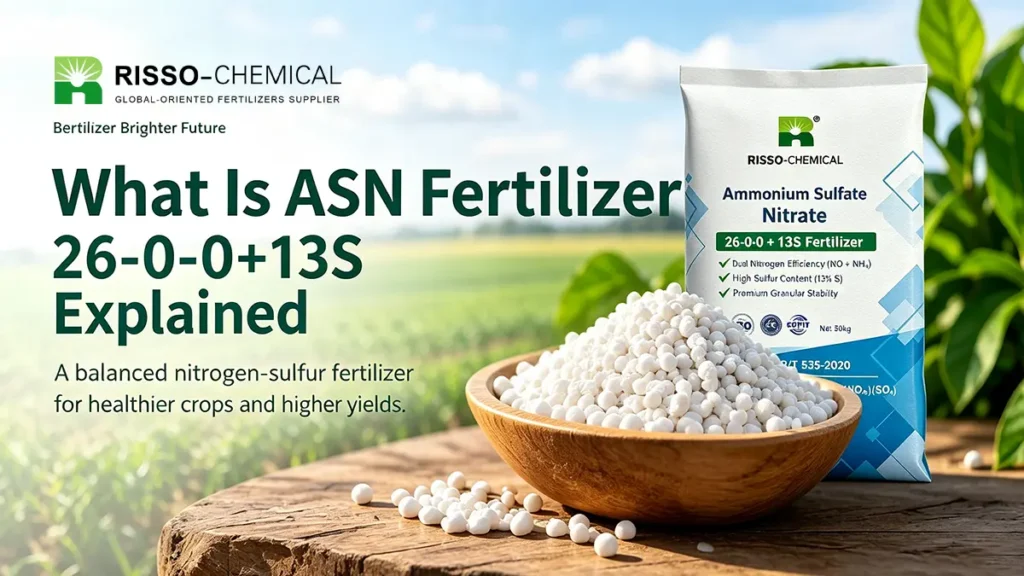
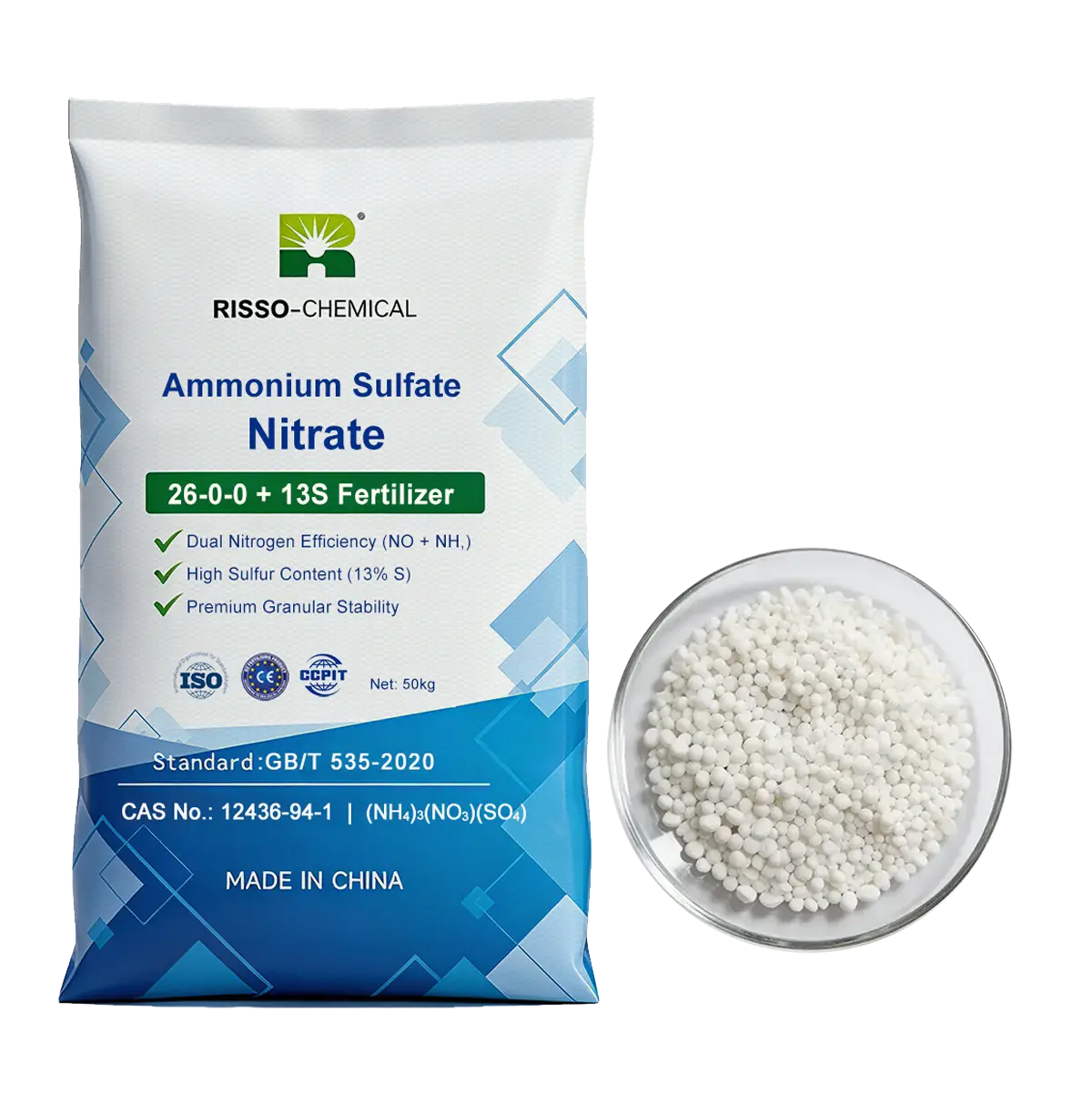
ASN fertilizer, short for Ammonium Sulfate Nitrate, is a granular nitrogen-sulfur fertilizer that supplies nitrogen in both nitrate and ammonium forms together with sulfur. One of the common commercial grades is ASN 26-0-0+13S, containing 26% total nitrogen and 13% sulfur.
For growers, fertilizer distributors, and agricultural buyers, ASN is particularly relevant when a crop needs both nitrogen and sulfur. Its nitrate nitrogen is readily available for plant uptake, while ammonium nitrogen provides a complementary nitrogen source. The sulfur is supplied mainly in sulfate form, which is available to plants.
Risso supplies granular ASN fertilizer for agricultural and commercial fertilizer markets, with product specifications designed around the commonly traded 26-0-0+13S grade.
ASN stands for Ammonium Sulfate Nitrate. It is a dry granular fertilizer containing:
Unlike urea, which is primarily a concentrated nitrogen fertilizer, ASN combines nitrogen and sulfur in the same granule. This makes it useful for nutrient programs where both elements are required.
The exact nitrogen distribution can vary between products. A typical ASN 26-0-0+13S specification contains approximately 7–8% nitrate nitrogen and 18–19% ammonium nitrogen, although buyers should always refer to the supplier’s current TDS and COA for the exact specification.
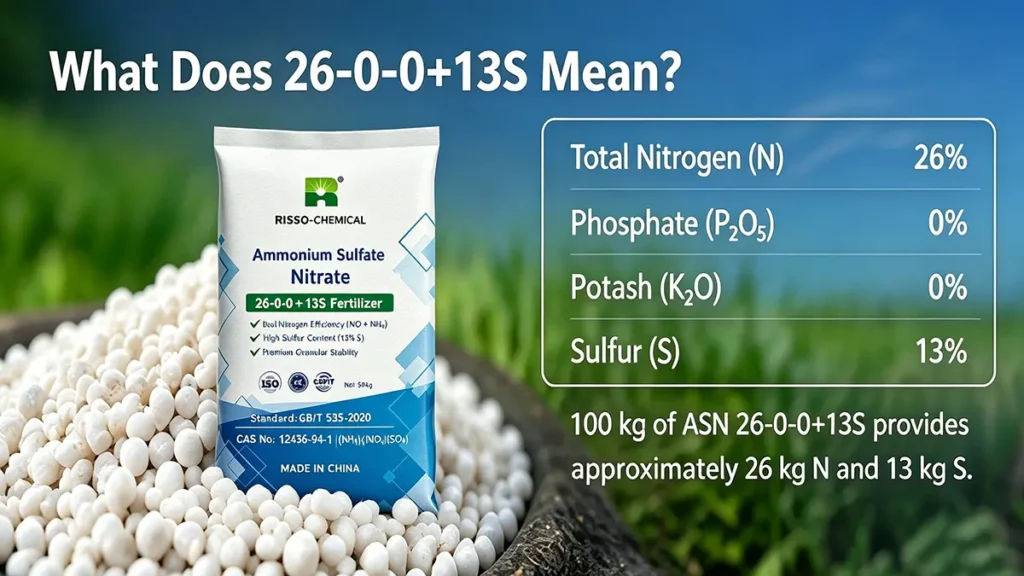
| Nutrient | Content |
|---|---|
| Total Nitrogen (N) | 26% |
| Phosphate (P₂O₅) | 0% |
| Potash (K₂O) | 0% |
| Sulfur (S) | 13% |
| ASN Rate | Nitrogen | Sulfur |
|---|---|---|
| 100 kg/ha | 26 kg/ha | 13 kg/ha |
| 200 kg/ha | 52 kg/ha | 26 kg/ha |
| 300 kg/ha | 78 kg/ha | 39 kg/ha |
| 400 kg/ha | 104 kg/ha | 52 kg/ha |
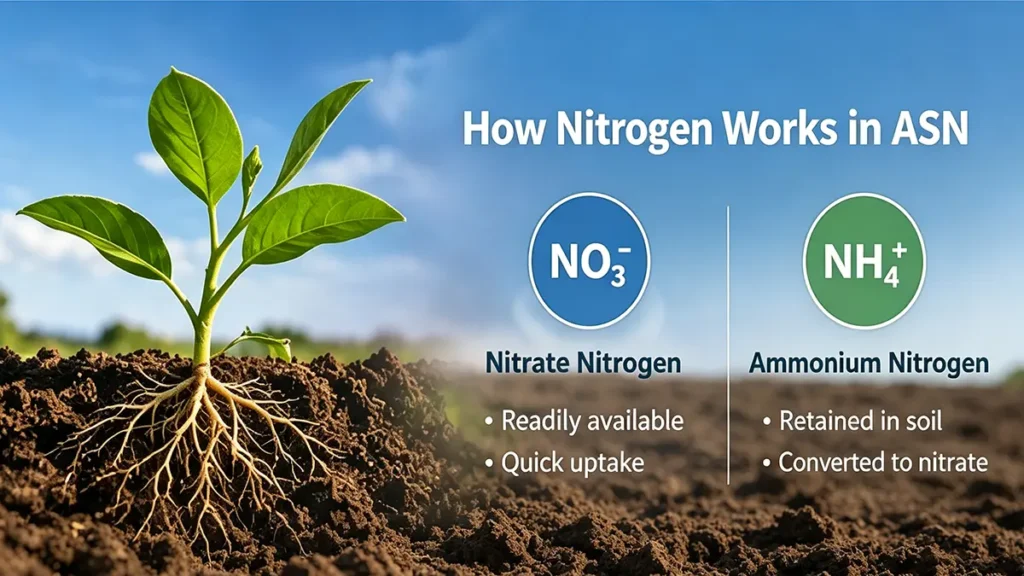
Ammonium nitrogen is positively charged and can be retained on soil exchange sites. Under suitable soil conditions, microorganisms gradually convert ammonium into nitrate through nitrification.
The combination gives ASN a complementary nitrogen profile: readily available nitrate-N together with ammonium-N that participates in the soil nitrogen cycle.
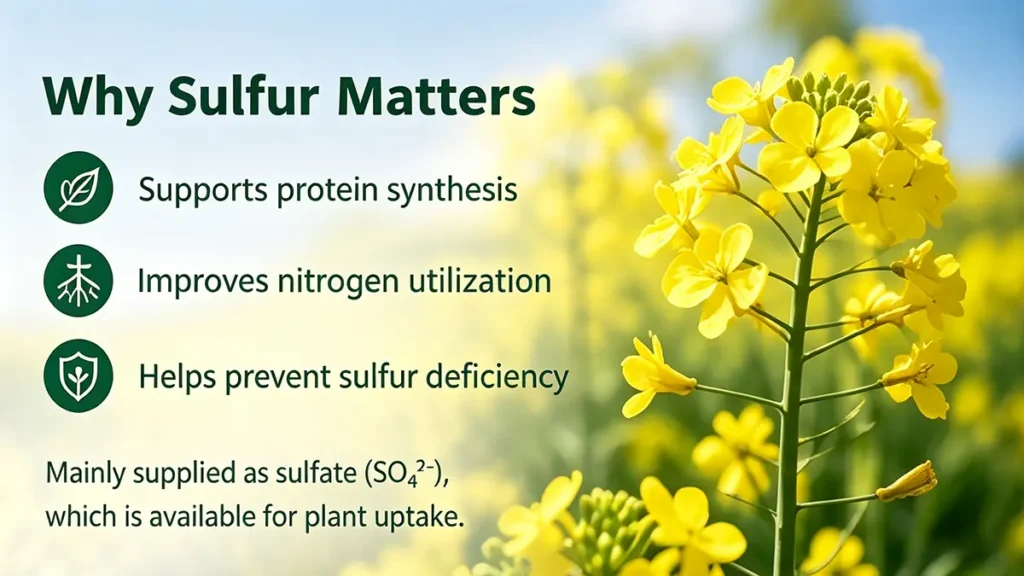
Sulfur is essential for plant protein synthesis and is closely associated with efficient nitrogen utilization.
Plants primarily take up sulfur as sulfate (SO₄²⁻). Sulfur deficiency is more likely in some high-yield cropping systems, particularly where soils have low organic matter, sulfate losses are significant, or atmospheric sulfur deposition is limited.
Crops such as wheat, canola, rapeseed and other high-yield crops may require additional sulfur depending on soil conditions and expected yield.
This is one of the main reasons ASN can be considered when a nitrogen-only fertilizer does not provide the desired nutrient balance.
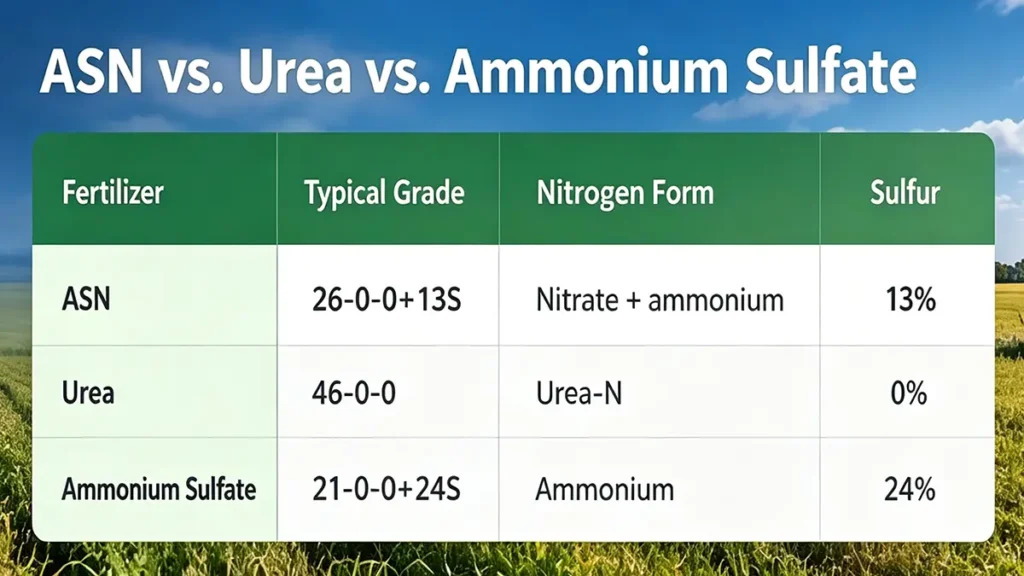
| Fertilizer | Typical Grade | Nitrogen Form | Sulfur |
|---|---|---|---|
| ASN | 26-0-0+13S | Nitrate + ammonium | 13% |
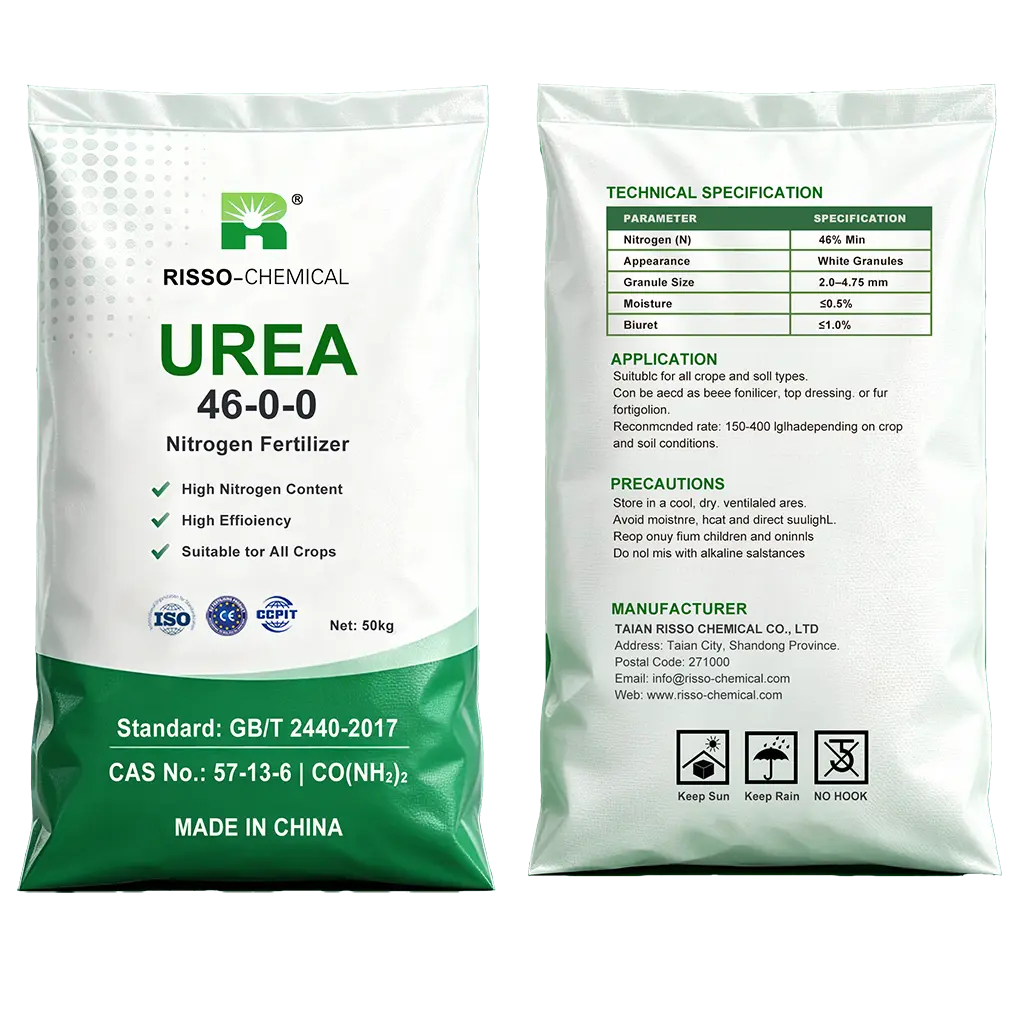
| Urea | 46-0-0 | Urea-N | 0% |
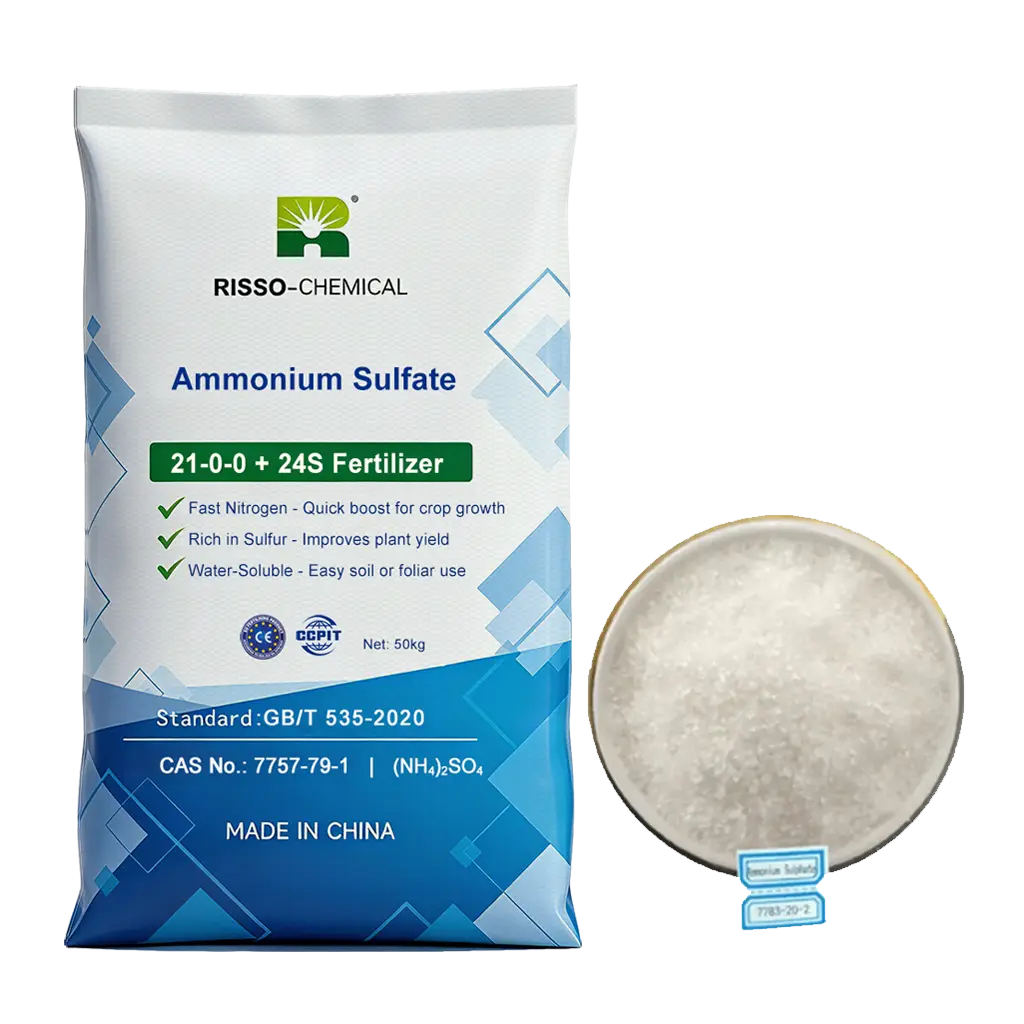
| Ammonium Sulfate | 21-0-0+24S | Ammonium | 24% |
Urea has a higher nitrogen concentration, so less product is required to supply the same amount of nitrogen. However, it does not provide sulfur.
Ammonium sulfate provides more sulfur but supplies nitrogen primarily as ammonium.
ASN occupies a different position by combining nitrate nitrogen, ammonium nitrogen and sulfur in one granular fertilizer.
Therefore, the best fertilizer depends on crop requirements, soil nutrient status, application timing and the required nitrogen-to-sulfur ratio, rather than nitrogen concentration alone.
ASN should not be applied at a fixed rate across all crops. The appropriate rate depends on the field’s nutrient status and the crop’s actual requirement.
For ASN 26-0-0+13S:
ASN rate = Required nitrogen ÷ 0.26
For example, if the crop requires 150 kg N/ha:
150 ÷ 0.26 = 577 kg ASN/ha
This amount would also provide approximately:
577 × 0.13 = 75 kg S/ha
This calculation demonstrates an important consideration: when ASN is used to meet nitrogen requirements, sulfur is automatically applied at the corresponding 13% rate.
If the crop needs substantial nitrogen but relatively little sulfur, another nitrogen source may provide a better nutrient balance.
For commercial fertilizer procurement, the grade printed on the bag is only the starting point.
Buyers should check:
Physical quality is particularly important for granular fertilizer. Consistent granule size and strength can improve handling, storage and mechanical spreading.
For international procurement, the actual batch COA should be checked against the agreed product specification before shipment.
ASN stands for Ammonium Sulfate Nitrate. It is a granular nitrogen-sulfur fertilizer containing nitrate nitrogen, ammonium nitrogen and sulfur.
It is a fertilizer grade containing 26% total nitrogen and 13% sulfur, with no declared phosphate or potash.
A 26-0-0+13S fertilizer provides approximately 26 kg of nitrogen per 100 kg of product.
At the 13S grade, 100 kg of ASN supplies approximately 13 kg of sulfur.
Yes. Nitrate is a plant-available nitrogen form that can be directly taken up by crop roots.
Not necessarily. Urea provides more nitrogen per kilogram of product, while ASN supplies both nitrogen and sulfur and provides nitrogen in nitrate and ammonium forms. The appropriate choice depends on crop and soil requirements.
ASN contains both nitrate and ammonium nitrogen and typically 13% sulfur in the 26-0-0+13S grade. Ammonium sulfate generally contains about 21% nitrogen and 24% sulfur, with nitrogen supplied primarily as ammonium.
Yes. ASN can be used in wheat where both nitrogen and sulfur are required. The application rate and timing should be based on soil conditions, crop demand and local fertilizer recommendations.
ASN 26-0-0+13S is a granular N+S fertilizer supplying 26% nitrogen and 13% sulfur. Its key technical feature is the combination of readily available nitrate nitrogen, ammonium nitrogen and sulfate sulfur in one product.
Compared with urea, ASN provides less nitrogen per unit of fertilizer but adds sulfur and a nitrate-N component. Compared with ammonium sulfate, ASN provides a combination of nitrate and ammonium nitrogen while supplying less sulfur.
For growers and fertilizer distributors, ASN is most useful when nitrogen and sulfur need to be supplied together. The correct application rate should be determined from soil nutrient status, crop demand, expected yield and the desired N:S balance.
For commercial buyers, Risso provides ASN fertilizer in the commonly traded 26-0-0+13S grade, with product specifications and quality documentation available for international fertilizer procurement.
Ultimately, ASN should not be selected simply because it contains 26% nitrogen. Its value lies in the combination of nitrogen forms and sulfur, which can make it a practical option for balanced crop nutrition where both nutrients are required.
If you want to know other questions about nitrogen fertilizers, please contact us and we will provide professional answers.
✔ Quick & helpful reply within 6 hours.
✔ Tailored solutions for your project.
✔ One-stop product, tech, market

Want to find a China fertilizer manufacturer?
Risso will be your best choice; send us your request for your fertilizer details requirement
© Copyright 2017 RISSO CHEMICAL. All Rights Reserved.