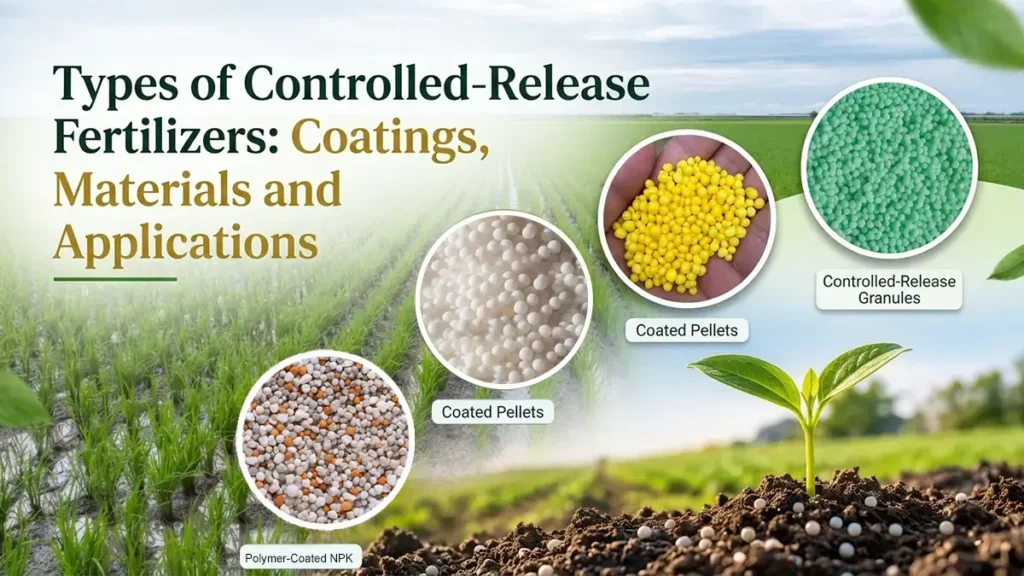
Controlled-release fertilizers (CRFs) are designed to regulate the availability of plant nutrients over a specified period. By using protective coatings or carrier materials, these fertilizers release nutrients more gradually than conventional water-soluble fertilizers, helping match nutrient supply with crop requirements.
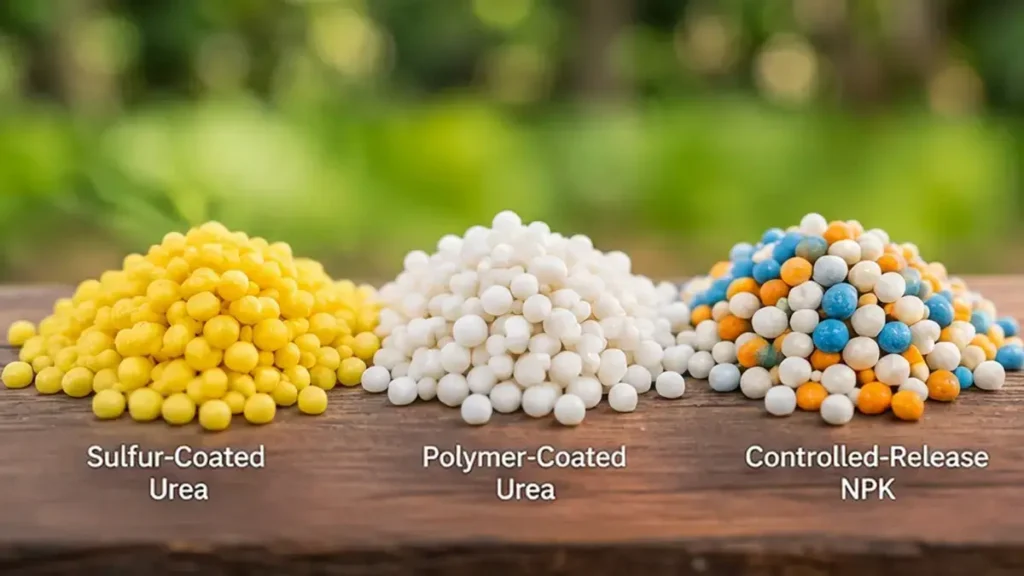
Common types include polymer-coated urea, sulfur-coated urea, polymer-sulfur coated fertilizers, controlled-release NPK, and biodegradable polymer-based fertilizers. Each technology differs in coating composition, nutrient-release mechanism, production cost, and suitability for specific crops and growing conditions.
The performance of a controlled-release fertilizer depends on several factors, including coating thickness, membrane permeability, granule quality, soil temperature, moisture availability, and fertilizer placement. Understanding these factors is essential when selecting fertilizers for field crops, rice, vegetables, fruit trees, and horticultural production.
This article examines the main types of controlled-release fertilizers, commonly used coating materials, nutrient-release mechanisms, agricultural applications, and key considerations for fertilizer selection.
Controlled-release fertilizers are products in which nutrient release is regulated to achieve a specified release rate and duration under defined conditions.
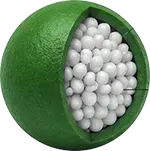
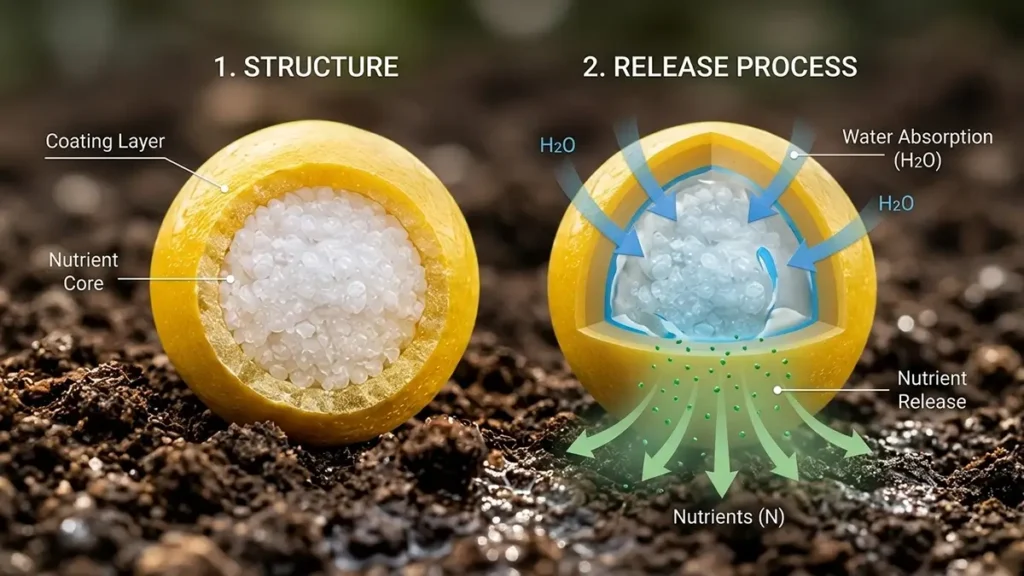
Most coated controlled-release fertilizers contain a water-soluble nutrient core surrounded by a protective layer. The coating regulates water entry and the movement of dissolved nutrients into the surrounding soil.
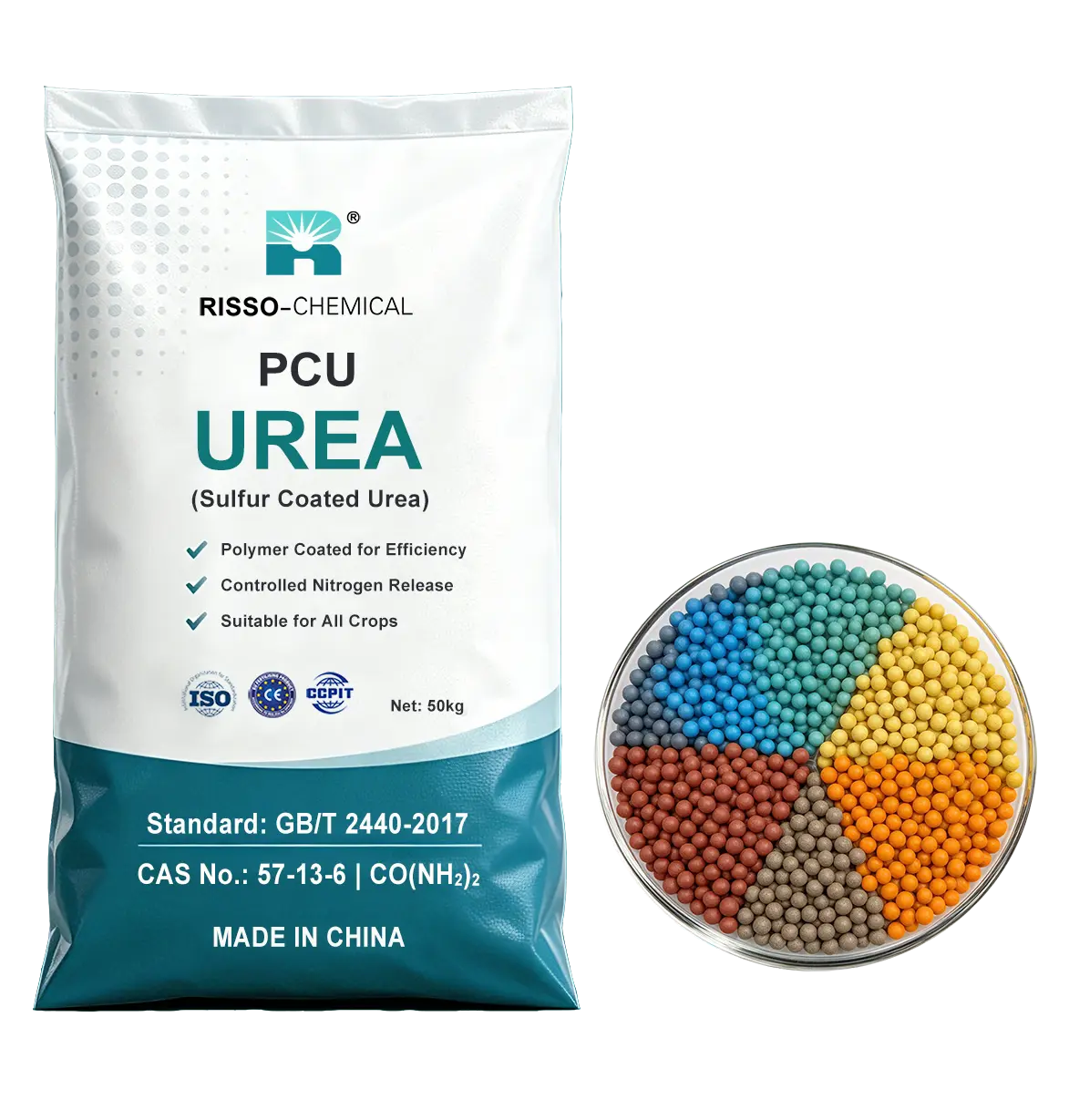
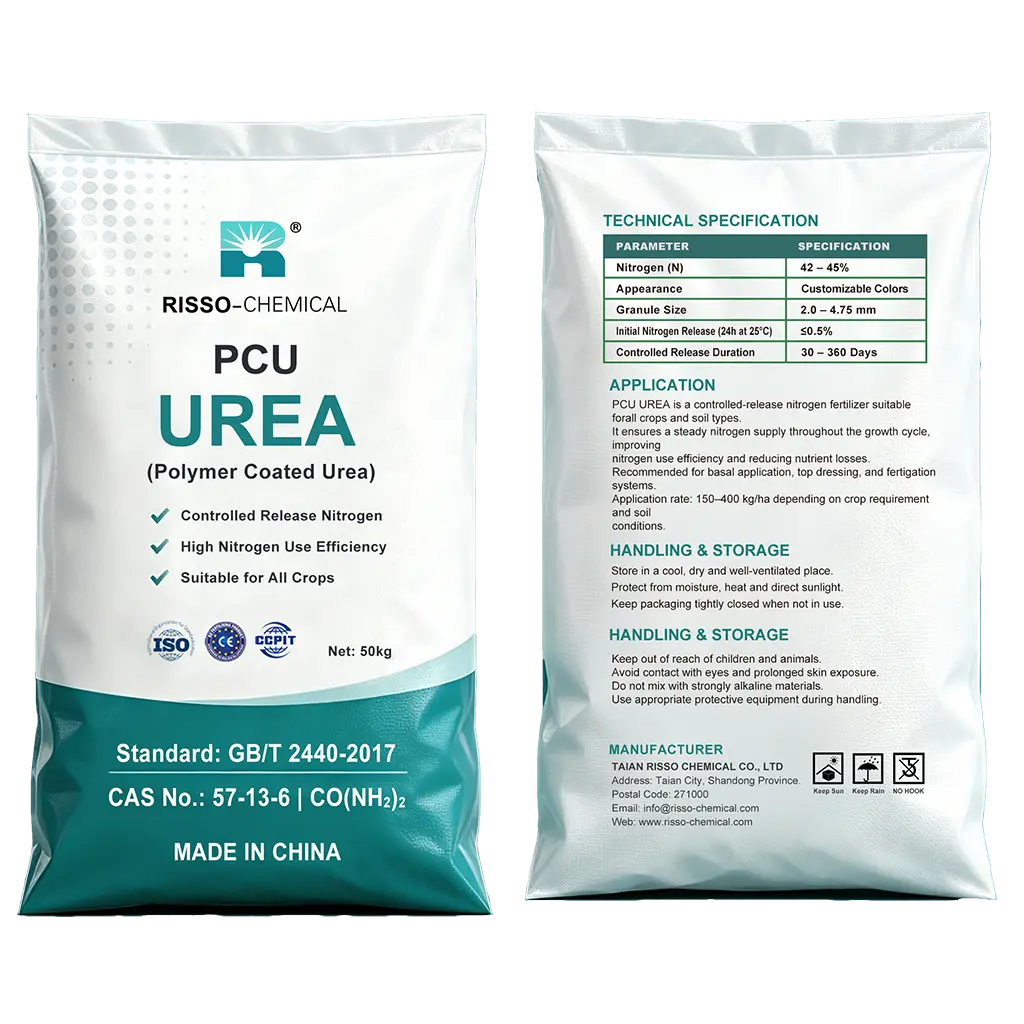
For example, polymer-coated urea uses a polymer membrane to slow the dissolution and release of nitrogen. Depending on the coating formulation and thickness, the product can be designed for different release periods.
Main Characteristics
| Characteristic | Description |
|---|
| Nutrient sources | Urea, compound NPK and other soluble nutrients |
| Release mechanism | Water penetration followed by nutrient diffusion |
| Coating materials | Sulfur, polyurethane, polyolefin and other polymers |
| Release duration | Depends on formulation and testing conditions |
| Main influencing factors | Temperature, moisture, coating properties and soil conditions |
| Common applications | Field crops, rice, vegetables, fruit trees and horticulture |
Controlled-release fertilizers are part of the broader enhanced-efficiency fertilizer category. Their main purpose is to regulate nutrient availability, rather than simply increase the total nutrient content.
Most coated controlled-release fertilizers operate through three basic processes: water penetration, nutrient dissolution, and nutrient diffusion.
2.1 Water Penetration
After application, soil moisture gradually penetrates the fertilizer coating and reaches the nutrient core. The speed of water entry depends on coating thickness, permeability, porosity, and environmental conditions.
2.2 Nutrient Dissolution and Diffusion
Nutrients then move through the coating into the surrounding soil solution.
A simplified diffusion relationship is:
Where
- J = Nutrient diffusion flux.
- Deff = Effective diffusion coefficient.
- Ci − Co = Nutrient concentration difference.
- L = Effective coating thickness.
In general, lower membrane permeability and greater coating thickness can slow nutrient transport. Actual release behavior also depends on coating defects, swelling, and changes in polymer structure.
2.3 Nutrient-Release Stages
Many coated fertilizers exhibit three general release stages:
| Stage |
Process |
Characteristics |
| Initial lag phase |
Water enters the coating and dissolves nutrients |
Relatively low initial release |
| Sustained release phase |
Dissolved nutrients diffuse outward |
Main nutrient-release period |
| Final release phase |
Nutrient core becomes depleted |
Release rate gradually declines |
Coating defects can cause premature or burst release. Conversely, a coating with excessively low permeability may delay nutrient availability beyond the crop’s early growth requirements.
The objective is to establish a release profile that matches the intended crop cycle.
3. Main Types of Controlled-Release Fertilizers
Controlled-release fertilizers are mainly classified according to their coating materials and nutrient-release systems.
3.1 Sulfur-Coated Urea (SCU)
Sulfur-coated urea consists of conventional urea granules covered with an elemental sulfur layer. The sulfur coating acts as a physical barrier, slowing water penetration and nitrogen release.
Some products include an additional sealant layer to cover surface imperfections and improve coating integrity.
Advantages:
-
Relatively low-cost coating material.
-
Provides nitrogen and sulfur.
-
Can delay the initial dissolution of urea.
-
Suitable for certain bulk fertilizer applications.
Limitations:
Sulfur coatings are relatively brittle. Cracks, pinholes, or incomplete coverage can allow water to reach the urea core, resulting in uneven nitrogen release. For this reason, coating quality and sealing technology are important to product performance.
3.2 Polymer-Coated Urea (PCU)
Polymer-coated urea is one of the most widely studied controlled-release nitrogen fertilizers.
A polymer membrane surrounds each urea granule and regulates the movement of water into the fertilizer and dissolved nitrogen out of it.
Common coating materials include polyurethane, polyethylene, polyolefin, and other synthetic polymer systems.
The release characteristics can be adjusted by changing polymer composition, coating thickness, and membrane permeability.
Advantages:
-
Adjustable nitrogen-release periods.
-
Better control over nutrient diffusion.
-
Potentially more consistent nitrogen supply.
-
Suitable for different crop cycles and fertilizer programs.
Limitations:
Polymer-coated urea generally has a higher production cost than conventional urea. Coating damage can affect release consistency, while the environmental persistence of some synthetic polymers requires consideration.
A 2026 systematic review of 34 coating-engineered controlled-release urea studies reported experimental coating thicknesses of approximately 40–170 μm and release periods of 20–150 days. These figures represent research formulations, not universal commercial specifications.
3.3 Polymer-Sulfur Coated Urea (PSCU)
Polymer-sulfur coated urea combines a sulfur layer with an additional polymer coating.
The polymer layer helps seal imperfections in the sulfur coating, reducing direct water entry through cracks and weak points.
This composite structure aims to balance coating cost, mechanical durability, and nitrogen-release performance.
The main technical considerations are coating uniformity, adhesion between layers, and resistance to damage during transportation and application.
3.4 Controlled-Release NPK Fertilizers
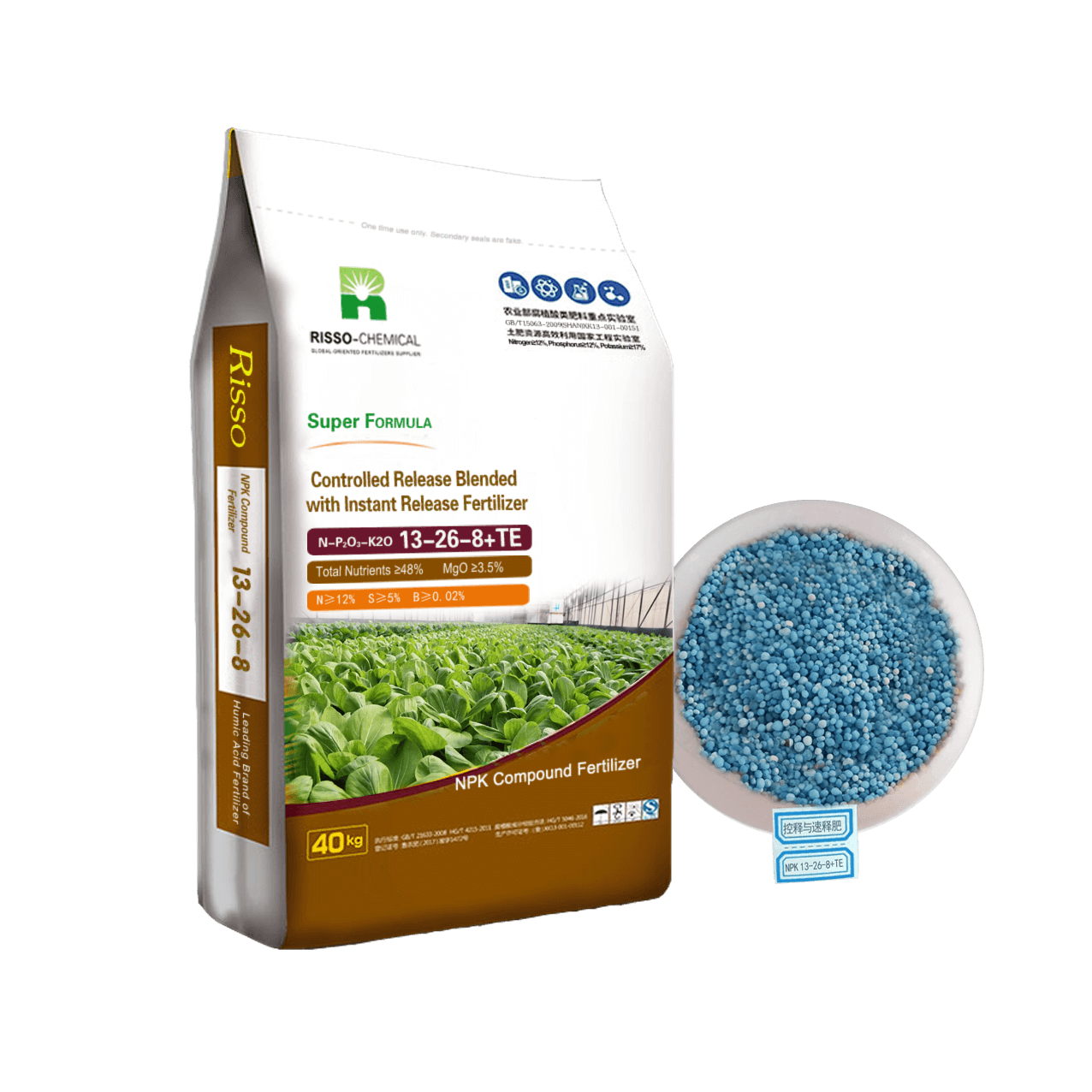
Controlled-release NPK fertilizers provide nitrogen, phosphorus, and potassium in a formulation designed to regulate nutrient availability.
Two product structures are important:
-
Fully coated NPK: Compound fertilizer granules are covered with a coating that regulates nutrient release.
-
Controlled-release NPK blend: Controlled-release nitrogen sources are combined with conventional NPK nutrients.
The second type may provide gradual nitrogen supply while phosphorus, potassium, and part of the nitrogen are available relatively quickly.
Buyers should check whether the coating regulates all three nutrients or primarily the nitrogen fraction.
Important specifications include NPK ratio, controlled-release nutrient content, coating type, release duration, and granule size.
3.5 Biodegradable Polymer-Coated Fertilizers
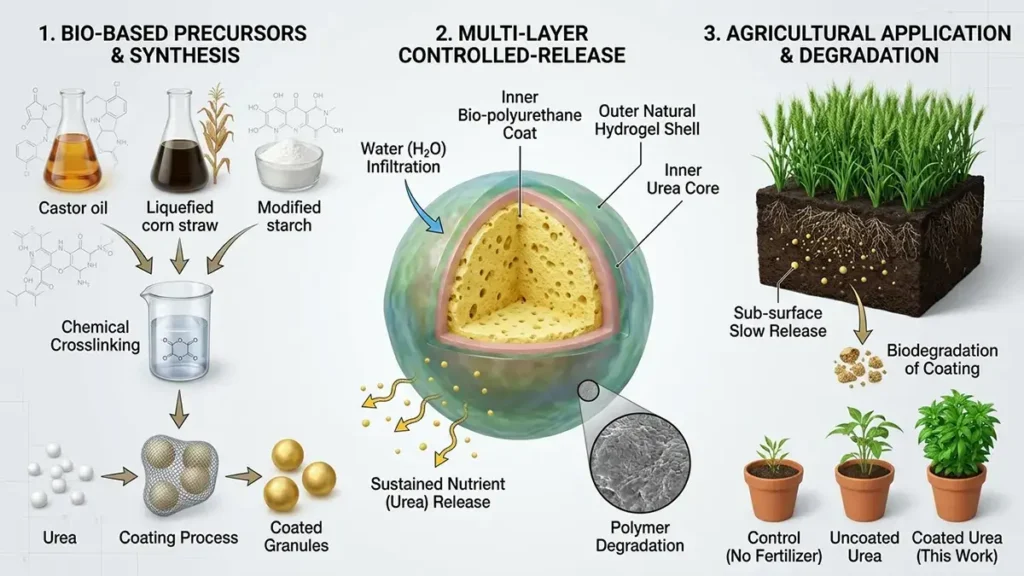
Biodegradable polymer coatings are being developed to reduce the persistence of conventional synthetic coating materials in agricultural soil.
Research materials include starch, cellulose, chitosan, lignin, and bio-based polyurethane.
Their main challenge is balancing water resistance with mechanical strength and controlled nutrient release. Many natural polymers absorb water readily and therefore require modification, blending, or crosslinking.
It is also important to distinguish bio-based materials from biodegradable materials. Renewable raw materials do not automatically make a finished coating biodegradable. Environmental claims should be supported by appropriate degradation testing.
Comparison of Main Controlled-Release Fertilizers
| Type |
Main material |
Main advantage |
Main limitation |
| SCU |
Elemental sulfur |
Relatively economical |
Brittle coating |
| PCU |
Synthetic polymers |
Adjustable release rate |
Higher cost |
| PSCU |
Sulfur and polymer |
Combined coating properties |
Layer adhesion |
| Controlled-release NPK |
Polymer-coated compound fertilizer |
Multiple nutrient supply |
Formulation complexity |
| Biodegradable coated fertilizer |
Starch, cellulose, bio-based polymers |
Potentially reduced persistent residues |
Water sensitivity |
4. Common Coating Materials
The performance of controlled-release fertilizers depends heavily on the coating material’s permeability, mechanical strength, adhesion, and stability.
The most commonly discussed materials include:
| Coating material |
Main characteristics |
Typical role |
| Sulfur |
Relatively economical, but brittle |
Primary coating for urea |
| Polyurethane (PU) |
Adjustable permeability and mechanical strength |
Polymer-coated urea |
| Polyethylene (PE) |
Hydrophobic and moisture-resistant |
Protective coating |
| Polyolefin |
Low water permeability |
Long-duration coating systems |
| Alkyd resin |
Film-forming and curing properties |
Specialty fertilizer coatings |
| Starch and cellulose |
Renewable and film-forming |
Biodegradable coating research |
| Mineral materials |
Available as fillers and coating components |
Composite coating systems |
No single material is suitable for every fertilizer application. The appropriate coating depends on the required release duration, nutrient core, manufacturing process, and cost target.
The terms controlled-release fertilizer (CRF) and slow-release fertilizer (SRF) are often used interchangeably in commercial markets, but their technical definitions differ.
According to ISO 8157:2022, controlled-release fertilizer is defined by a specified nutrient-release rate and release time at a specified temperature.
Slow-release fertilizer, by comparison, spreads nutrient availability over time through mechanisms such as limited solubility, hydrolysis, or biodegradation.
| Comparison |
Controlled-Release Fertilizer |
Slow-Release Fertilizer |
| Release mechanism |
Coating or engineered matrix |
Low solubility, hydrolysis or biodegradation |
| Main nutrient source |
Usually soluble fertilizer compounds |
Less-soluble or chemically condensed nutrients |
| Release control |
Designed through formulation |
More dependent on soil conditions |
| Examples |
PCU, SCU and PSCU |
Urea-formaldehyde, methylene urea and IBDU |
Stabilized fertilizers are another category. Products containing urease inhibitors or nitrification inhibitors slow specific nitrogen transformation processes. They do not necessarily use a coating or physical barrier.
Understanding these differences helps fertilizer buyers compare products according to their actual nutrient-release mechanisms.
6. Factors Affecting Nutrient Release
A controlled-release fertilizer’s declared release period does not necessarily represent its exact performance under every field condition.
The main influencing factors are temperature, moisture, coating properties, and fertilizer quality.
6.1 Temperature
Temperature is one of the most important factors affecting polymer-coated fertilizer performance.
Higher temperatures generally accelerate water transport and nutrient diffusion, shortening the effective release period. Lower temperatures tend to slow these processes.
Many commercial horticultural fertilizers are evaluated at approximately 21–28°C, although the actual test temperature depends on the manufacturer and applicable method.
UC Nursery and Floriculture Alliance
This is particularly relevant in tropical markets, where soil temperatures may be higher than laboratory testing conditions.
6.2 Soil Moisture
Water is required for most coated fertilizers to release nutrients.
Insufficient moisture can delay water penetration and nutrient dissolution, while adequate moisture supports the release process.
However, heavy rainfall or excessive irrigation may still increase nutrient movement beyond the active root zone after nutrients have been released.
6.3 Coating Thickness and Uniformity
In general, thicker coatings increase the diffusion distance and can slow nutrient release.
Uneven coating coverage, cracks, and pinholes may have the opposite effect, allowing water to reach the fertilizer core prematurely.
Manufacturers therefore need to control both coating thickness and surface uniformity.
6.4 Soil and Crop Conditions
Soil texture, drainage, pH, and microbial activity can influence fertilizer performance, particularly for biodegradable and mineral-based systems.
Crop nutrient demand is equally important. A fertilizer releasing nutrients beyond the crop’s main growing period may not provide the intended agronomic benefit.
Key Factors at a Glance
| Factor |
General influence |
| High temperature |
Often accelerates release |
| Low soil moisture |
May delay nutrient release |
| Greater coating thickness |
Generally slows diffusion |
| Coating defects |
May cause premature release |
| Soil properties |
Influence nutrient availability |
| Crop growth duration |
Determines suitable release period |
7. Agricultural Applications
Controlled-release fertilizers are used in agricultural systems where nutrient supply needs to be maintained over an extended period.
7.1 Field Crops
Controlled-release urea and NPK fertilizers can be used in corn, wheat, cotton, and other field crops.
They can provide a more sustained nutrient supply when the release period is matched to crop development and fertilizer placement.
For corn, nitrogen availability during rapid vegetative growth is particularly important. For wheat, the fertilizer program should consider tillering, stem elongation, and grain development.
7.2 Rice Cultivation
Controlled-release nitrogen fertilizers can be considered for rice production where fertilizer management aims to improve nitrogen availability throughout the growing season.
However, flooded soil conditions influence nitrogen transformation and movement. Product selection should therefore be supported by local field trials and appropriate water-management practices.
7.3 Vegetables and Fruit Trees
Vegetables and fruit trees have different nutrient requirements and growing cycles.
Controlled-release NPK can be considered for tomatoes, peppers, cucumbers, citrus, apples, and other crops where a sustained supply of multiple nutrients is needed.
The product’s nutrient ratio and release duration should be selected according to crop requirements and soil testing.
7.4 Greenhouse, Nursery and Turfgrass
Controlled-release fertilizers are also used in container plants, nursery production, ornamental horticulture, golf courses, and landscape maintenance.
Products with different release periods allow growers to adjust nutrient supply to production cycles and local temperatures.
Application Guide
| Application |
Common fertilizer type |
Main consideration |
| Corn and wheat |
Controlled-release urea or NPK |
Seasonal nitrogen demand |
| Rice |
Controlled-release nitrogen |
Floodwater and soil conditions |
| Vegetables |
Controlled-release NPK |
Crop duration |
| Fruit trees |
Longer-duration NPK |
Seasonal nutrient supply |
| Greenhouse crops |
Polymer-coated NPK |
Growing media and irrigation |
| Turfgrass |
Controlled-release nitrogen |
Temperature and maintenance schedule |
8. How to Select the Right Controlled-Release Fertilizer
Selecting a suitable controlled-release fertilizer requires evaluating nutrient composition, release duration, climate, soil conditions, and product quality.
8.1 Nutrient Composition
Choose the formulation according to crop nutrient requirements.
-
Controlled-release urea: Mainly used to regulate nitrogen supply.
-
Controlled-release NPK: Provides a combined nutrient formulation.
-
Controlled-release blended fertilizer: Combines controlled-release nitrogen with conventional NPK nutrients.
Importers should confirm which nutrient fractions are controlled-release and which are immediately available.
8.2 Release Duration
The release period should correspond to the crop’s nutrient-demand cycle.
Common commercial options include 30, 60, 90, 120, and 180 days, while some specialty products offer longer periods.
These are product categories, not universal recommendations. Testing temperature and environmental conditions must be considered when comparing release durations.
8.3 Product Quality
Before purchasing, buyers should evaluate:
-
-
Controlled-release nutrient proportion.
-
-
Release duration and test temperature.
-
-
-
-
Nutrient-release test results.
A clear technical specification and batch COA are important for verifying product quality.
8.4 Manufacturer and Supply Capability
International buyers should also assess manufacturing capacity, production consistency, quality-control procedures, packaging, export experience, and the supplier’s ability to provide customized formulations.
Risso Fertilizer offers controlled-release urea, controlled-release NPK, and controlled-release blended fertilizers for different agricultural requirements.
Relevant product information:
9. Manufacturing and Quality Control
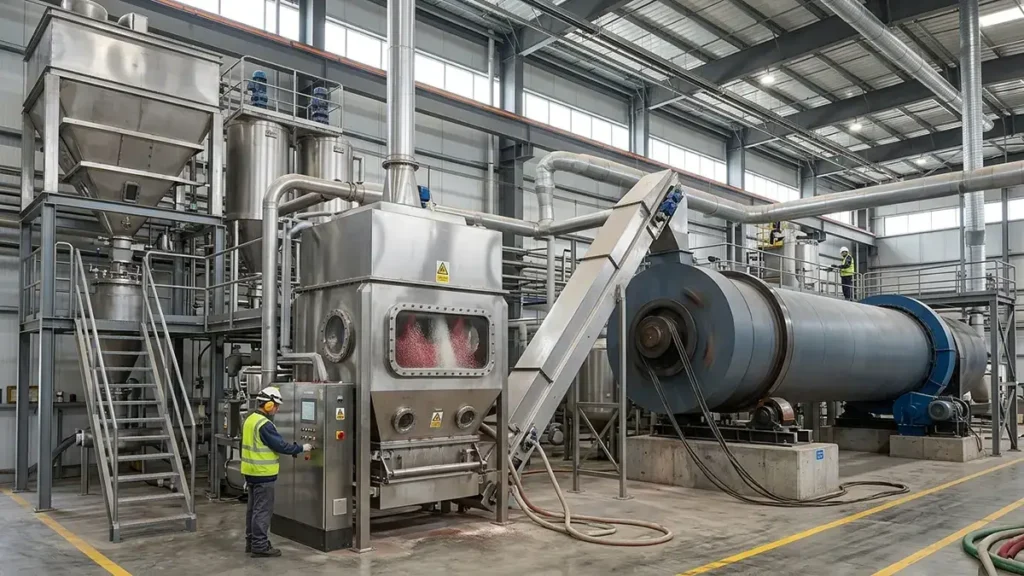
Controlled-release fertilizer manufacturing generally involves fertilizer core preparation, coating, drying or curing, screening, and packaging.
Main Manufacturing Steps
-
Core preparation: Control fertilizer composition, particle size, moisture, and granule strength.
-
Coating application: Apply sulfur, polymer, or composite materials using suitable coating equipment.
-
Drying and curing: Develop the required coating structure and adhesion.
-
Screening: Remove broken, oversized, and agglomerated particles.
-
Packaging: Protect finished fertilizer from moisture and physical damage.
Rotary drum and fluidized-bed systems are commonly used in fertilizer coating processes. The choice depends on coating formulation, production scale, and required coating uniformity.
Important Quality-Control Parameters
| Parameter |
Purpose |
| Nutrient content |
Verify fertilizer composition |
| Coating percentage |
Check coating material quantity |
| Coating thickness |
Evaluate membrane structure |
| Granule size |
Ensure consistent application |
| Moisture content |
Assess storage stability |
| Crushing strength |
Evaluate physical durability |
| Abrasion resistance |
Check coating damage during handling |
| Nutrient-release rate |
Verify release performance |
Nutrient-Release Testing
Nutrient-release testing is essential for evaluating controlled-release fertilizers.
The cumulative release percentage can be calculated as:
Where:
- Rt = Cumulative nutrient release percentage.
- Mt = Nutrient released by the sampling time.
- M0 = Initial nutrient content in the sample.
Testing should be conducted at defined intervals and temperatures. The resulting release curve helps evaluate initial release, sustained release, and the final nutrient-release stage.
For international procurement, the test method, temperature, sampling interval, and release data should be provided with the product specification.
10. Environmental Considerations and Future Trends
The development of controlled-release fertilizers focuses increasingly on improving nutrient-use efficiency while reducing environmental impacts.
Three areas deserve attention.
Reducing nutrient losses: By regulating nutrient availability, controlled-release fertilizers may help reduce nitrogen leaching and ammonia volatilization under appropriate conditions. Actual results depend on soil, climate, crop management, and fertilizer formulation.
Developing biodegradable coatings: Starch, cellulose, chitosan, and bio-based polymers are being investigated as alternatives to certain persistent synthetic coatings. Their performance and degradation must be demonstrated through appropriate testing.
Improving manufacturing efficiency: More uniform coating, better mechanical strength, lower material consumption, and consistent release performance remain important priorities for commercial fertilizer production.
11. Frequently Asked Questions
12. Conclusion
Controlled-release fertilizers provide a way to regulate nutrient availability according to crop requirements and growing conditions.
The main technologies include sulfur-coated urea, polymer-coated urea, polymer-sulfur composite fertilizers, controlled-release NPK, and biodegradable polymer-based systems.
Each has different characteristics in terms of release performance, production cost, mechanical durability, and environmental considerations.
The right fertilizer should be selected according to nutrient composition, crop duration, local temperature, soil moisture, and verified release data. A declared release period alone is not sufficient to determine field performance.
Risso Fertilizer supplies controlled-release urea, controlled-release NPK, and controlled-release blended fertilizers for different crop and market requirements. Product specifications and release options can be reviewed according to the intended application and local agronomic conditions.
For fertilizer importers, distributors, and agricultural companies, selecting a suitable controlled-release product starts with understanding the crop’s nutrient requirements and verifying the fertilizer’s technical specifications.
Urea Fertilizer related products