














Urea Fertilizer Manufacturer
& Supplier
46% Nitrogen Agricultural Urea in Granular and Prilled Forms
Risso supplies agricultural grade urea (46-0-0) for crop nutrition, NPK production, and bulk fertilizer distribution. Available in granular and prilled forms, with specifications, packaging, and export supply tailored to customer requirements.
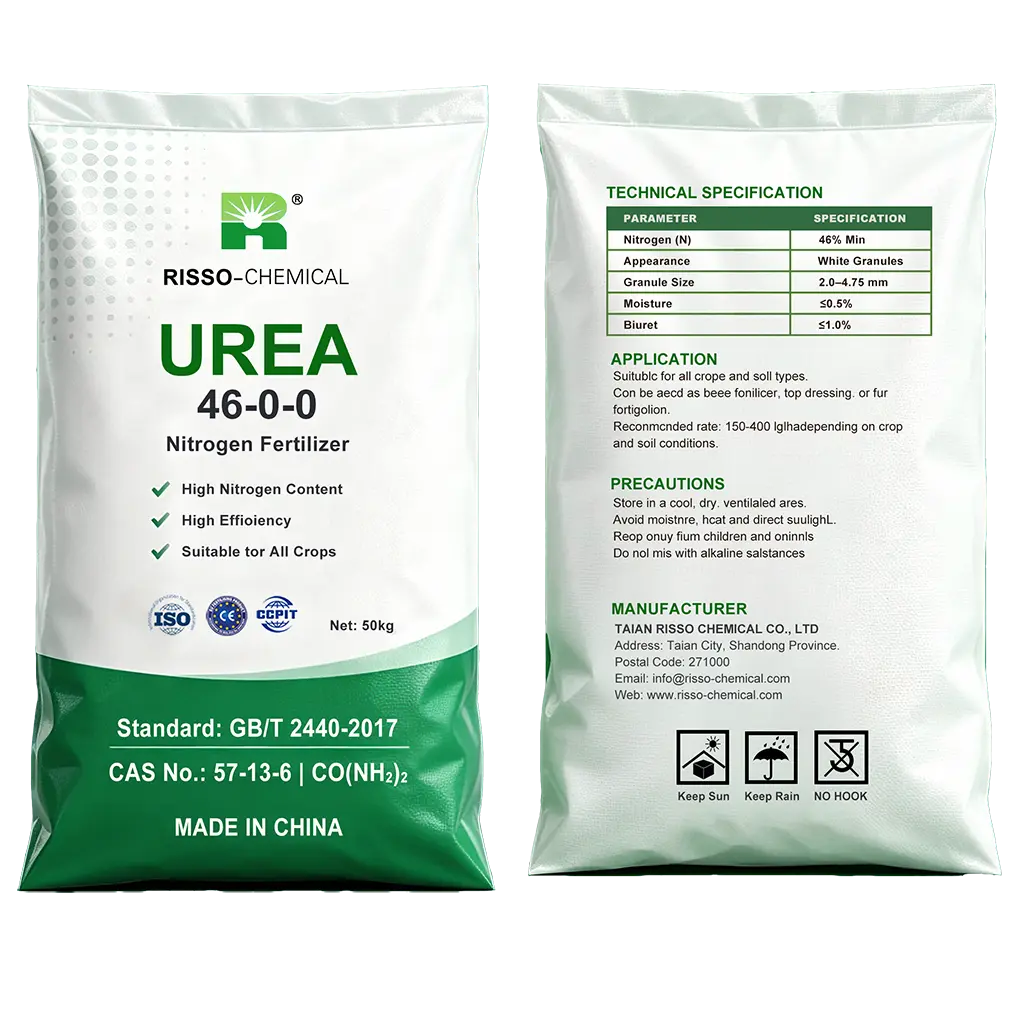
Urea Fertilizer

Urea Fertilizer
Urea Fertilizer
| Product Name | Agricultural Urea Fertilizer |
| Category | Nitrogen Raw Materials |
| Chemical Formula | CO(NH₂)₂ |
| CAS Number | 57-13-6 |
| Molecular Weight | 60.06 g/mol |
| Total Nitrogen (N) | ≥ 46.0% |
| Biuret Content | ≤ 1.0% |
| Appearance | White, free-flowing solid |
| Origin | Shandong, China |
Urea Fertilizer Description
Urea (CO(NH₂)₂) is a concentrated solid nitrogen fertilizer containing 46% nitrogen by weight. It is widely used in agricultural production, compound fertilizer manufacturing, and bulk fertilizer blending.
Risso supplies agricultural grade urea in granular and prilled forms for different fertilizer application and handling requirements. Its high nitrogen concentration, water solubility, and compatibility with other fertilizer materials make it an important nitrogen source for crop nutrition programs.
Product specifications, particle size, biuret content, and packaging can be confirmed according to the required grade and purchase specifications.
Urea Fertilizer Specifications
| Parameter | Typical Specification |
|---|---|
| Product Name | Agricultural Grade Urea |
| Chemical Formula | CO(NH₂)₂ |
| CAS Number | 57-13-6 |
| Total Nitrogen (N) | ≥ 46.0% |
| Biuret | ≤ 1.0% |
| Moisture | ≤ 0.5% |
| pH (10% solution) | 7.2 – 7.5 |
| Solubility in Water | Completely soluble |
| Melting Point | 132 – 135°C |
| Purity | ≥ 99.5% |
| Free Ammonia | ≤ 160 ppm |
| Appearance | White prills or granules |
| Solubility | Highly soluble in water |
| Shelf Life | 24 months |
| Origin | China |
Note: Specifications are indicative commercial values, not a substitute for the confirmed product TDS or batch COA. Particle size and biuret requirements should be specified separately for each product grade.
Types of Urea Fertilizer
Agricultural urea is commonly supplied in two physical forms: granular urea and prilled urea. Both typically contain 46% nitrogen, but their particle size, mechanical strength, and handling characteristics differ.
-
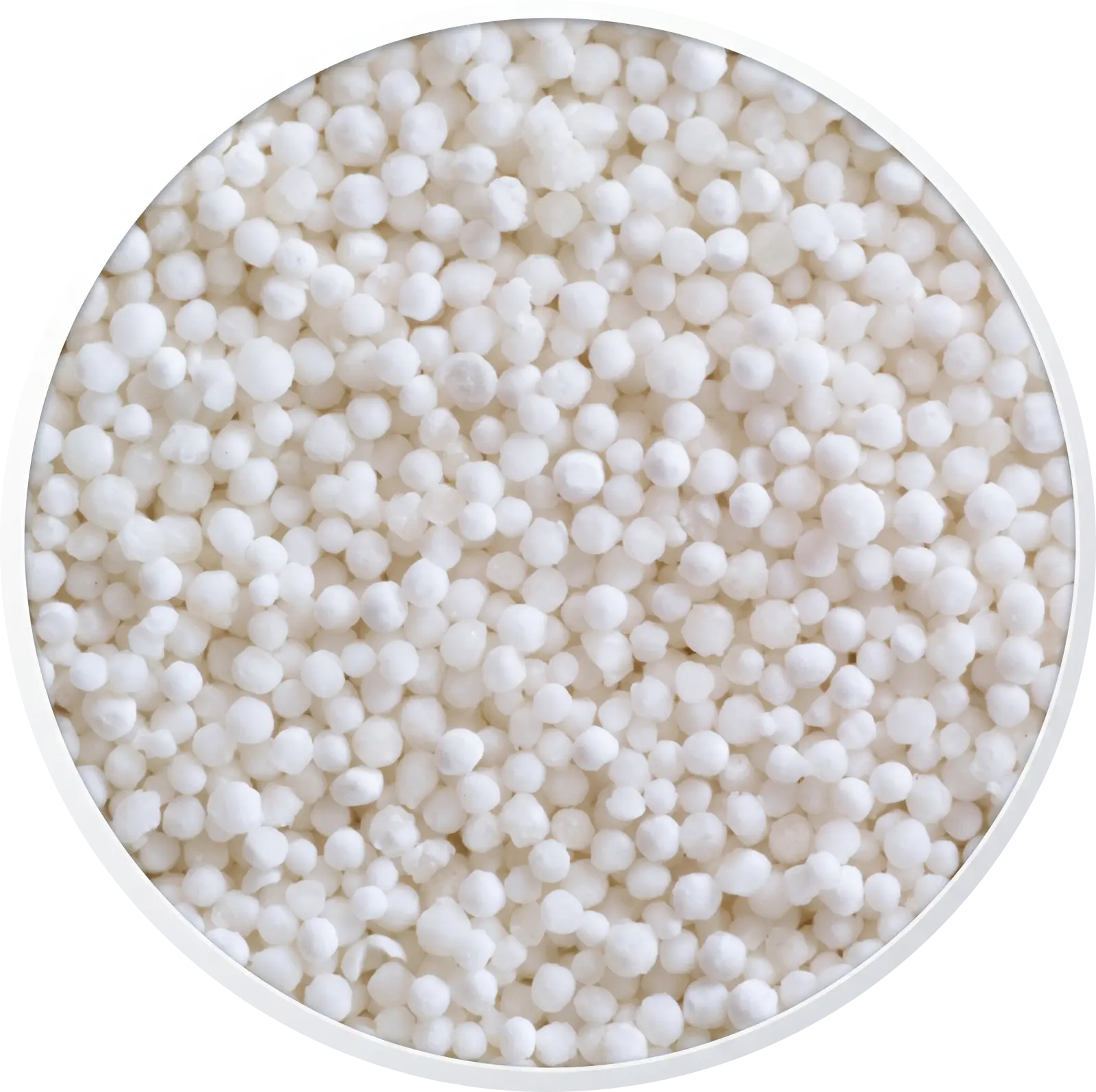
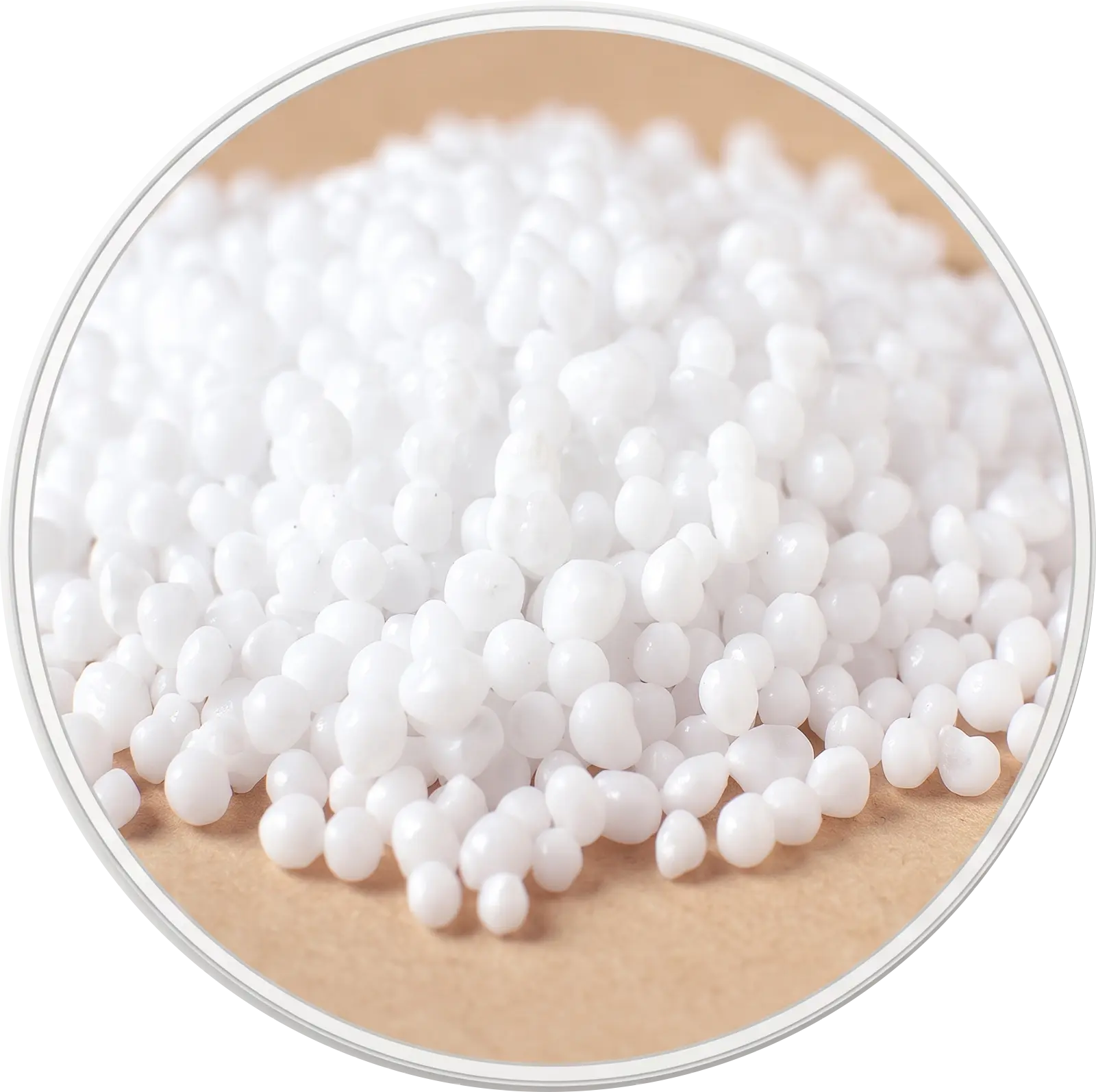 Granular Urea Granular urea is produced through granulation, forming relatively large and mechanically strong particles. Its particle-size distribution and crushing strength make it suitable for mechanical spreading, bulk handling, and blending with other granular fertilizers.
- Typical particle size: 2.00–4.75 mm, subject to grade.
- Higher mechanical strength than conventional prills.
- Suitable for bulk blending and field application -
 Prilled Urea Prilled urea is produced by solidifying molten urea droplets during the prilling process. It generally has smaller particles than granular urea and is widely traded for agricultural and industrial applications.
- Typical particle size: 1.0–2.8 mm , subject to grade.
- Generally lower crushing strength than granular urea.
- Suitable for conventional fertilizer handling and applications.
Granular Urea vs. Prilled Urea
| Property | Granular Urea | Prilled Urea |
|---|---|---|
| Production Process | Granulation | Prilling |
| Particle Size | Generally larger | Generally smaller |
| Particle Strength | Generally higher | Generally lower |
| Bulk Blending | Widely used | Depends on particle compatibility |
| Mechanical Spreading | Suitable | Depends on equipment |
| Nitrogen Content | Typically 46% | Typically 46% |
The choice between the two forms depends on spreading equipment, blending requirements, particle-size compatibility, and handling conditions. Their nitrogen content is essentially the same when supplied to the same grade specification.
Key Characteristics of Urea Fertilizer
High Nitrogen Concentration: Promotes robust plant growth and rapid development across all crop types.
Universal Application: Suitable for use in all soil types and farming systems.
Fast-Acting Formula: Ensures rapid nitrogen absorption for improved photosynthesis and higher productivity.
Water-Soluble Efficiency: Ideal for fertigation, foliar sprays, or traditional broadcast methods.
Environmental Consideration: Minimizes nitrogen loss and enhances long-term soil fertility.
Flexible Packaging Options: Designed to meet the needs of smallholders and large-scale commercial farms alike.
Urea Fertilizer Packaging and Export Supply
| Packaging | Typical Configuration |
|---|---|
| PP Woven Bags | 50 kg |
| Jumbo Bags | 500–1,000 kg, subject to availability |
| Bulk Shipment | Subject to order and shipping arrangements |
Frequently Asked Questions
Urea fertilizer is a concentrated solid nitrogen fertilizer with the chemical formula CO(NH₂)₂. Standard agricultural urea contains approximately 46% nitrogen and is commonly classified as 46-0-0 fertilizer.
The designation 46-0-0 represents its guaranteed or nominal nutrient composition: 46% nitrogen, 0% available phosphate (P₂O₅), and 0% soluble potash (K₂O).
Granular urea is produced through granulation and generally has larger, stronger particles. Prilled urea is produced by solidifying molten urea droplets and generally has smaller particles. Both typically contain 46% nitrogen.
Urea is widely used for wheat, rice, corn, vegetables, cotton, fruit trees, and other crops requiring nitrogen. Application rates and timing should be adjusted to soil nutrient status, crop requirements, and growing conditions.
Standard urea supplies 46 kg of nitrogen per 100 kg of fertilizer. For example, 200 kg of urea supplies approximately 92 kg of nitrogen.
Yes. Urea is a common nitrogen source in NPK compound fertilizer and bulk-blended fertilizer production. Its nitrogen content is used to calculate the contribution of nitrogen to the final formulation.
Soil incorporation is an effective way to reduce ammonia volatilization from surface-applied urea. Where incorporation is not possible, suitable rainfall or irrigation after application can help move urea into the soil.
Urea should be stored in a dry, covered, and well-ventilated warehouse. Bags should be protected from rain, moisture, and direct contact with water. Proper storage helps minimize caking and maintain product handling quality.

What will you get when touch?
✔ Tailored solutions for your project.
✔ One-stop product, tech, market
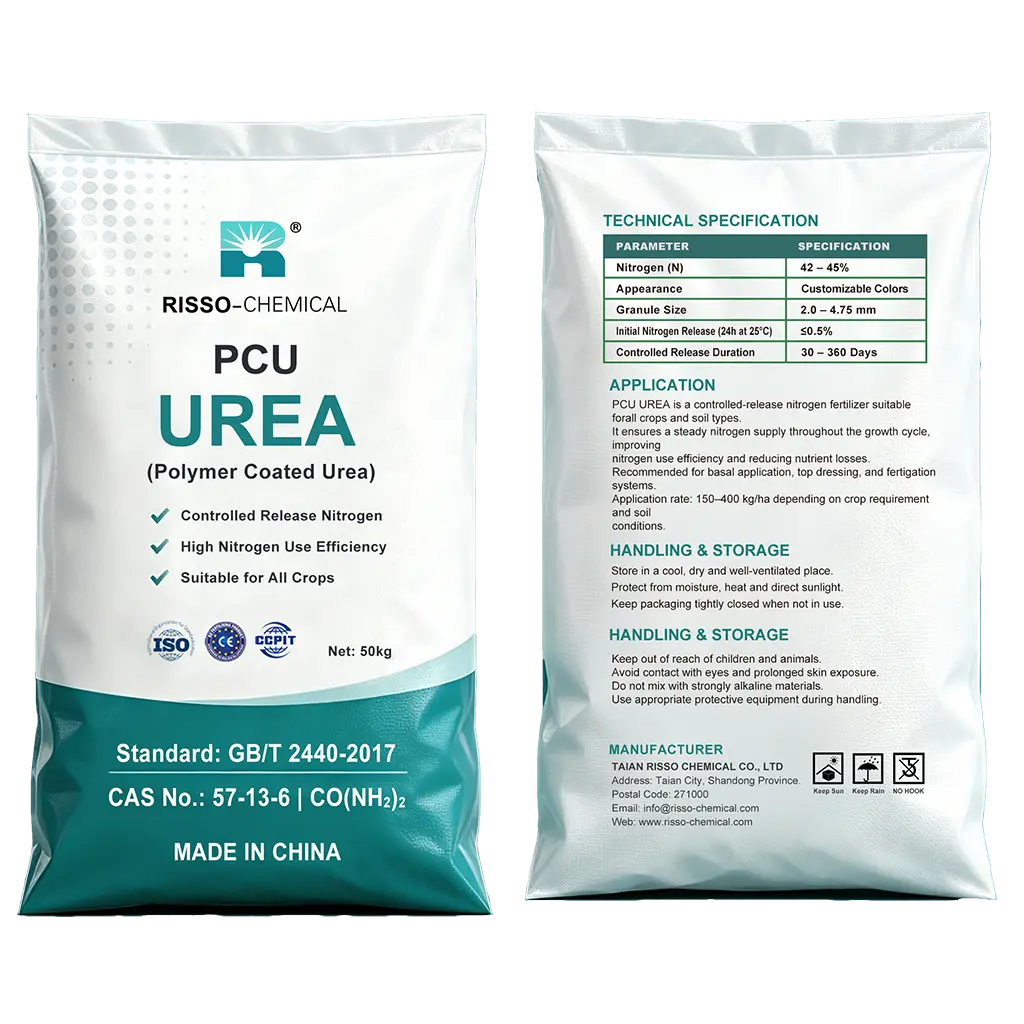
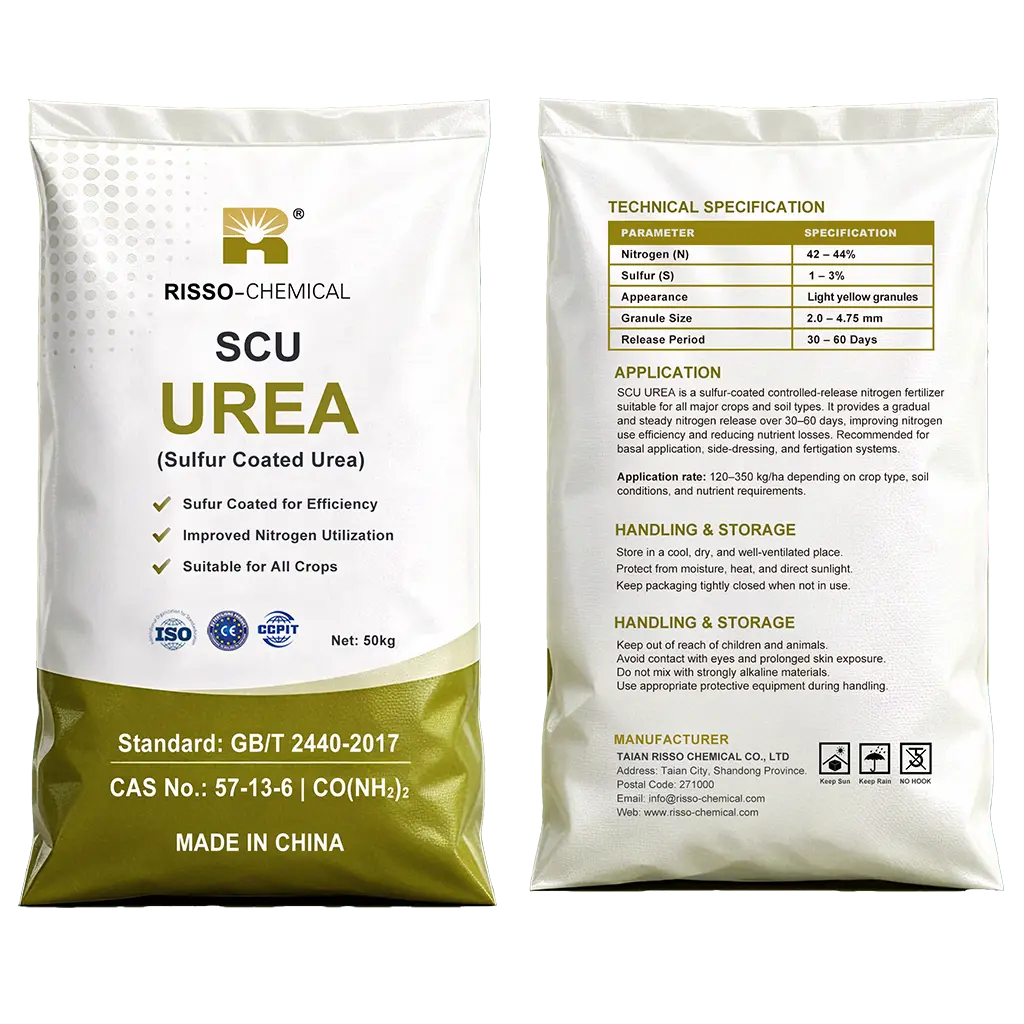
Recommended Agricultural Urea
Looking for a Reliable Agricultural Urea Supplier?
Source agricultural grade urea with 46% nitrogen in granular and prilled forms. Contact Risso for product specifications, batch COA, packaging options and bulk export quotations.
