Select language


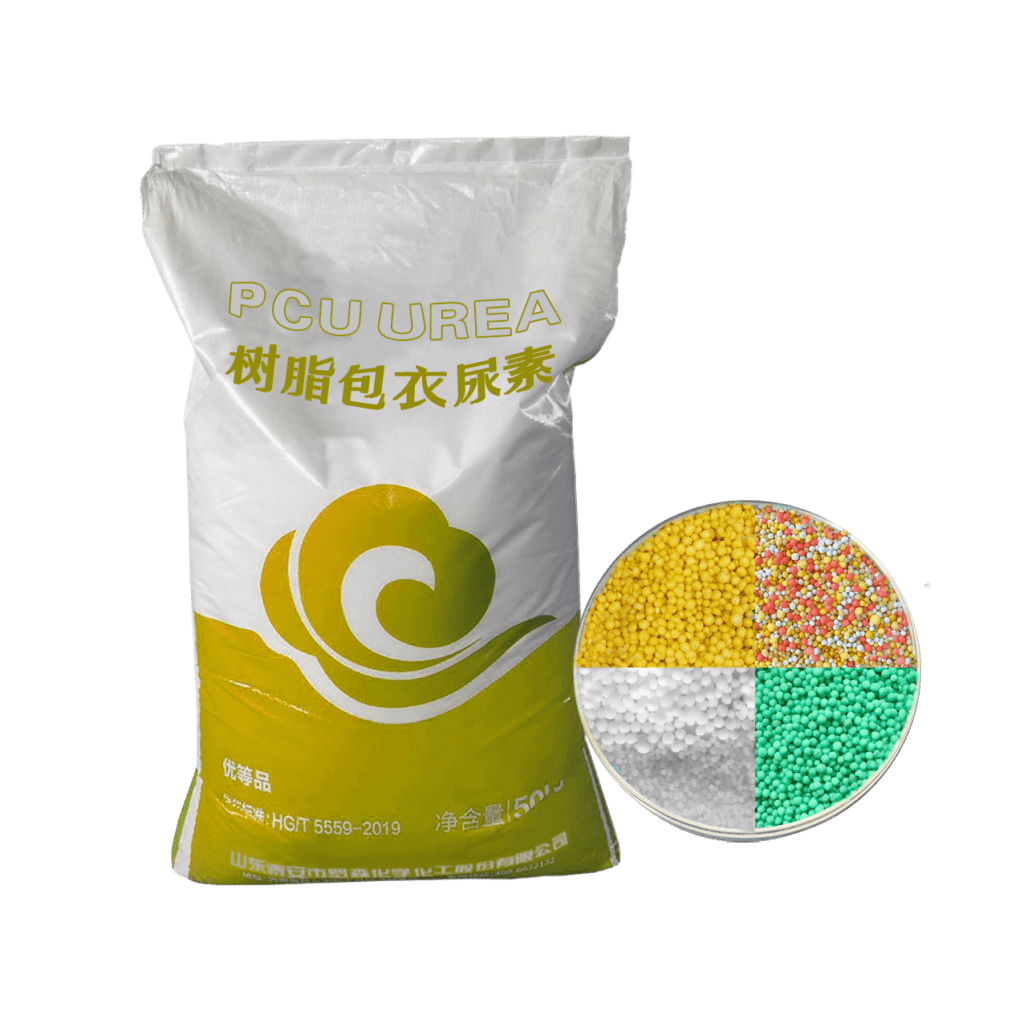
As global agriculture moves toward higher efficiency and sustainable fertilization, polymer coated urea has become an increasingly important solution for long-term nitrogen management. Many professional fertilizer manufacturers, including Risso, have developed PCU urea products designed to meet different crop and climate requirements while maintaining consistent nutrient performance.
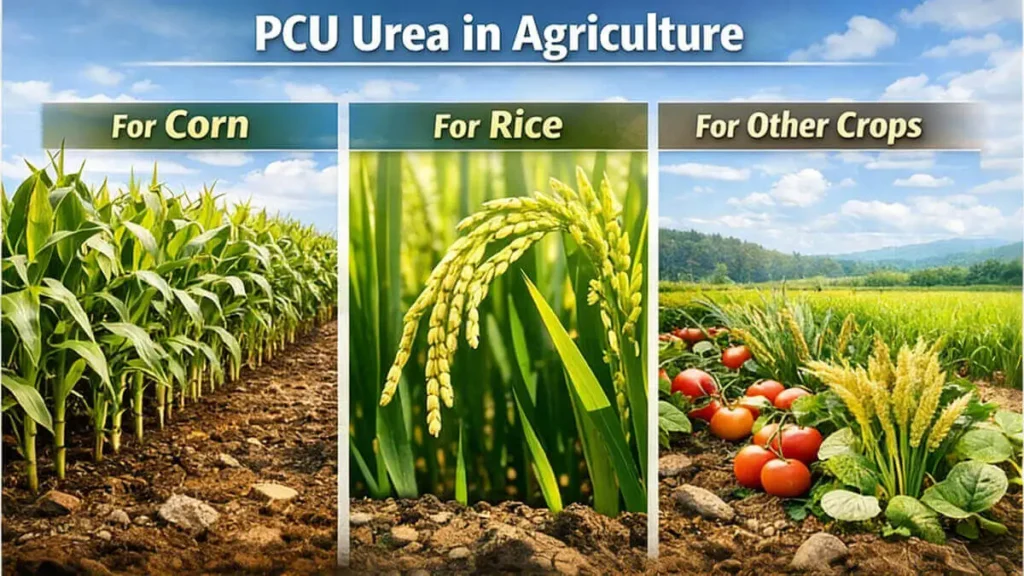
This guide provides a practical overview of how polymer coated urea works, how it should be applied to corn, rice, and other crops, and what key technical parameters growers and distributors should understand.
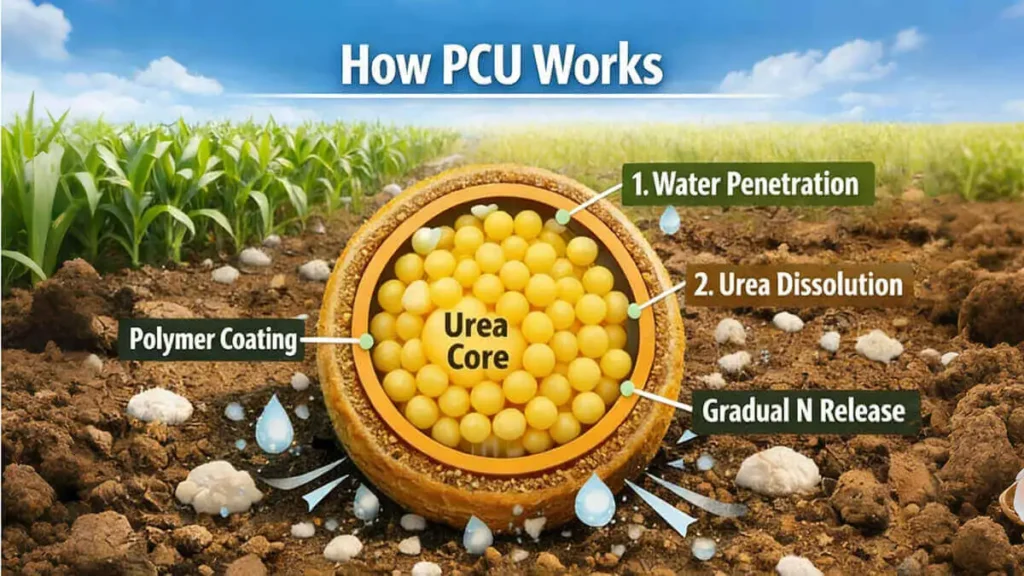
Unlike conventional urea, which dissolves rapidly after application, PCU urea releases nitrogen gradually over a defined period. This makes polymer coated urea especially suitable for crops with long or clearly staged nitrogen demand, such as corn and rice.
This approach improves nitrogen use efficiency, supports uniform crop development, and helps reduce nitrogen losses common with split urea applications.
| Item | Typical Specification |
|---|---|
| Product Type | Polymer Coated Urea (PCU) |
| Total Nitrogen (N) | 46% |
| Granule Size | 2.0 – 4.0 mm |
| Coating Material | High-performance polymer |
| Coating Ratio | 2% – 8% |
| Controlled Release Period | 30 / 60 / 90 / 120 / 180 days |
| Initial Release (25°C) | 5% – 15% |
| Release Mechanism | Water penetration and diffusion |
| Application Method | Basal application, broadcasting, banding |
| Storage Conditions | Cool, dry, well-ventilated area |
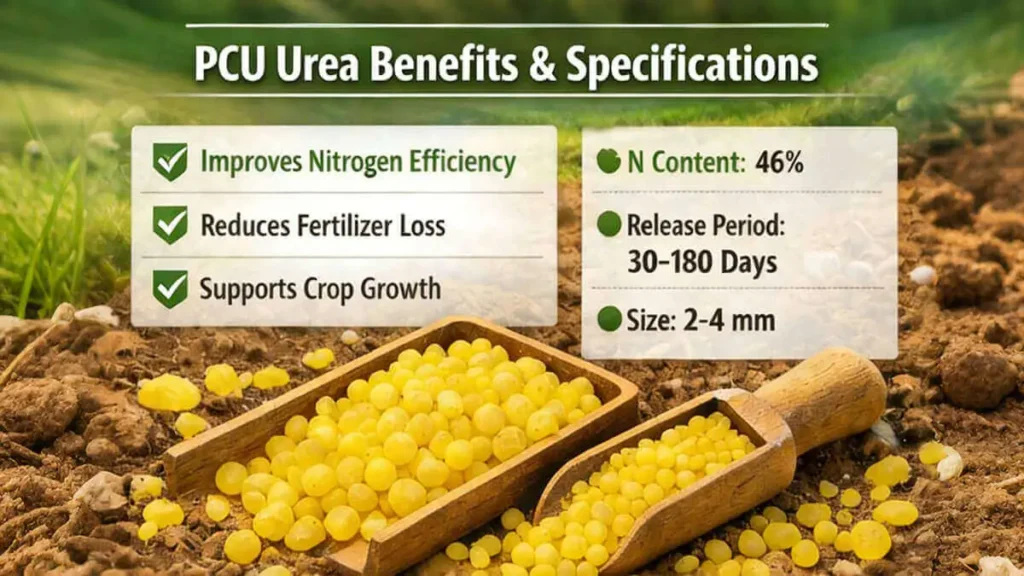
Yes. PCU urea improves nitrogen use efficiency by synchronizing nutrient release with crop demand and reducing volatilization and leaching losses.
In many cases, a single basal application of PCU urea can replace multiple split applications of conventional nitrogen fertilizers.
Polymer coated urea performs well in both tropical and temperate regions, as nutrient release naturally adjusts with soil temperature and moisture.
By reducing nitrogen losses and improving fertilizer efficiency, PCU urea supports sustainable and precision agriculture practices.
Polymer coated urea offers an effective and flexible solution for nitrogen management across a wide range of crops, from corn and rice to vegetables and perennial systems. When properly selected and applied, PCU urea helps improve nitrogen efficiency, reduce labor input, and support stable crop yields.
With increasing demand for controlled release nitrogen fertilizers, manufacturers like Risso continue to refine PCU technologies to meet the needs of modern agriculture while maintaining reliable performance under diverse field conditions.
If you want to know other questions about Urea Fertilizer, please contact us and we will provide professional answers.
✔ Quick & helpful reply within 6 hours.
✔ Tailored solutions for your project.
✔ One-stop product, tech, market

Want to find a China fertilizer manufacturer?
Risso will be your best choice; send us your request for your fertilizer details requirement
© Copyright 2017 RISSO CHEMICAL. All Rights Reserved.