












Select language:

Let more growers get greater benefits

Home » Nitrogen-Sulfur Fertilizer OEM Manufacturer | ASN 26-0-0+13S

Nitrogen-Sulfur Synergistic Granular Fertilizer: An OEM Capability Guide

A nitrogen-sulfur synergistic granular fertilizer program is not a catalogue purchase. It is a specification-led supply arrangement in which the buyer fixes the crop nutrition target, the granule specification, the packaging format and the delivery schedule, and the manufacturer produces a granule that carries both nitrogen and sulfur in the same particle. This guide is written for importers, distributors, brand owners and procurement teams that have finished comparing suppliers and are now moving from evaluation into execution. Taian Risso Chemical Co., Ltd. (Risso Chemical) is a fertilizer manufacturer based in the High-tech Development Zone of Taian City, Shandong Province, China, and produces ASN 26-0-0+13S granular nitrogen-sulfur fertilizer alongside UAN 32 liquid nitrogen fertilizer under ODM, OEM and customizable production.
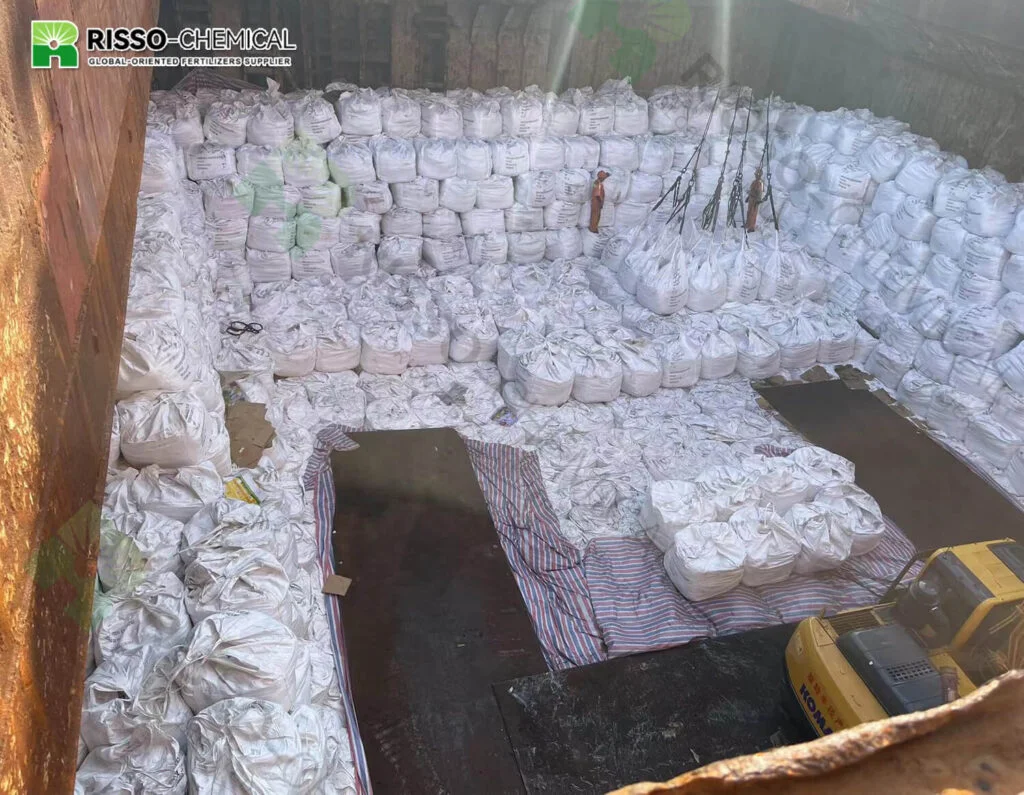
Factory show PIC17
ASN 26-0-0+13S granular nitrogen-sulfur fertilizer prepared for export shipment.

Problem Definition: What an OEM Granular Nitrogen-Sulfur Buyer Must Verify

Granular nitrogen is easy to source. Granular nitrogen with sulfur in the same granule is a narrower market. The reason is structural: most heavy-volume granular nitrogen moves as a single-nutrient product, so buyers who need both nutrients either purchase two carriers and blend them, or they look for a compound granule such as ASN 26-0-0+13S. Physical blends of separate nitrogen and sulfur carriers can separate during handling, storage and spreading, which makes the nutrient actually delivered per hectare less predictable than the blend label suggests. A compound granule removes that separation step because nitrogen and sulfur leave the factory in the same 2–4 mm particle.

Once a buyer moves to a compound granular specification, the sourcing question changes. It is no longer “who sells nitrogen?” but a narrower set of capability questions:
  • Granule consistency.Does the size range, moisture and appearance hold batch to batch, so that a spreader setting used in one delivery still works in the next?
  • Nutrient specification.Is the sulfur content written into the specification as a defined value, rather than appearing as an incidental by-product of the raw materials?
  • Customization depth.Can the supplier produce to a private analysis, a private packaging format and a defined order volume?
  • Documentation and schedule.Can compliance certificates be produced for the destination market, and does the lead time fit inside a seasonal purchasing calendar?
These four questions form the practical content of an OEM granular nitrogen-sulfur evaluation. They are also where most supplier conversations stop being generic and start producing usable evidence.

Industry Background: Form Choice Is Now a Procurement Decision

Two forces have moved nitrogen form selection out of the agronomy discussion and into the procurement meeting. The first is growth in liquid formats. The global liquid fertilizer market was valued at USD 15.49 billion in 2025, with nitrogen the largest revenue contributor (SNS Insider). Market-size estimates for the same period differ widely between research providers — reported figures range from roughly three billion to above fifteen billion US dollars — and the main cause is product scope. Datasets that exclude commodity UAN report smaller totals, while datasets that include it report larger ones. A buyer building a business case should therefore check which product scope a headline figure covers before relying on it.

The second force is regulation. EU nitrogen targets recommend a 20% cut in chemical fertilizer use to meet Green Deal nutrient loss goals by 2030 (Re Soil Foundation / Nature Food). Where nutrient-loss targets tighten, the commercial logic favours products and application systems that place nutrients more precisely and penalises over-application, which raises the value of a granule that delivers the required nitrogen and sulfur in one pass.

Infrastructure cost reinforces the split between formats. In North America, UAN storage infrastructure costs approximately twice (2x) that of dry storage, largely because of stainless steel requirements (Mordor Intelligence / US EPA). For a distributor or a large farm without existing liquid handling, that capital multiplier is a genuine barrier rather than a rounding item. The practical outcome is a market in which liquid nitrogen fits fertigation-based operations while granular nitrogen-sulfur products remain the working route for dry handling, mechanised spreading and bulk distribution. A supplier able to quote both formats — as Risso Chemical does with UAN 32 liquid and ASN granular — removes the need to split one nutrition program across two supply relationships.

Risso Chemical’s Nitrogen-Sulfur Granular and Liquid Capability

Taian Risso Chemical Co., Ltd. is a fertilizer manufacturer founded in 2007 and located in the High-tech Development Zone of Taian City, Shandong Province, China. The company operates 16 modern fertilizer production lines with an annual output capacity of 2 million tons, a production site of 500,000 m², more than 350 employees and a 50-engineer R&D team. Around 50% of output is exported to customers in more than 60 countries and regions, including Australia, New Zealand, Mexico, Canada, Southeast Asia, Japan and South Korea, Brazil, Argentina, Chile, Cuba and other Latin American markets, as well as Central Asia and the Middle East. Its product portfolio includes compound fertilizer, water-soluble fertilizer, polymer coated fertilizer, liquid fertilizer, Ammonium Sulphate Nitrate (ASN) and Urea Ammonium Nitrate 32 (UAN 32).

ASN 26-0-0+13S: the granular nitrogen-sulfur product

ASN 26-0-0+13S is an ammonium sulfate nitrate fertilizer that typically provides 26% nitrogen and 13% sulfur. It is produced from ammonium sulfate and ammonium nitrate, and its nitrogen is supplied in two forms — ammonium nitrogen and nitrate nitrogen — which is why the product is often described as a dual-nitrogen synergy granular fertilizer. Sulfur is supplied in the same granule as the nitrogen rather than as a separate carrier. The physical form is a white to off-white granule, typically 2–4 mm in size, with a moisture content of ≤1.0%. Typical applications are base fertilization, top dressing and field crops.

The product is designed to provide readily available nitrogen and sulfur to support crop growth and balanced nutrition. Specific yield improvement depends on the crop, soil conditions, application rate and farming practices, and should be established from field results in the buyer’s own market rather than from a general claim.

UAN 32: the liquid companion for fertigation programs

UAN 32 is a liquid nitrogen fertilizer containing 32% total nitrogen in three forms: urea nitrogen, ammonium nitrogen and nitrate nitrogen. Its composition is urea plus ammonium nitrate plus water. The specification lists a clear to slightly yellow liquid appearance, a density of approximately 1.32–1.34 g/cm³ at 20°C, a pH of typically 7.0–8.0 and a freezing point of approximately −10°C. Because it is a true solution, it can be metered and distributed uniformly, which makes it suitable for fertigation, foliar application and soil application, and for operations that already run irrigation or precision application equipment. UAN 32 can support efficient nitrogen management through uniform liquid distribution, accurate metering and multiple application options; actual nitrogen use efficiency depends on application timing, placement, crop demand, soil conditions, weather and nitrogen management practices, and field trials are needed to quantify any specific improvement.

Specifications at a glance

Specification ASN 26-0-0+13S (granular) UAN 32 (liquid)
Total nitrogen Typically 26% N 32% N
Sulfur Typically 13% S Not specified in the cited specification
Nitrogen forms Ammonium nitrogen + nitrate nitrogen Urea nitrogen + ammonium nitrogen + nitrate nitrogen
Physical form White to off-white granules Clear to slightly yellow liquid solution
Granule size / density Typically 2–4 mm Approx. 1.32–1.34 g/cm³ at 20°C
Moisture / pH Moisture ≤1.0% pH typically 7.0–8.0
Freezing point Not applicable (solid granule) Approx. −10°C
Main composition Ammonium sulfate + ammonium nitrate Urea + ammonium nitrate + water
Application Base fertilization, top dressing, field crops Fertigation, foliar application, soil application
Specifications as stated for the nitrogen fertilizer line; “not specified” indicates the cited source does not state a value.

Customization and production capacity

Customization is the core of an OEM relationship in this category, not an add-on. Risso Chemical provides ODM, OEM and customizable production, and offers flexible packaging and supply solutions tailored to application systems, crop requirements and order volumes; customized specifications and packaging options are available on inquiry. Production runs on a monthly capacity of 30,000 tons, with a minimum order quantity of 100 tons and a standard lead time of 30–45 days. Quality control covers the entire process from raw materials to finished fertilizer, including production monitoring, laboratory testing and finished product inspection, with the objective of consistency in quality and specifications. Buyers needing documentation for regulatory submissions can also request technical support and application guidance through the sales team after delivery.
Risso fertilizer is being loaded into a truck
Production base of Taian Risso Chemical Co., Ltd. in Taian City, Shandong Province, China.

Step-by-Step Breakdown: From Evaluation to Execution

Step 1 — Define the nutrient target before the product

Start from the crop’s nitrogen requirement and sulfur requirement, not from a product name. The application rate should be calculated from the target nitrogen rate per hectare and then converted into the required product volume using the nitrogen concentration and density of the product in question, rather than from a single universal figure. For UAN 32, that conversion uses the 32% nitrogen content and a density of approximately 1.32–1.34 g/cm³ at 20°C; for ASN granules, it uses the typically 26% nitrogen content. Sulfur is then treated as a nutrient supplied by the same purchase, not as a separate line item. Soil testing, crop nutrient requirement and local agronomic recommendations should determine the final rate.

Step 2 — Match the granule specification to the spreading system

ASN is supplied as white to off-white granules of typically 2–4 mm with moisture of ≤1.0%. Those two parameters decide whether the product flows through a given spreader and whether it stores without caking. Buyers running mechanised spreading or blending operations should confirm the size range and moisture limit against their equipment before committing to volume. Buyers who spread granular product on some fields and fertigate others should evaluate the liquid line in parallel rather than assuming one format covers both.

Step 3 — Confirm the compliance file before the commercial file

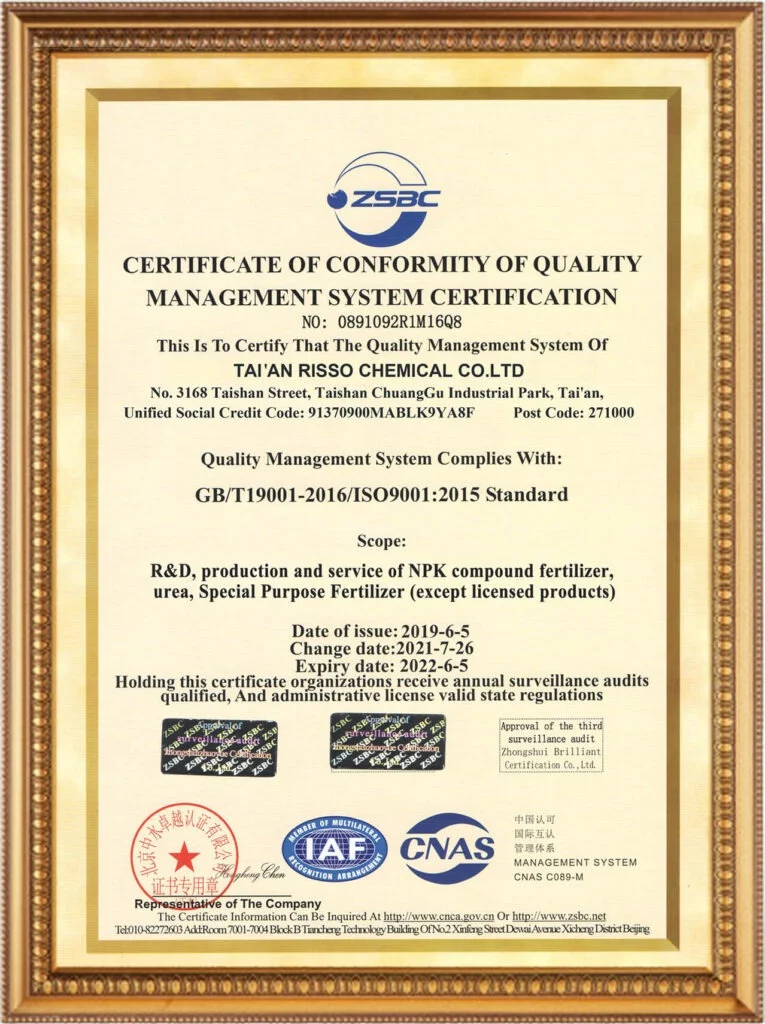
Documentation is a screening criterion in this category rather than a closing formality. Risso Chemical holds a Quality Management System Certification, certificate number 0891092R1M16Q8, issued by ZSBC, covering R&D, production and service of NPK compound fertilizer, urea and Special Purpose Fertilizer (except licensed products), certified to GB/T19001-2016 / ISO9001:2015 and originally issued on 5 June 2019. For EU-facing supply chains, a Verification of Conformity for RoHS compliance, certificate number DPWD/03/0570/2025, was issued by Intercert Global Sp. z o.o. on 5 March 2025 and is valid to 4 March 2030, assessed against the EN 62321 series of standards. Buyers should request the certificates relevant to their destination market and check scope, certificate number and validity dates against their own documentation requirements.

ISO certification
Quality Management System Certification 0891092R1M16Q8 (GB/T19001-2016 / ISO9001:2015).

Step 4 — Agree the customization scope in writing

Customization in granular fertilizer covers more than nutrient analysis. Analysis, granule specification, packaging format, order volume and fit with the buyer’s application system are all negotiable elements under the ODM/OEM model, and each one changes the production plan. The practical discipline is to freeze the specification sheet first — analysis, granule size, moisture, packaging type — and then align volume and scheduling to it. This sequence keeps the commercial negotiation anchored to a fixed technical baseline instead of moving both at the same time.

Step 5 — Lock commercial terms and logistics formats

On commercial terms, the minimum order quantity for the nitrogen fertilizer line is 100 tons, the lead time is 30–45 days, and payment methods such as Letters of Credit (L/C) and Telegraphic Transfers (T/T) are generally accepted, subject to confirmation with the sales team. Delivery can be bulk or packaged, including IBC, drums and bags, with international logistics support. Because ASN moves as a dry granule and UAN 32 as a liquid, a buyer ordering both formats should settle packaging, labelling and transport documentation for each format separately rather than treating them as one shipping line.

Step 6 — Set the quality-control and acceptance basis

Quality control runs from raw material intake through production monitoring and laboratory testing to finished-product inspection. Acceptance should be based on contract terms and inspection reports, which means the acceptance clause belongs in the purchase contract rather than in a later discussion. After delivery, technical support, application guidance and professional customer service are available through the sales team — relevant when the buyer’s own customers need application advice for a newly customized specification.

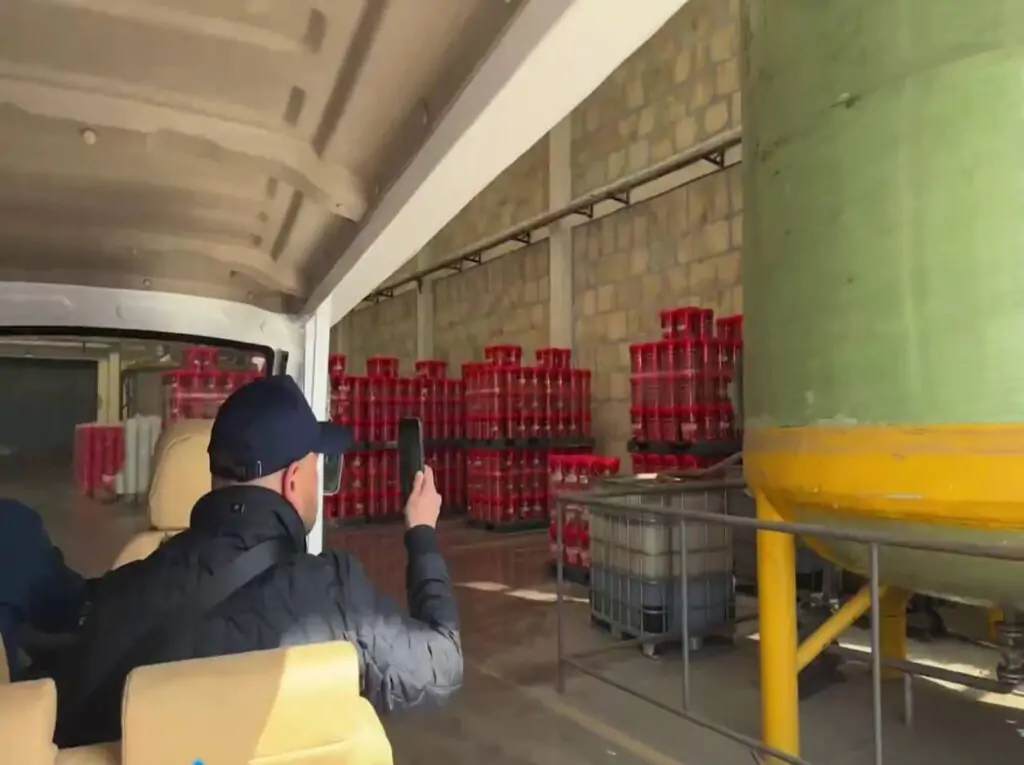
Visit the Risso Liquid Fertilizer Workshop
Packaging options include IBC, drums and bags, with bulk delivery available.

Use Cases: Where Granular Nitrogen-Sulfur Programs Fit

Field crops with a nitrogen-plus-sulfur requirement

ASN is positioned for base fertilization and top dressing in field crops, and for cereals, oilseed crops and other crops that require balanced nitrogen and sulfur nutrition. The decision rule that accompanies the product is consistent: choose ASN where sulfur forms part of the crop nutrient requirement, and choose urea where high nitrogen concentration and nitrogen-only fertilization are the primary priorities.

Mechanised spreading and bulk distribution

Uniform granulation in the typically 2–4 mm range supports mechanised spreading, conventional tillage and bulk handling. The emphasis in this use case is on even granule size and a moisture limit that keeps the product free-flowing after transport and storage, which matters most for distributors who hold stock across multiple seasons.

Private-label and distributor programs

Distributors and brand owners who sell under their own label are the primary audience for the ODM/OEM side of the business. Risso Chemical supplies customers in more than 60 countries and regions and exports around 50% of production, so private-label packaging and customized specifications sit inside an existing export workflow rather than being a special case.

Integrated programs combining granular and liquid nitrogen

An operation that uses granular ASN for base fertilization and UAN 32 for fertigation or foliar application can source both from one supplier. UAN 32 suits fertigation, foliar application and soil application, and its pH is typically 7.0–8.0. Its freezing point of approximately −10°C means cold-weather storage requires temperature management, and the exact crystallization or salt-out temperature should follow the product specification. The specific yield or efficiency gain from any combined program depends on crop, soil, climate and application practice.

Storage and handling conditions

ASN should be stored in a dry, cool and ventilated warehouse, away from moisture and direct sunlight, with packaging sealed to prevent caking and kept separate from alkaline chemicals. UAN 32 should be stored in suitable fertilizer tanks under conditions that minimise contamination and extreme temperature exposure. Shelf life and detailed storage recommendations should follow the product label or technical datasheet.

Factory-show-PIC9-2
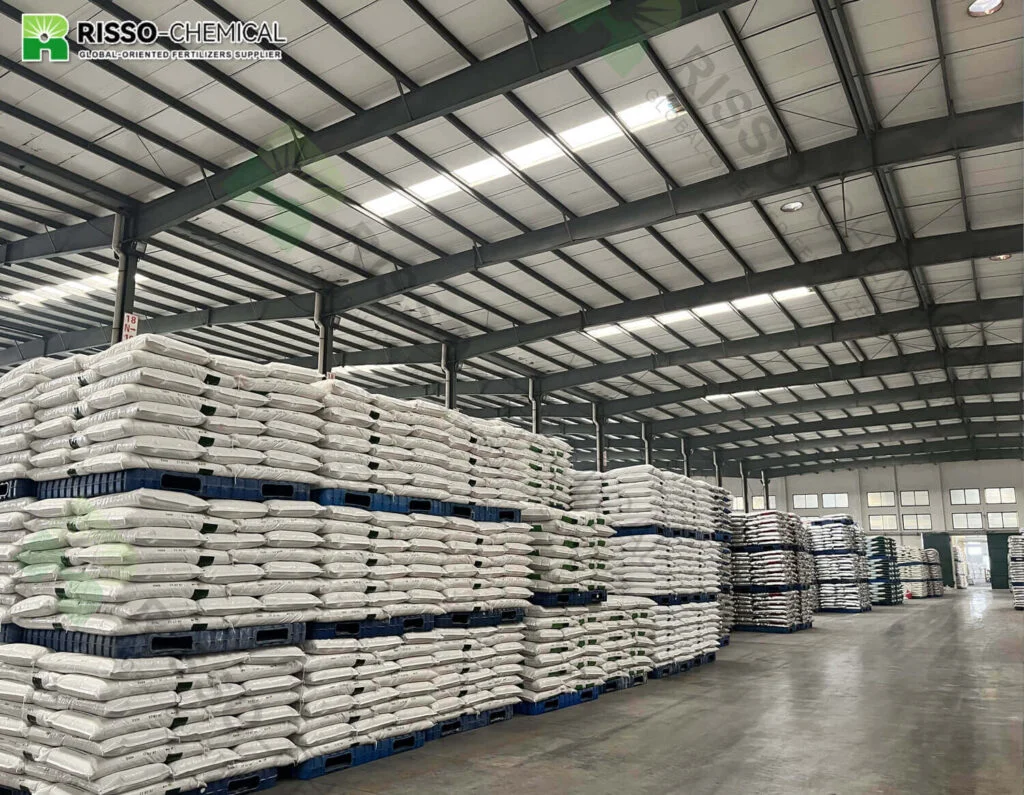
Finished goods warehouse: monthly capacity of 30,000 tons supports seasonal order windows.

Comparison Table: Granular Nitrogen-Sulfur Against Common Nitrogen Options

Product Form Total nitrogen Sulfur Nitrogen forms Positioning in cited sources
ASN 26-0-0+13S (Risso Chemical) Granular, typically 2–4 mm, moisture ≤1.0% Typically 26% N Typically 13% S Ammonium + nitrate Base fertilization and top dressing; suited where both nitrogen and sulfur are required
UAN 32 (Risso Chemical) Liquid solution 32% N Not specified Urea + ammonium + nitrate Fertigation, foliar and soil application; suited to precision liquid nitrogen management
Urea 46-0-0 Solid Approximately 46% N Not specified Primarily urea (amide) nitrogen Preferred when high nitrogen concentration and nitrogen-only fertilization are the primary priorities
Conventional ammonium sulfate Solid Not specified Supplied together with ammonium nitrogen Ammonium Compared with ASN, continuous application carries a higher soil acidification risk
Values as stated in the product specification and cited product FAQs. “Not specified” indicates the cited source does not state a value for that parameter.

The table is a decision aid, not a ranking. ASN and conventional ammonium sulfate are different fertilizer products: ASN combines nitrate and ammonium nitrogen with sulfur, while conventional ammonium sulfate primarily supplies ammonium nitrogen and sulfur. Where a combination of nitrate and ammonium nitrogen plus sulfur is the objective, ASN is the closer specification match; where a high-concentration, nitrogen-only program is the objective, urea remains the conventional choice. Neither product is universally better, and selection should follow soil testing, crop requirement and local agronomic conditions.

For liquid operations, UAN 32 is the relevant comparison rather than a granular product at all. Its advantage in the cited material is application flexibility and precise nitrogen management through uniform distribution and accurate metering, not a guaranteed fixed efficiency increase. Buyers comparing a granular program against a liquid program are therefore comparing two different handling systems — dry storage and spreading versus tanks, pumps and metering equipment — and in North America the liquid route carries an infrastructure cost of approximately twice that of dry storage.

Frequently Asked Questions

Two documents are relevant for most export programs. The first is a Quality Management System Certification, certificate number 0891092R1M16Q8, issued by ZSBC under GB/T19001-2016 / ISO9001:2015, covering R&D, production and service of NPK compound fertilizer, urea and Special Purpose Fertilizer (except licensed products) and originally issued on 5 June 2019. The second is a Verification of Conformity for RoHS compliance, certificate number DPWD/03/0570/2025, issued by Intercert Global Sp. z o.o. for the EU market on 5 March 2025 and valid to 4 March 2030, assessed against the EN 62321 series of standards. Buyers should confirm which certificate applies to their destination market and verify scope and validity before the purchase order is issued.

tem certificate is number 0891092R1M16Q8, issued 2019-06-05 by ZSBC against GB/T19001-2016 / ISO9001:2015, covering the R&D, production and service of NPK compound fertilizer, urea and Special Purpose Fertilizer (except licensed products). The RoHS verification of conformity is certificate DPWD/03/0570/2025, issued 2025-03-05 and valid to 2030-03-04 by Intercert Global Sp. z o.o., covering NPK compound fertilizer, NPK water-soluble fertilizer, NPK blending fertilizers and NPK liquid fertilizer for the EU market. Buyers should confirm that the certificate scope matches their own product category before placing an order.

Yes. The manufacturer provides ODM, OEM and customizable production services, and offers flexible packaging and supply solutions tailored to application systems, crop requirements and order volumes. Customized specifications and packaging options are available on inquiry. Production capability behind that customization includes 16 modern fertilizer production lines, an annual output capacity of 2 million tons, a monthly capacity of 30,000 tons and a 50-engineer R&D team.

The minimum order quantity for the nitrogen fertilizer line is 100 tons. Payment methods such as Letters of Credit (L/C) and Telegraphic Transfers (T/T) are generally accepted, subject to confirmation with the sales team. Delivery is available in bulk or in packaged formats including IBC, drums and bags, with international logistics support; exact delivery methods and shipping terms should be confirmed with sales before the order is placed. Acceptance should be based on contract terms and inspection reports, and the acceptance clause should be written into the purchase contract.

Validation is specification-led rather than price-led. Buyers confirm the target nitrogen rate, the sulfur requirement, the granule size range (typically 2–4 mm for ASN), the moisture limit (≤1.0%), the packaging format and the acceptance basis with the technical and sales teams before committing to a production run. Where a spreader, blender or fertigation unit is involved, the relevant parameters should be checked against the product datasheet, since handling behaviour depends on granule size, moisture and storage conditions. Sample and trial arrangements can be discussed directly with the Risso Chemical sales team.

Standard lead time for the nitrogen fertilizer range is 30–45 days. That schedule is supported by an annual output capacity of 2 million tons across 16 production lines and a monthly capacity of 30,000 tons, with around 50% of production exported to customers in more than 60 countries and regions. Buyers working to a seasonal application window should confirm the schedule with the sales team before the specification is frozen. To start, request a quote or the product catalogue by telephone at +86 0538 5076188, email at info@risso-chemical.com, or WhatsApp at +86 19506380519. Contact information and the downloadable catalogue are also listed below.

Conclusion: Evaluate the Capability, Then the Price

The nitrogen-sulfur synergistic granular category rewards buyers who assess manufacturing capability before they assess price. A granule that carries nitrogen and sulfur together is only as reliable as the granulation consistency, specification discipline, documentation file and lead time behind it. For a procurement team in the evaluation-to-execution stage, the useful sequence is therefore: define the nutrient target from the crop requirement, match the granule specification to the application system, verify the compliance certificates for the destination market, freeze the customization scope in writing, lock commercial terms and logistics formats, and set the acceptance basis in the contract.

Taian Risso Chemical Co., Ltd. operates at the intersection of the two nitrogen formats discussed here — granular ASN 26-0-0+13S for dry handling, base fertilization and top dressing, and UAN 32 for fertigation and liquid precision application — under an ODM/OEM model with a 100-ton minimum order quantity and a 30–45 day lead time. Buyers who need both formats can evaluate a single supplier relationship instead of two.

Risso Chemical is a national high-tech enterprise founded in 2007, based in the High-tech Development Zone of Taian City, Shandong Province, China, serving fertilizer distributors, agricultural companies and growers in more than 60 countries and regions.

Next step: request a quotation, a product specification sheet or the full Risso Chemical catalogue, and confirm sample or trial arrangements with the sales team.
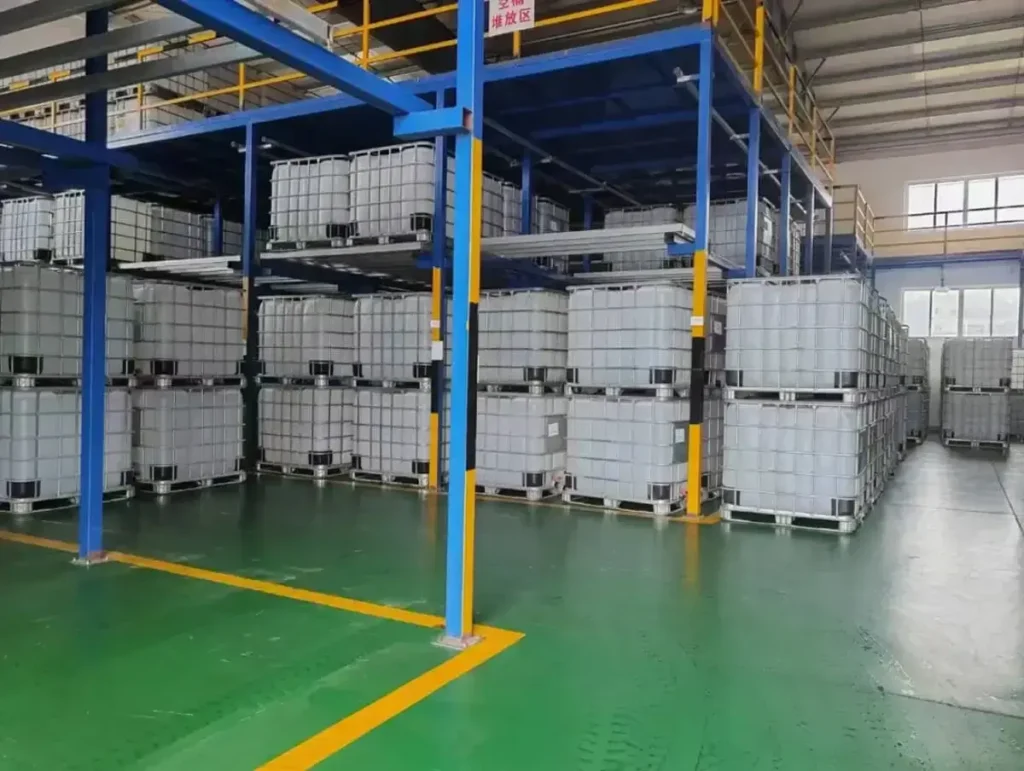
Warehouse-1
Catalogue download: Risso Chemical Catalogue (PDF)
Website: risso-chemical.com
Email: info@risso-chemical.com
WhatsApp: +86 19506380519
Tel: +86 0538 5076188
Address: High-tech Development Zone, Taian City, Shandong Province, China.