














2026-09-23
Select language:

Nitrogen fertilizer selection is rarely as simple as choosing the product with the highest nitrogen analysis. Crop demand, soil conditions, sulfur availability, application timing, weather, and the risk of nitrogen loss all influence how effectively fertilizer nitrogen is used.
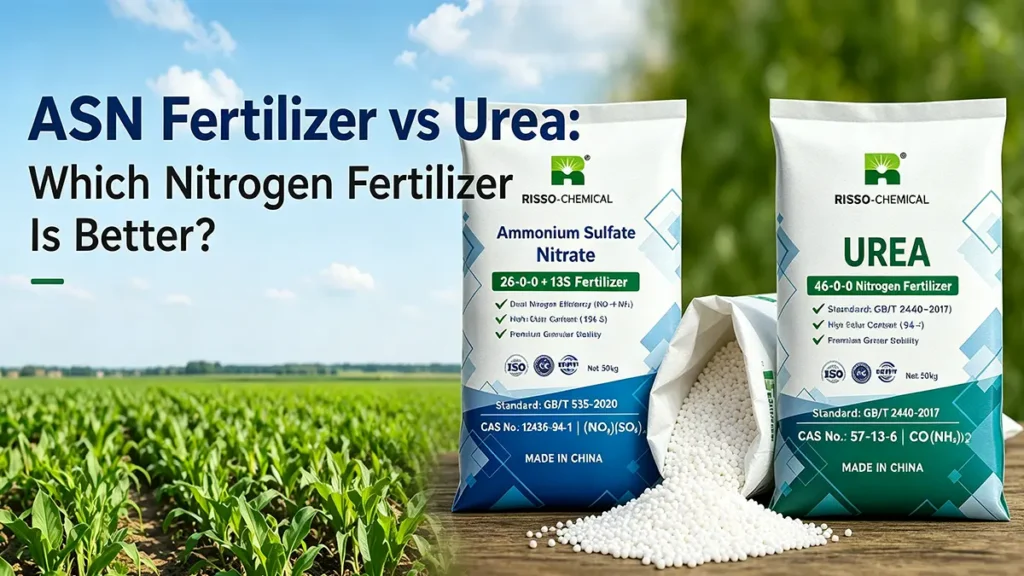
Two products often considered for nitrogen management are ASN fertilizer (Ammonium Sulphate Nitrate) and urea 46-0-0. They are both important nitrogen fertilizers, but they work differently and serve somewhat different agronomic purposes.
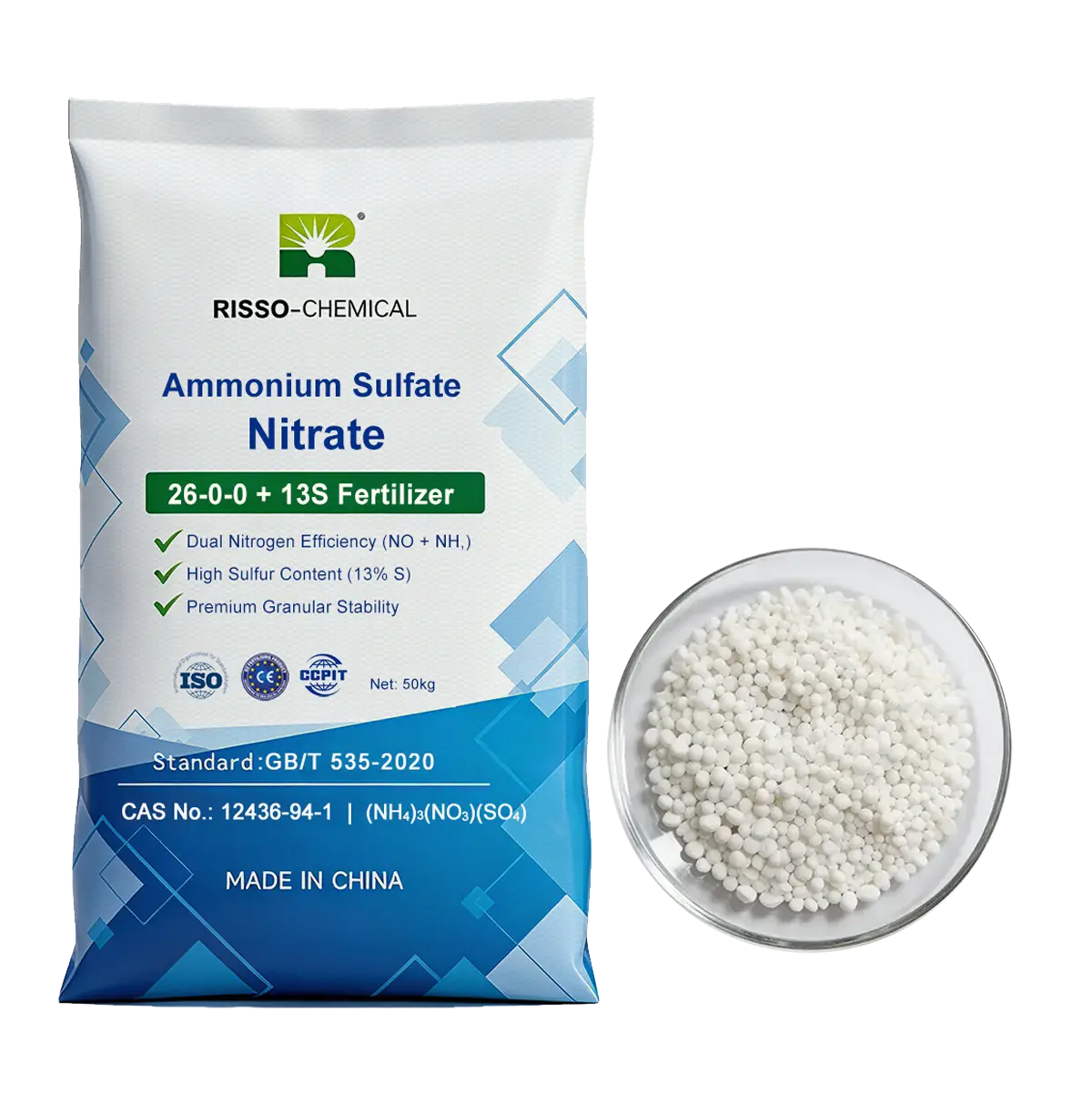
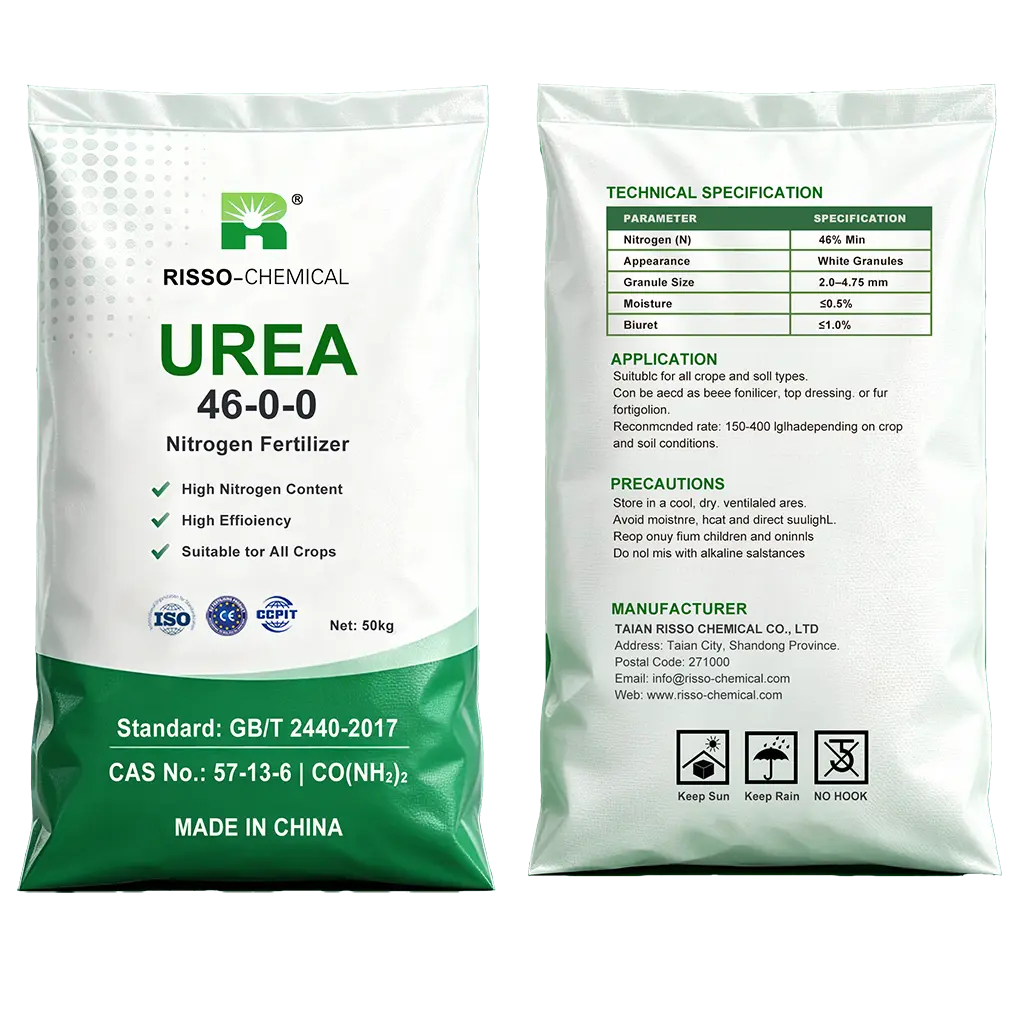
A typical ASN 26-0-0+13S fertilizer supplies nitrogen in both nitrate and ammonium forms together with sulfur. Urea, by comparison, contains approximately 46% nitrogen and is one of the most concentrated solid nitrogen fertilizers available.
So, which is better?
Neither is universally better. Urea can be the more practical choice when the main objective is to supply a large amount of nitrogen efficiently. ASN can be particularly attractive when a crop also needs sulfur and the grower wants to provide nitrogen and sulfur in a single granular fertilizer.
This article examines the practical differences between ASN and urea and explains when one may make more sense than the other.
Risso supplies ASN 26-0-0+13S and other nitrogen and NPK fertilizer products for agricultural distributors, importers, fertilizer blenders, and commercial growers. Its ASN product is designed to provide a combined source of nitrogen and sulfur for a range of crop nutrition programs.
| Characteristic | ASN 26-0-0+13S | Urea 46-0-0 |
|---|---|---|
| Total Nitrogen | 26% | 46% |
| Nitrate Nitrogen | Yes | No |
| Ammonium Nitrogen | Yes | No, initially |
| Sulfur | 13% | None |
| Main Nutritional Role | Nitrogen + sulfur | Nitrogen |
| Nitrogen Concentration | Moderate | High |
| Typical Physical Form | Granular | Granular |
That distinction becomes important when evaluating fertilizer cost. A ton of urea and a ton of ASN do not provide the same nutrient package, so comparing their prices per ton alone can lead to the wrong conclusion.
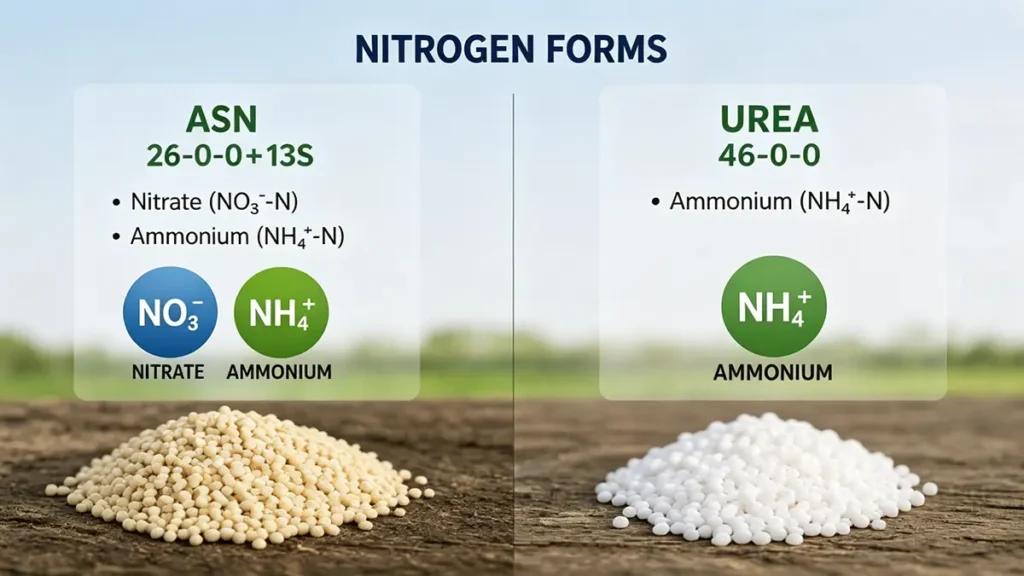
For example, a typical ASN specification may contain roughly 7–8% nitrate nitrogen and 18–19% ammonium nitrogen, depending on the specific product formulation. Risso’s ASN 26-0-0+13S product follows this general nutrient profile. Risso ASN 26-0-0+13S product
Urea 46-0-0 has a much higher nitrogen concentration. Approximately 460 kg of nitrogen is contained in every metric ton of urea, compared with approximately 260 kg of nitrogen in one metric ton of ASN 26-0-0+13S.
This difference has an obvious logistical advantage for urea when nitrogen is the only nutrient being considered.
However, ASN supplies sulfur at the same time.
That means the more meaningful comparison for a sulfur-responsive crop is not simply:
“How much nitrogen does each ton contain?”
It is:
“How much nitrogen and sulfur does the fertilizer program need to deliver, and what is the total cost of supplying those nutrients?”
ASN provides both nitrate nitrogen (NO₃-N) and ammonium nitrogen (NH₄-N). Nitrate is readily available for plant uptake, while ammonium behaves differently in soil and can be retained on soil exchange sites before undergoing nitrification.
Urea takes a different path.
After urea is applied to the soil, the enzyme urease breaks it down through hydrolysis. The resulting nitrogen then enters the ammonium/ammonia equilibrium and subsequently the broader soil nitrogen cycle.
This difference is especially relevant when fertilizer is broadcast onto the soil surface.
Under suitable conditions, surface-applied urea can experience substantial ammonia volatilization before the nitrogen is incorporated into the soil or moved into the root zone.
That does not mean ASN is automatically more efficient in every field. It means the two fertilizers have different nitrogen chemistry and therefore need to be considered differently in a fertilizer management program.
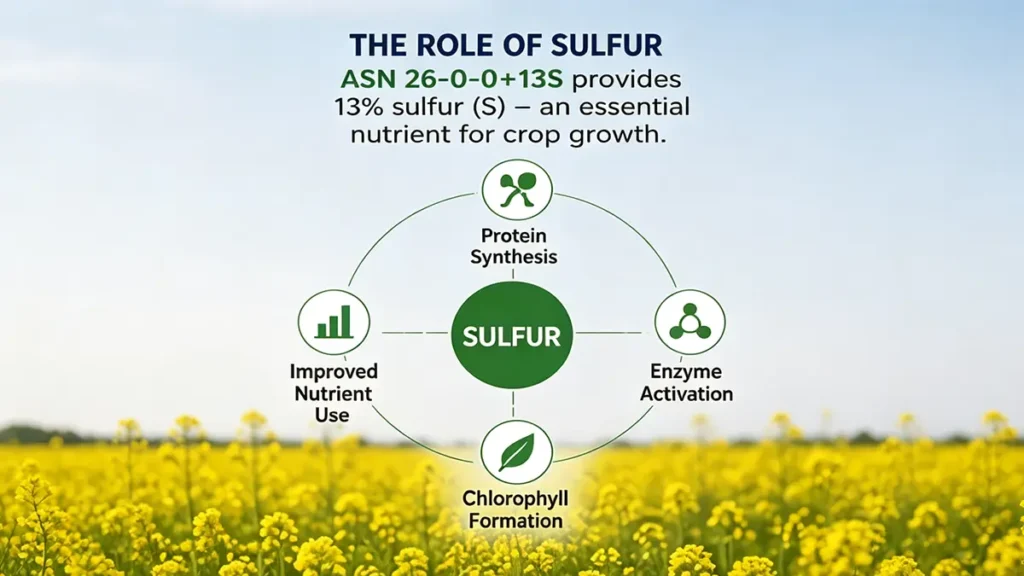
Modern high-yield cropping systems can remove considerable amounts of sulfur from agricultural soils. Sulfur is involved in amino acid formation, protein synthesis, enzyme activity, and normal plant development.
The relationship between nitrogen and sulfur is particularly important.
A crop may have sufficient nitrogen available but still respond poorly if sulfur supply is inadequate. In this situation, simply applying additional urea does not address the sulfur requirement.
This is where nitrogen sulfur fertilizer such as ASN can offer a practical advantage.
Instead of applying:
Nitrogen fertilizer + separate sulfur fertilizer
a grower can use:
ASN = nitrogen + sulfur in one granular product
This can simplify fertilizer handling and application while providing a more balanced nutrient program.
The benefit, however, depends on whether the crop actually requires additional sulfur. If soil sulfur levels are already sufficient, the sulfur component of ASN may have limited additional value.
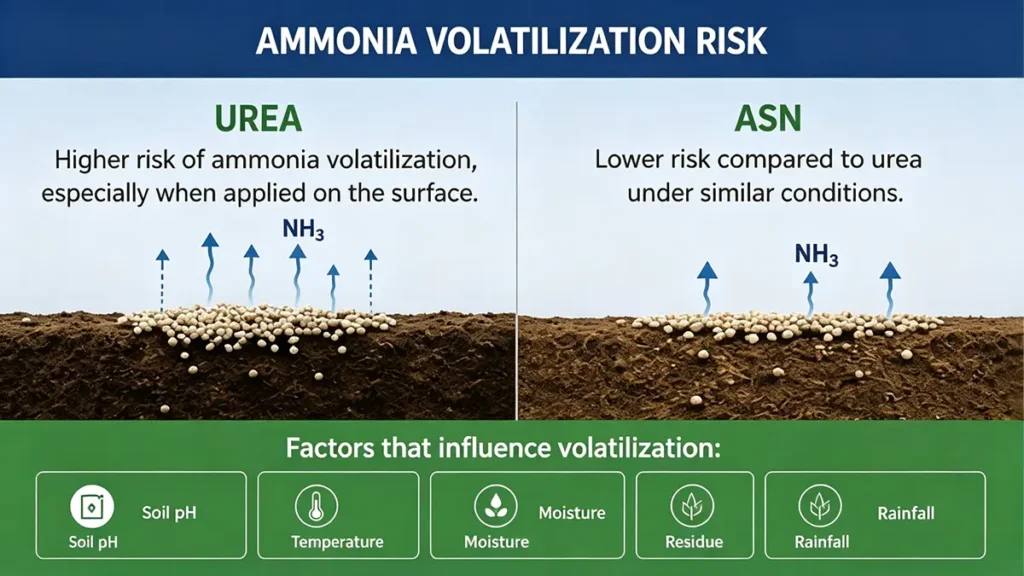
Urea is especially susceptible to ammonia loss when it remains on the soil surface under conditions favorable to volatilization. Urease activity converts urea into ammonium-containing compounds and temporarily raises the pH around the fertilizer granule. Some of the resulting nitrogen can be lost as ammonia gas.
The risk tends to increase under conditions such as:
Research and extension guidance consistently identify surface-applied urea as a significant potential source of ammonia volatilization.
ASN behaves differently because it does not first require urease hydrolysis in the way urea does.
But this does not mean ASN is completely protected from nitrogen loss.
ASN contains ammonium nitrogen, and ammonium-based fertilizers can also experience ammonia volatilization, particularly in high-pH soils and under unfavorable application conditions.
For that reason, statements such as “ASN has no ammonia loss” or “ASN always has lower nitrogen losses than urea” are too broad.
The actual result depends on fertilizer placement, soil properties, weather, and management.
It is tempting to rank fertilizers from “best” to “worst” based on NUE, but field performance is rarely that simple.
Nitrogen can be lost through several pathways, including:
The same fertilizer can perform differently under different environmental conditions.
For example, surface-applied urea in a warm, dry, high-pH environment may have a very different nitrogen-loss profile from incorporated urea followed by sufficient rainfall.
Similarly, ASN performance depends on soil pH, moisture, application placement, temperature, crop demand, and the amount of ammonium and nitrate nitrogen supplied.
This is why ASN fertilizer and urea should be evaluated as part of the entire nutrient management system rather than as isolated products.
The difference is how carefully each product needs to be managed under particular conditions.
Where immediate incorporation is not possible, growers may also consider stabilized urea products or urease inhibitors as part of a nitrogen management strategy.
The timing of application should also match crop nitrogen demand as closely as practical.
Because it supplies both nitrogen and sulfur, application rates should be calculated according to the requirements for both nutrients, rather than simply matching the nitrogen rate used for urea.
This is particularly important for crops where sulfur demand is significant.
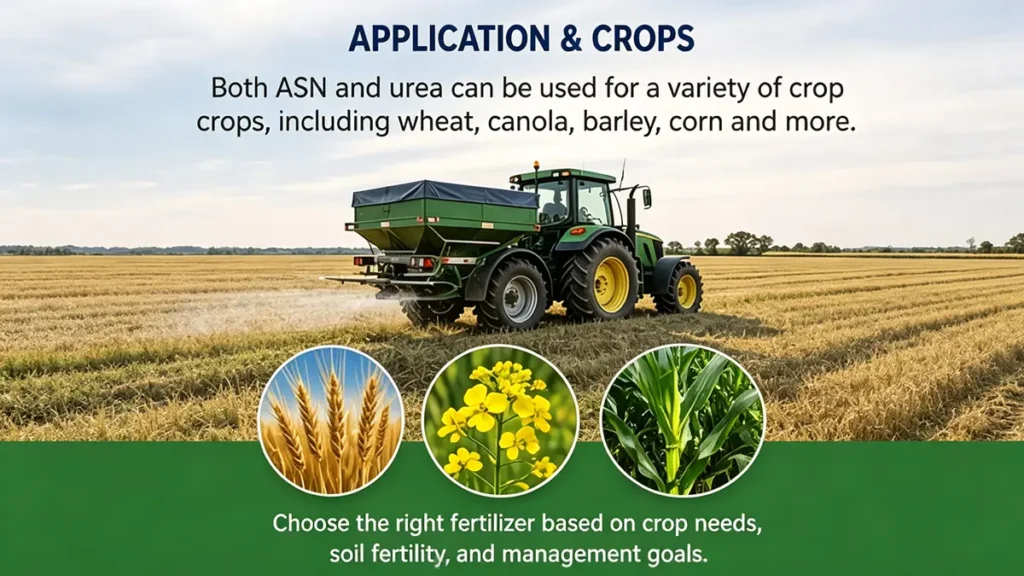
Where sulfur is limited, ASN fertilizer for wheat can provide both nutrients in a single application. This can be particularly useful in intensive wheat production systems where both nitrogen and sulfur need to be managed.
However, the correct application rate should be based on soil testing, yield potential, crop removal, and local agronomic recommendations.
Where both nitrogen and sulfur are required, ASN fertilizer for canola can provide a convenient N+S solution.
In a sulfur-deficient field, replacing an N+S program with urea alone may leave the crop’s sulfur requirement unaddressed.
ASN may be suitable where both N and S are required, while urea may be sufficient where nitrogen is the main nutrient requirement and sulfur availability is adequate.
The important point is that ASN is not a crop-specific fertilizer. Its suitability depends on the nutrient requirements of the crop and the fertility status of the soil.
With urea 46-0-0:
100 ÷ 0.46 = 217.4 kg urea
With ASN 26-0-0+13S:
100 ÷ 0.26 = 384.6 kg ASN
Urea therefore requires considerably less fertilizer mass to deliver the same amount of nitrogen.
But the ASN application also supplies sulfur:
384.6 kg × 13% = approximately 50 kg sulfur
So the comparison becomes:
Urea: 217.4 kg → 100 kg N
ASN: 384.6 kg → 100 kg N + approximately 50 kg S
This is why a simple “price per ton” comparison between 26-0-0 fertilizer and urea 46-0-0 is incomplete.
For a crop with adequate sulfur, urea may have the economic advantage.
For a sulfur-demanding crop grown on sulfur-deficient soil, the additional sulfur from ASN may reduce or eliminate the need for a separate sulfur fertilizer.
This is why ASN can be particularly relevant for crops such as canola, wheat, barley, and other intensive field crops where nitrogen and sulfur management are closely connected.
For large-scale agricultural operations, the 46% nitrogen concentration of urea can provide a substantial advantage in transportation, storage, and handling.
Urea 46-0-0 is a highly concentrated nitrogen source. Its high N analysis makes it attractive for large-scale nitrogen applications where sulfur is not a limiting nutrient.
ASN 26-0-0+13S provides a lower concentration of nitrogen but adds approximately 13% sulfur and supplies nitrogen in both nitrate and ammonium forms. Its main value comes from combining two important nutrients in one granular fertilizer.
The decision can therefore be summarized as follows:| If your priority is… | Consider |
|---|---|
| Maximum nitrogen concentration | Urea |
| Nitrogen-only fertilization | Urea |
| Efficient transport of nitrogen | Urea |
| Nitrogen + sulfur in one product | ASN |
| Sulfur-deficient soil | ASN |
| Crop with significant sulfur demand | ASN |
| Combined nitrate + ammonium nitrogen | ASN |
The better choice is the one that matches the crop’s nutrient requirements, soil fertility, environmental conditions, application method, and total nutrient economics.
For fertilizer buyers and distributors, this distinction is also important when comparing products from different suppliers. Product analysis, granule quality, packaging, certificates, consistency, logistics, and technical support can all influence the real value of a fertilizer purchase.
Risso Chemical supplies ASN 26-0-0+13S for international agricultural markets, with a focus on consistent nutrient specifications, granular quality, flexible packaging, and commercial fertilizer supply. Buyers can evaluate ASN based on their crop requirements, target nutrient ratios, packaging needs, and market requirements rather than selecting a fertilizer solely by its nitrogen percentage.
For growers, distributors, and fertilizer importers evaluating ASN fertilizer suppliers, the most useful next step is to compare the complete nutrient package and application requirements rather than looking only at the price per metric ton.
The right nitrogen fertilizer is not necessarily the one with the highest nitrogen percentage. It is the one that delivers the nutrients the crop actually needs, in the right form, at the right time, and at the right total cost.
Not universally. ASN can be more suitable when both nitrogen and sulfur are required, while urea is often attractive when high nitrogen concentration and nitrogen-only fertilization are the main priorities.
ASN 26-0-0+13S is an ammonium sulphate nitrate fertilizer containing approximately 26% total nitrogen and 13% sulfur. It supplies nitrogen in nitrate and ammonium forms.
The main differences are nutrient concentration, nitrogen form, and sulfur content. ASN provides approximately 26% N plus 13% S, while urea provides approximately 46% N without sulfur.
Not necessarily. “26-0-0” describes the N-P₂O₅-K₂O analysis. ASN is a specific fertilizer type, and a common commercial grade is 26-0-0+13S.
Yes. A typical ASN 26-0-0+13S fertilizer contains approximately 13% sulfur.
Yes. ASN contains both nitrate and ammonium nitrogen. A typical product contains approximately 7–8% nitrate nitrogen and 18–19% ammonium nitrogen, although exact specifications can vary by manufacturer.
No. Standard urea 46-0-0 does not supply sulfur.
No. ASN and ammonium sulfate are different fertilizer products with different nutrient compositions and nitrogen forms.
Either can be appropriate. ASN may have an advantage where wheat requires both nitrogen and sulfur. Urea can be appropriate where nitrogen is the primary requirement and sulfur is already sufficient.
ASN can be a useful nitrogen-sulfur fertilizer for canola where both nutrients are required. Canola's sulfur requirement makes soil sulfur status an important part of the decision.
Urea contains substantially more nitrogen by weight: approximately 46% compared with approximately 26% in typical ASN.
They can potentially be used within the same fertilizer program, provided the nutrient requirements, product compatibility, equipment, and application strategy are appropriate.
If you want to know other questions about nitrogen fertilizers, please contact us and we will provide professional answers.
✔ Quick & helpful reply within 6 hours.
✔ Tailored solutions for your project.
✔ One-stop product, tech, market

Want to find a China fertilizer manufacturer?
Risso will be your best choice; send us your request for your fertilizer details requirement
© Copyright 2017 RISSO CHEMICAL. All Rights Reserved.