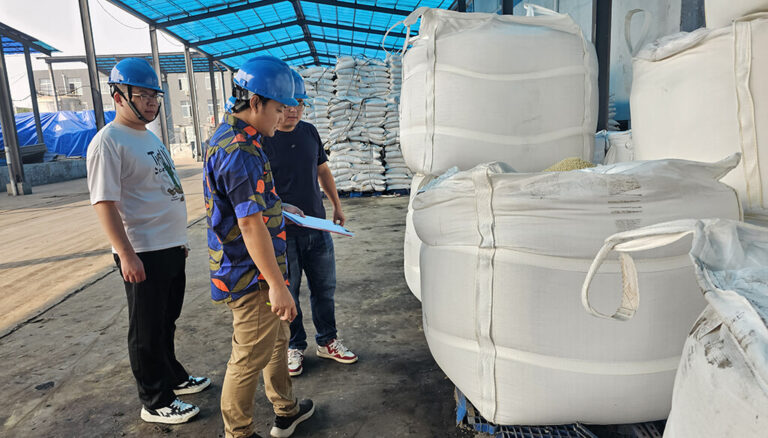














270 Days PCU Urea (Polymer Coated Urea)
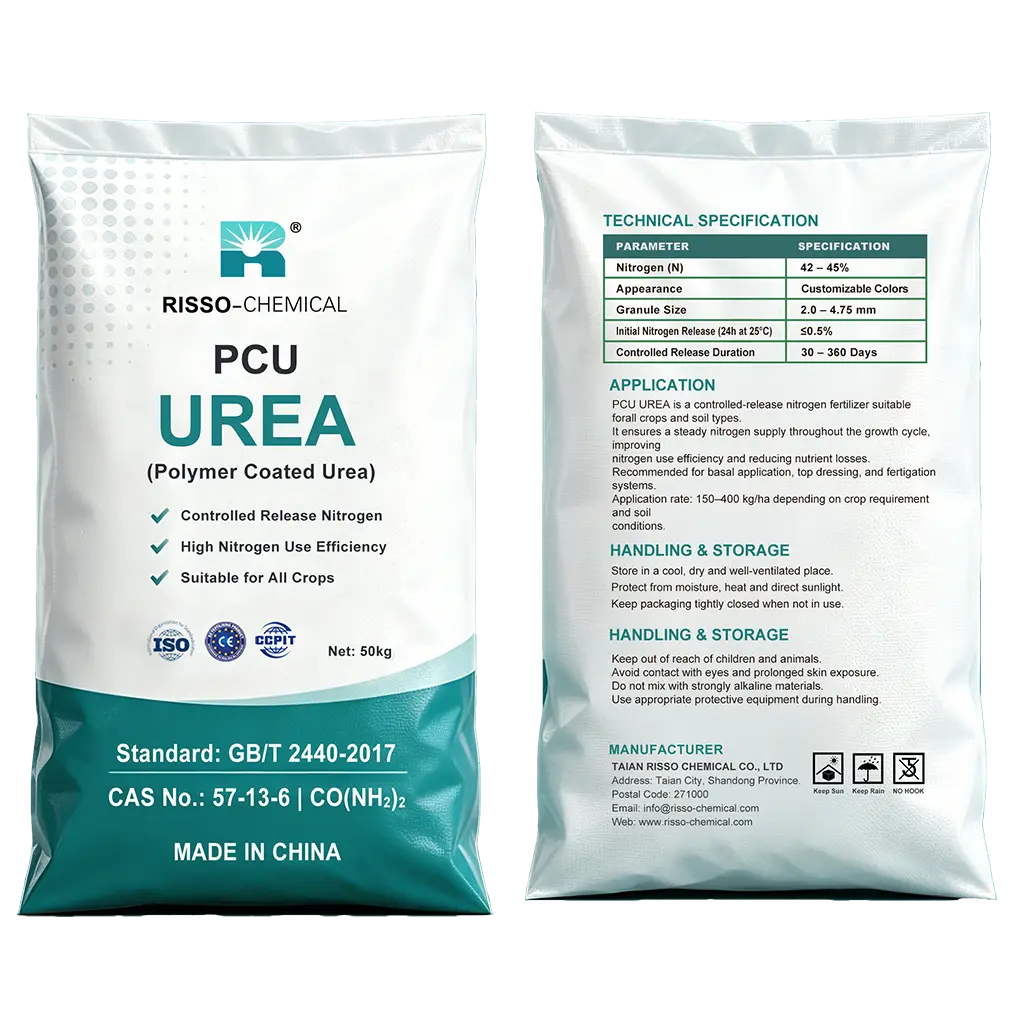
270 Days PCU Urea (Polymer Coated Urea)
Advanced Controlled Release Nitrogen Fertilizer for Season-Long Crop Nutrition
- 42–44% Nitrogen (N)
- Controlled Nitrogen Release for Up to 270 Days
- Improves Nitrogen Use Efficiency (NUE)
- Reduces Leaching, Volatilization and Nutrient Losses
- Fewer Applications with Long-Lasting Nutrient Supply
- Ideal for Orchards, Plantations, Turf, Forestry and Landscape Applications
Product Details
Risso® 270 Days PCU Urea is a high-performance Polymer Coated Urea (PCU UREA) specifically engineered to provide a consistent and controlled nitrogen supply for up to 270 days. Utilizing advanced polymer coating technology, each granule gradually releases nitrogen in response to soil temperature and moisture, ensuring optimal nutrient availability throughout extended crop growth cycles.
As a premium controlled release urea fertilizer, 270 Days PCU Urea helps improve Nitrogen Use Efficiency (NUE), reduce nutrient losses, minimize environmental impact, and decrease labor costs associated with repeated fertilizer applications. It is an ideal nitrogen solution for perennial crops, fruit orchards, plantations, turf management, forestry, landscaping, and long-season agricultural production systems.
How 270 Days PCU Urea Works
The advanced polymer coating acts as a semi-permeable membrane surrounding the urea core.
After application:- Soil moisture penetrates the polymer coating.
- The urea inside the granule dissolves.
- Nitrogen nutrients gradually diffuse through the coating layer.
- Crops receive a continuous and predictable nitrogen supply over an extended period.
This controlled nutrient release process significantly reduces nitrogen losses caused by volatilization, leaching, and denitrification while maximizing plant uptake efficiency.
Product Specifications
| Item | Specification |
|---|---|
| Product Name | 270 Days PCU Urea |
| Product Type | Polymer Coated Urea (PCU) |
| Total Nitrogen (N) | 42%–44% |
| Nitrogen Form | Controlled Release Nitrogen |
| Release Longevity | 270 Days |
| Coating Technology | Advanced Polymer Coating |
| Appearance | Light Yellow Granules |
| Granule Size | 2.0–4.75 mm |
| Moisture Content | ≤ 2.0% |
| Application Method | Basal Application |
| Packaging Options | 25kg, 50kg, 500kg, 1000kg Bags |
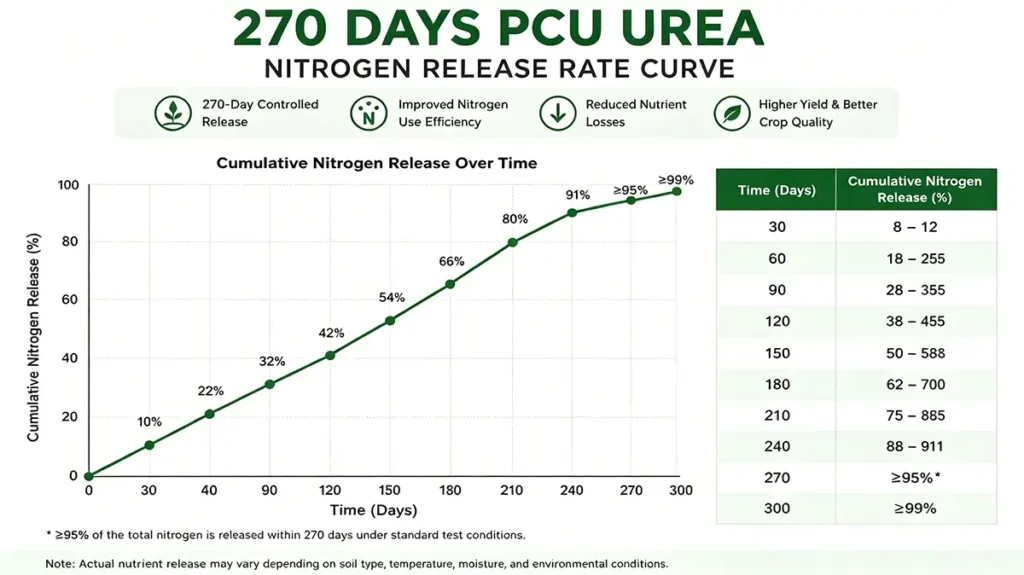
Typical Nitrogen Release Rate of 270 Days PCU Urea
| Release Period | Cumulative Nitrogen Release (%) |
|---|---|
| 30 Days | 8–12% |
| 60 Days | 18–25% |
| 90 Days | 28–35% |
| 120 Days | 38–45% |
| 150 Days | 50–58% |
| 180 Days | 62–70% |
| 210 Days | 75–85% |
| 240 Days | 88–91% |
| 270 Days | ≥95% Release Longevity Achieved |
| 300 Days | ≥99% |
Key Benefits of 270 Days Polymer Coated Urea
Extended Nitrogen Availability
Provides a reliable nitrogen supply for up to 270 days, supporting continuous crop growth from establishment through harvest.
Improved Nitrogen Use Efficiency (NUE)
Matches nutrient release with crop demand, allowing plants to absorb more nitrogen while reducing fertilizer waste.
Reduced Nutrient Losses
- Ammonia volatilization
- Nitrate leaching
- Nitrogen runoff
- Denitrification losses
Fewer Fertilizer Applications
The extended release period can replace multiple conventional urea applications, reducing labor, machinery use, and operational costs.
Enhanced Crop Growth and Yield
- Strong root development
- Uniform plant growth
- Improved nutrient uptake
- Enhanced crop quality
- Higher yield potential
Environmentally Sustainable Fertilization
Supports modern sustainable agriculture by reducing nutrient losses and improving overall fertilizer efficiency.
Application Recommendations
| Crop Category | Typical Crops | Recommended Rate |
|---|---|---|
| Fruit Trees & Orchards | Citrus, Apple, Pear, Mango, Avocado, Grapes | 300–800 kg/ha |
| Plantation Crops | Oil Palm, Rubber, Tea, Coffee, Cocoa | 250–700 kg/ha |
| Field Crops | Corn, Wheat, Rice, Cotton, Sugarcane | 200–500 kg/ha |
| Turf & Landscaping | Golf Courses, Sports Fields, Parks, Lawns | 150–400 kg/ha |
| Forestry & Nurseries | Tree Plantations, Seedlings, Ornamentals | 200–600 kg/ha |
Application Method: Apply as a basal fertilizer before planting or during early crop development. Incorporate into the soil whenever possible to maximize nutrient efficiency and ensure consistent nitrogen release.
Note: Actual application rates should be adjusted according to soil fertility, crop nutrient requirements, yield targets, and local agronomic recommendations.
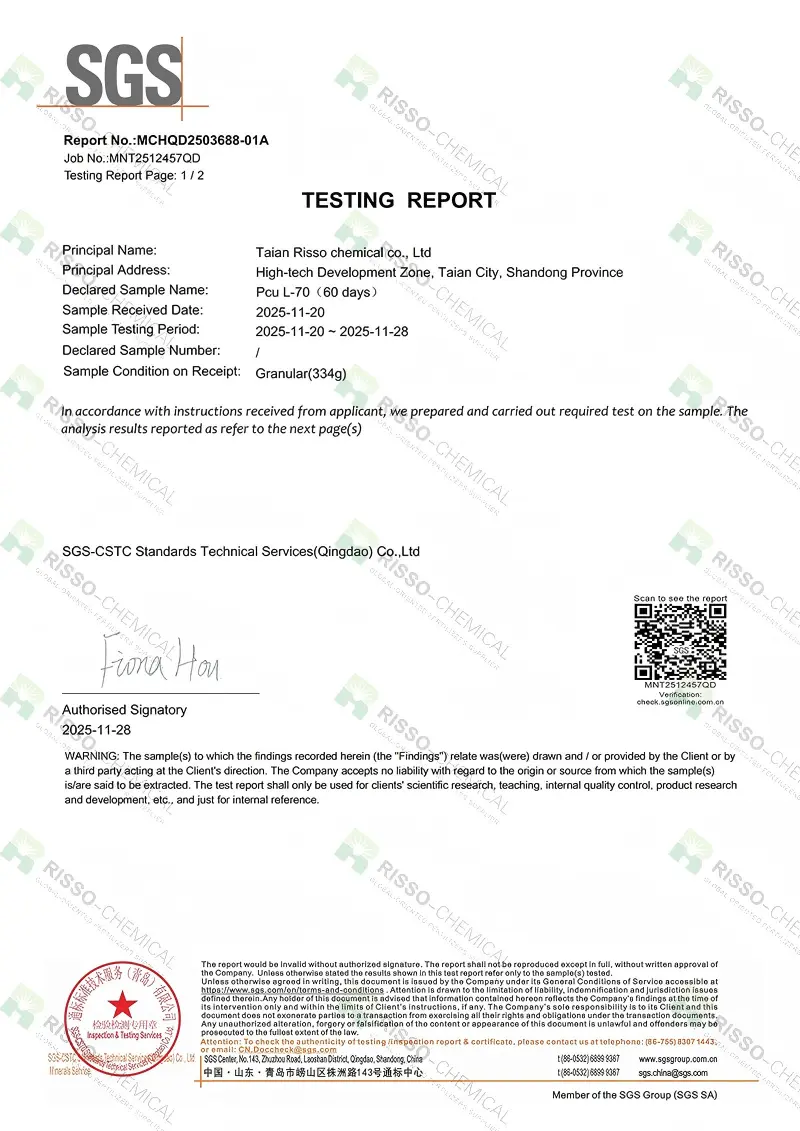
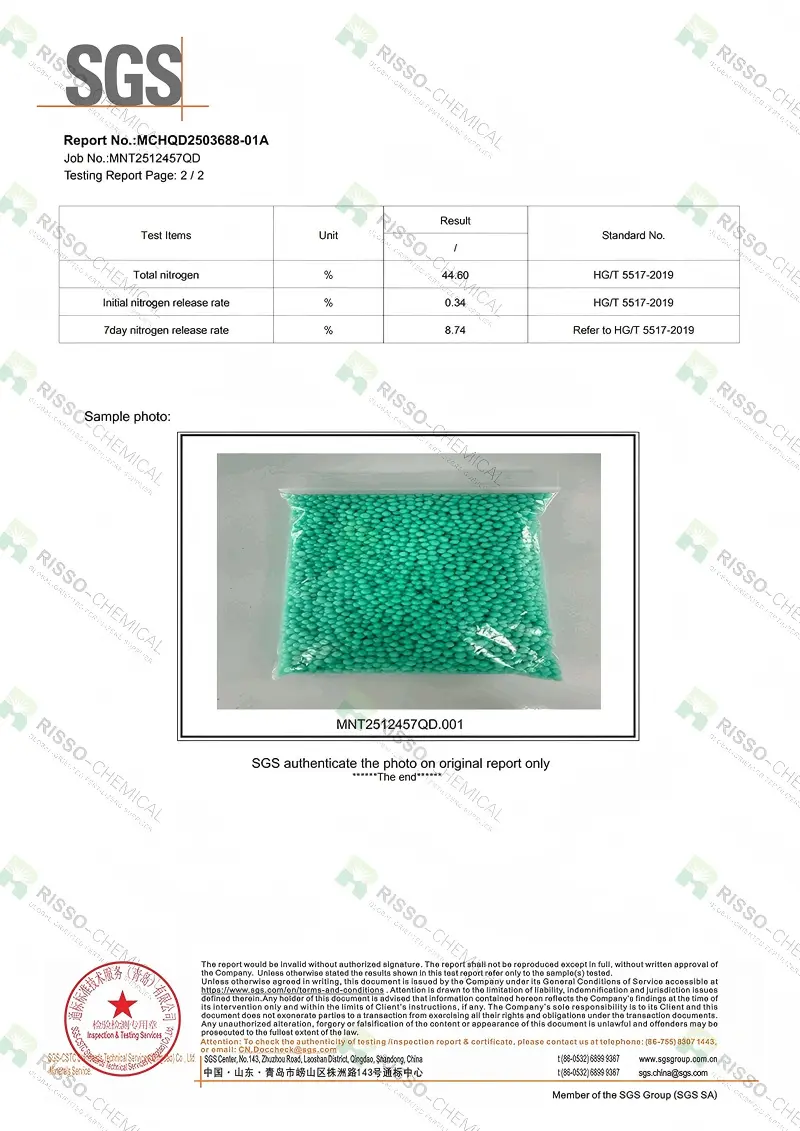
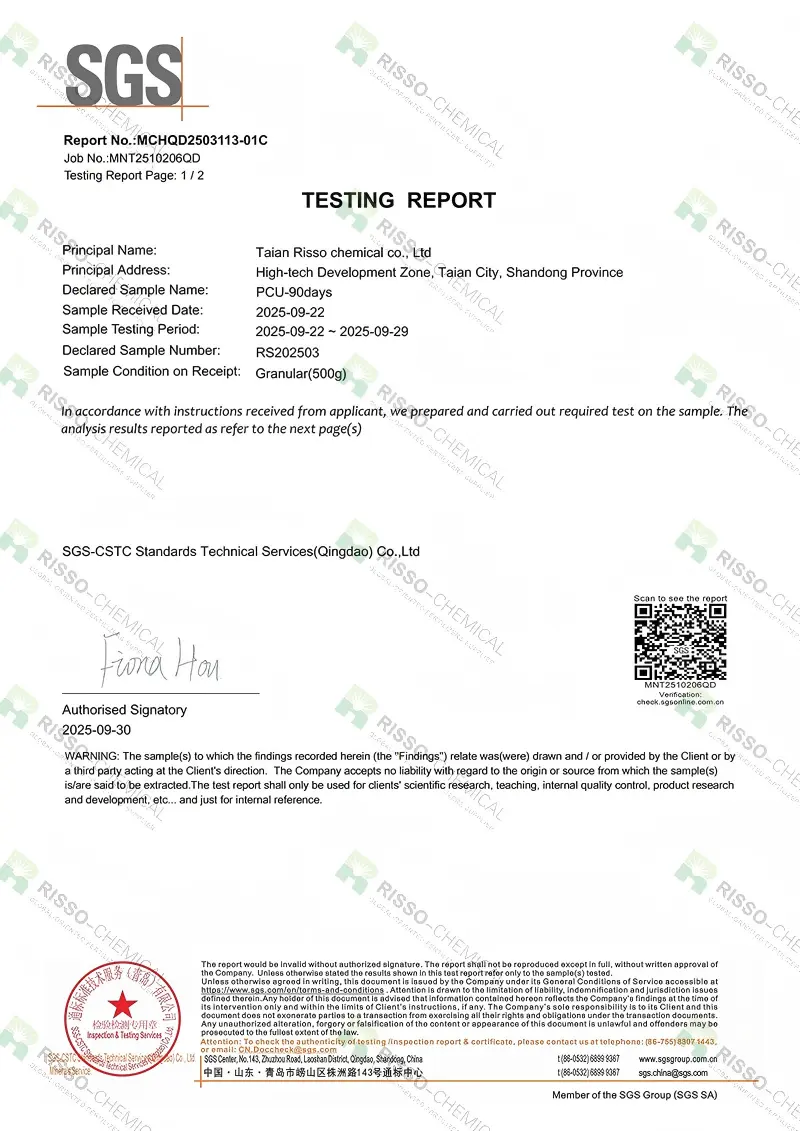
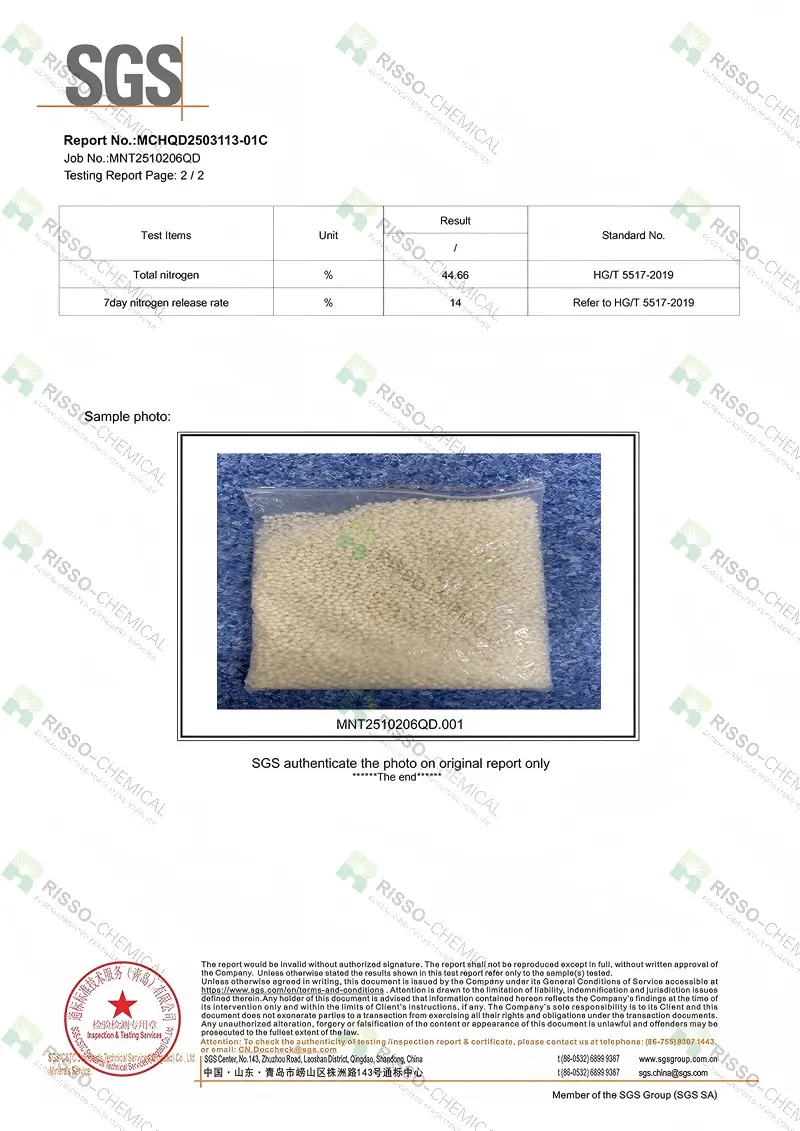
PCU UREA Certificate
Frequently Asked Questions
A: 270-day PCU urea is a polymer-coated controlled-release nitrogen fertilizer that gradually releases nitrogen for up to 270 days, improving nitrogen use efficiency and reducing fertilizer loss.
A: It uses a semi-permeable polymer coating that allows water to penetrate and slowly dissolve urea, releasing nitrogen based on soil temperature and moisture conditions.
A: Normal urea releases nitrogen immediately, while 270-day PCU provides a slow, controlled release over months, greatly improving nitrogen efficiency and reducing environmental loss.
A: Soil temperature, moisture level, coating thickness, and microbial activity all influence the nitrogen release rate.
A: Yes. It reduces nitrogen leaching, ammonia volatilization, and greenhouse gas emissions, making it a more sustainable fertilizer option.

Contact us for pricing and support.
✔ Reply within 12 hours
✔ Professional fertilizer solutions
✔ OEM & private label service
PRODUCTS THAT MIGHT INTEREST YOU
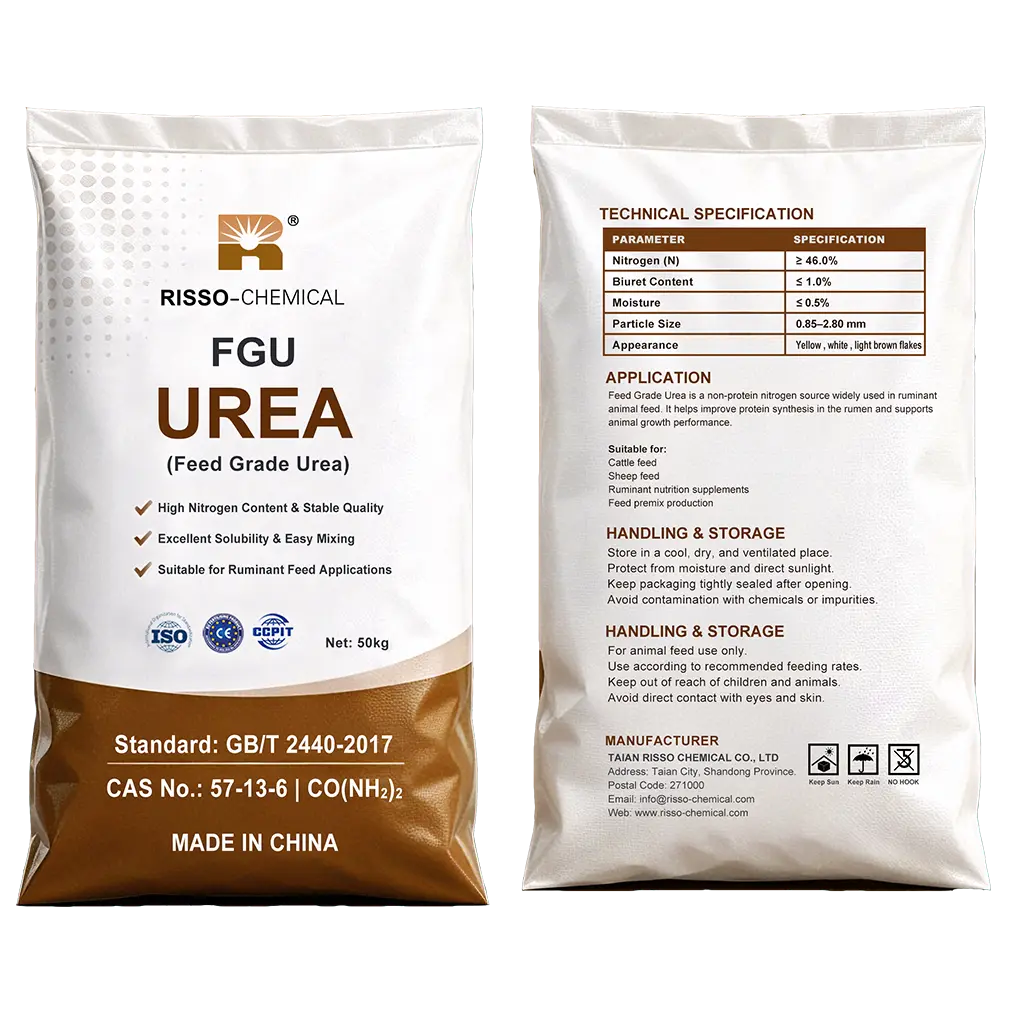
Feed Grade Urea
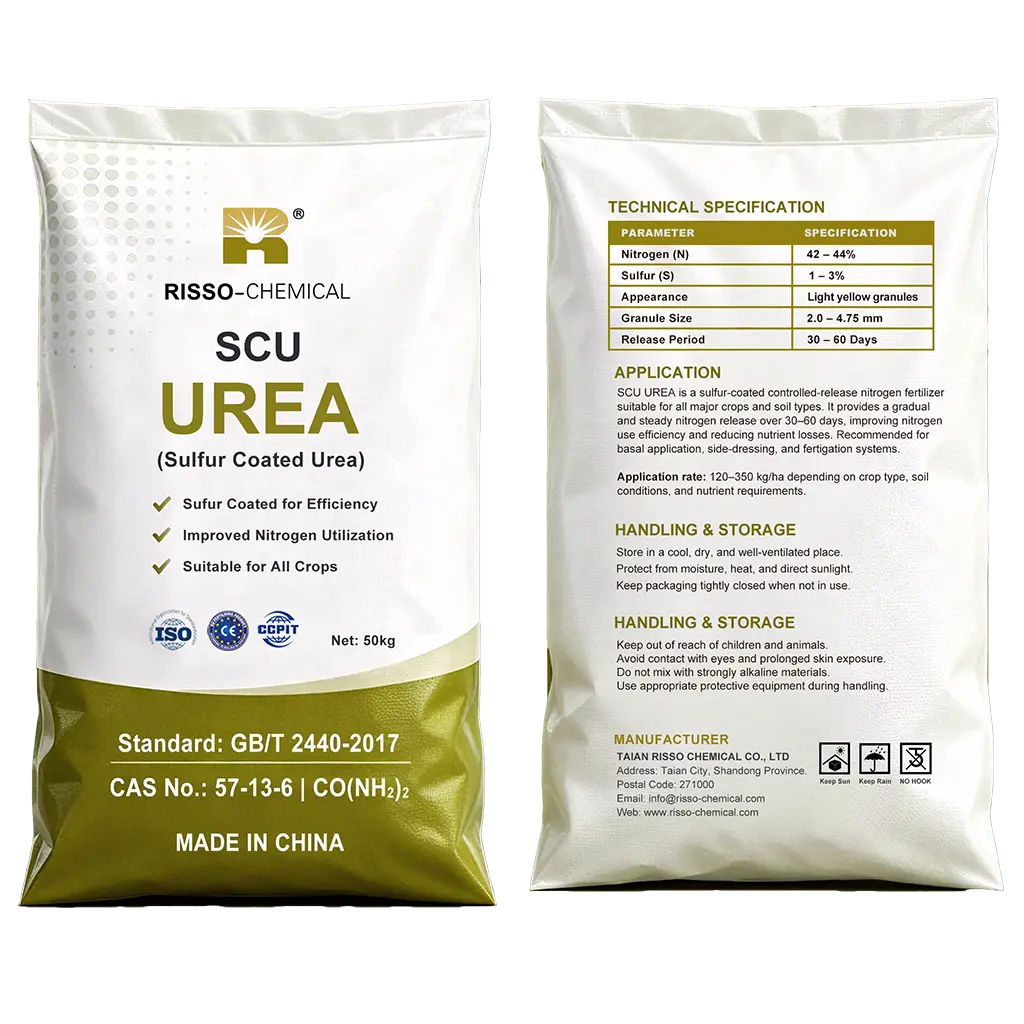
SCU UREA
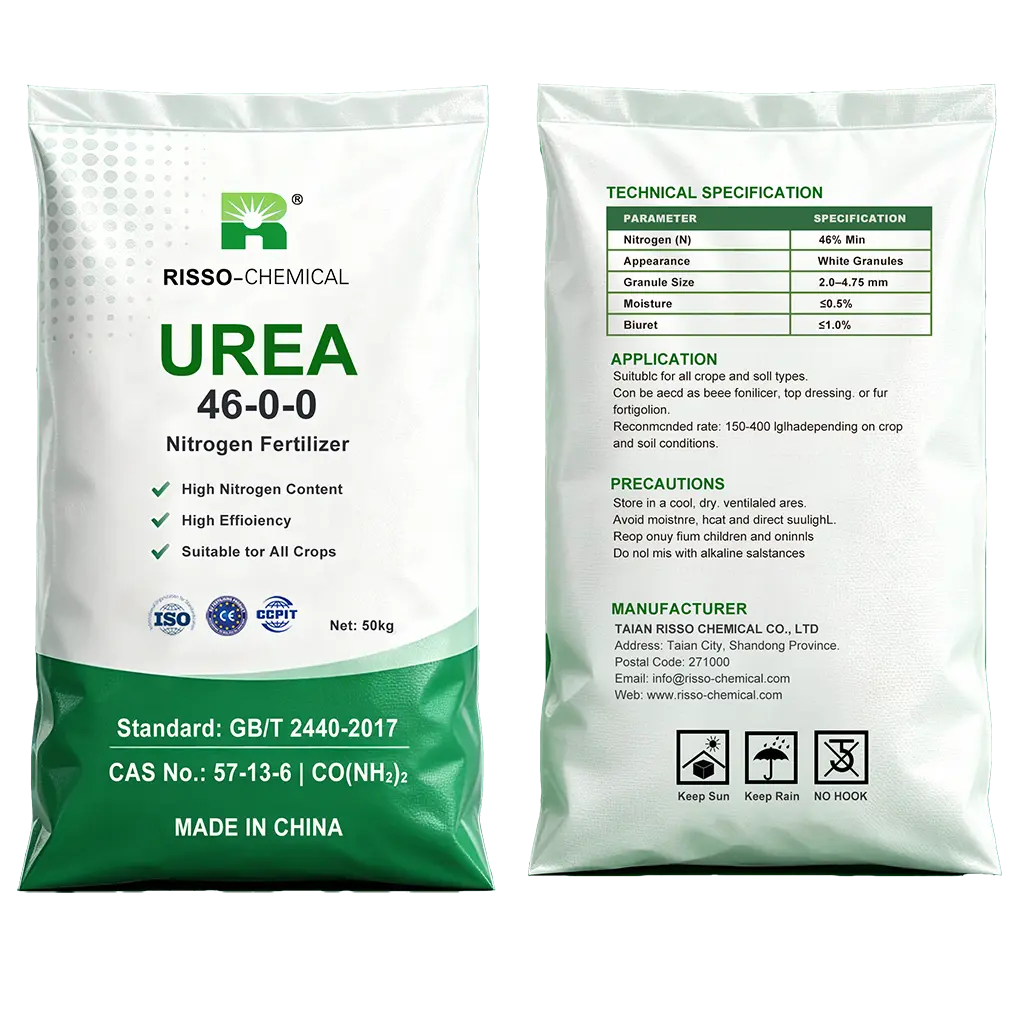
Agricultural-Urea
PCU UREA
Need a custom formula?
Contact our technical sales team for soil-specific recommendations and bulk pricing.
Why Choose Risso 270 Days PCU Urea?
- Advanced Polymer Coated Urea Technology
- Controlled Nitrogen Release for Up to 270 Days
- High Nitrogen Content (42–44%)
- Enhanced Nitrogen Use Efficiency
- Reduced Leaching and Volatilization Losses
- Uniform Granules for Consistent Performance
- Suitable for Long-Season Crops and Perennial Plantations
- OEM, Private Label, and Global Supply Available
Risso 270 Days PCU Urea is designed to deliver reliable long-term nitrogen nutrition, improve fertilizer efficiency, and support sustainable crop production.