














2026-09-23
Select language:

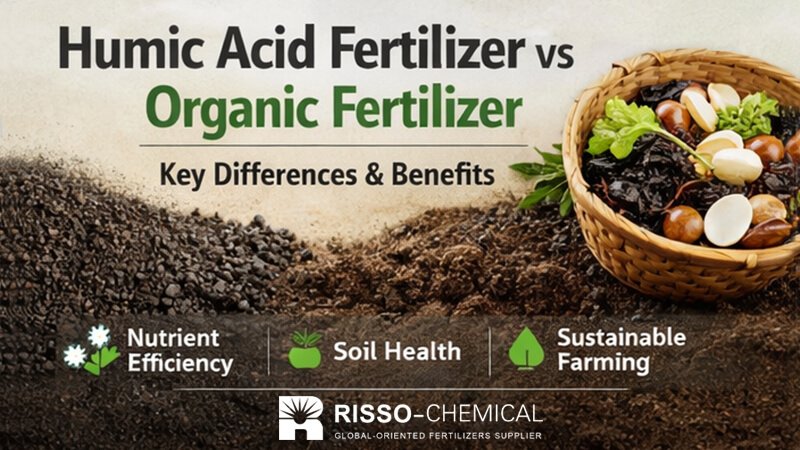
Modern agriculture increasingly focuses on soil health, nutrient efficiency, and sustainable yield improvement. When choosing soil improvement inputs, many growers and fertilizer buyers face the same question: humic acid fertilizer vs organic fertilizer — which one delivers better results?
As a professional fertilizer manufacturer, Risso works closely with growers and distributors worldwide and has found that misunderstandings between these two fertilizer types often lead to inefficient fertilization strategies. This in-depth guide explains their fundamental differences, real agronomic functions, and how to use them correctly for optimal crop performance.

In practical farming, fertilizer performance is not determined solely by nutrient content, but by how efficiently plants can absorb and utilize those nutrients. Both humic acid fertilizer and organic fertilizer are widely used to improve soil fertility, yet they operate through fundamentally different mechanisms.
Understanding the difference between humic acid fertilizer and organic fertilizer is essential for:This distinction is especially important in intensive cropping systems, degraded soils, and precision agriculture programs.
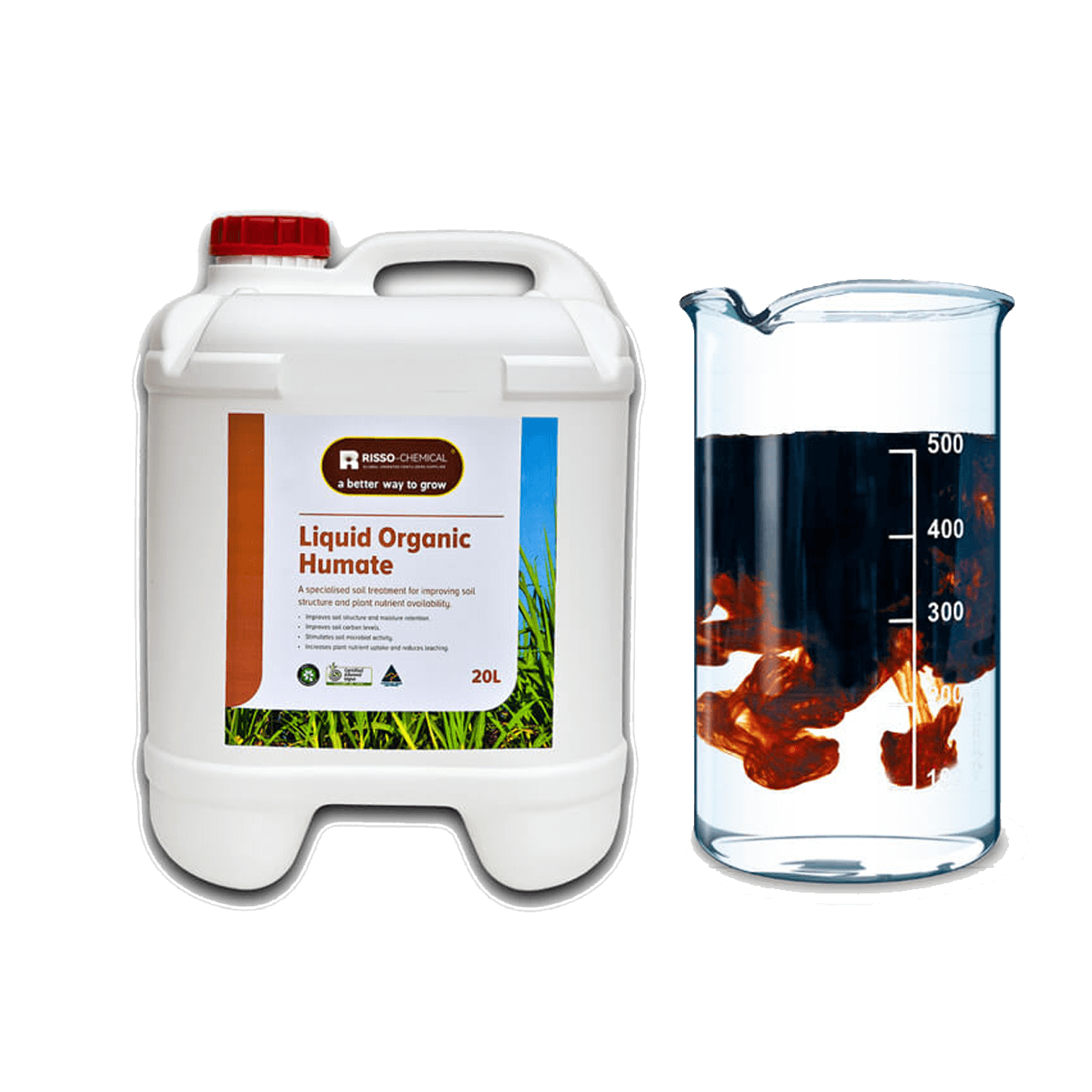
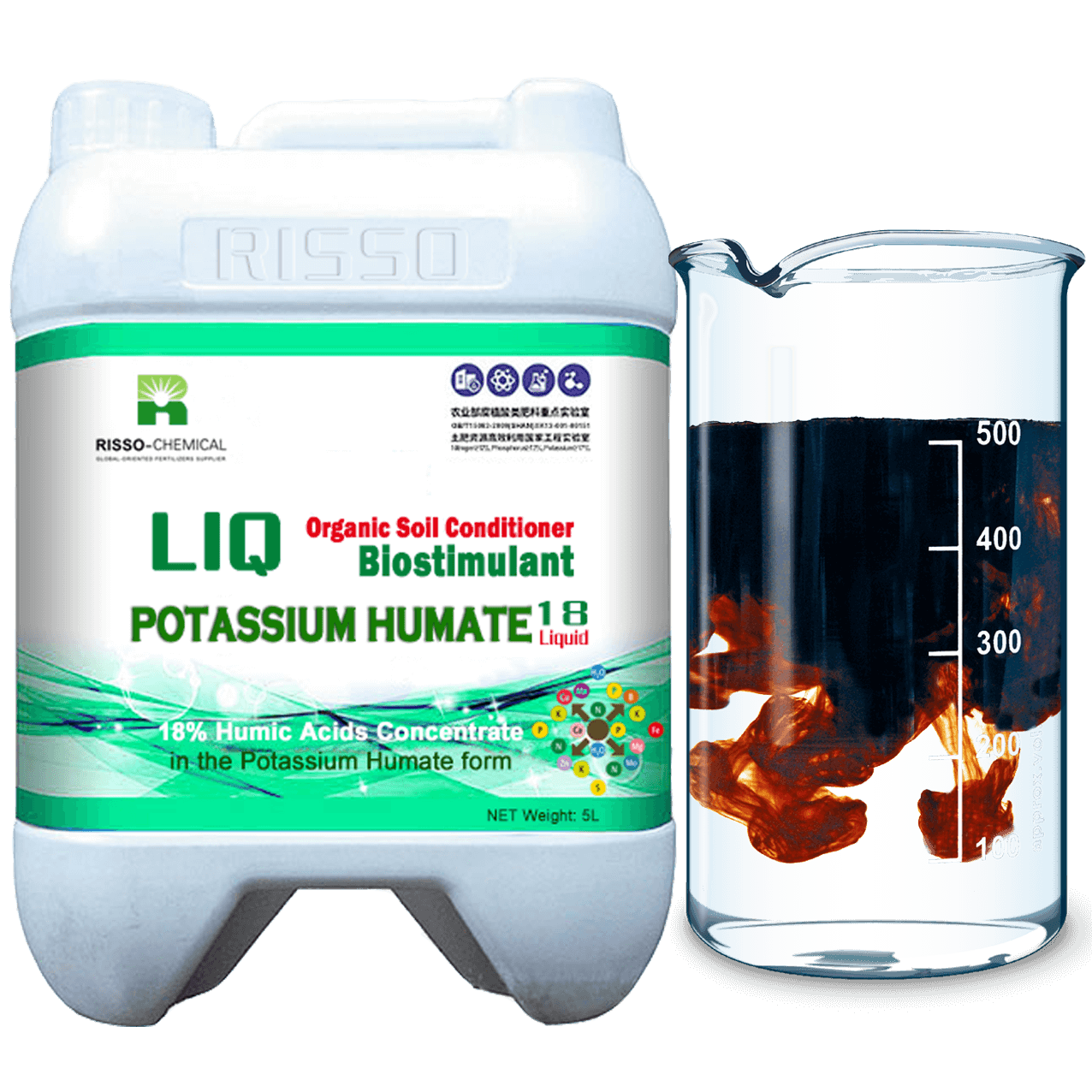
Humic acid fertilizer is formulated from naturally occurring humic substances extracted from leonardite, lignite, or highly humified organic materials. Rather than acting as a primary nutrient source, it functions mainly as a soil conditioner and nutrient utilization enhancer.
From an agronomic perspective, humic acid improves soil performance by:
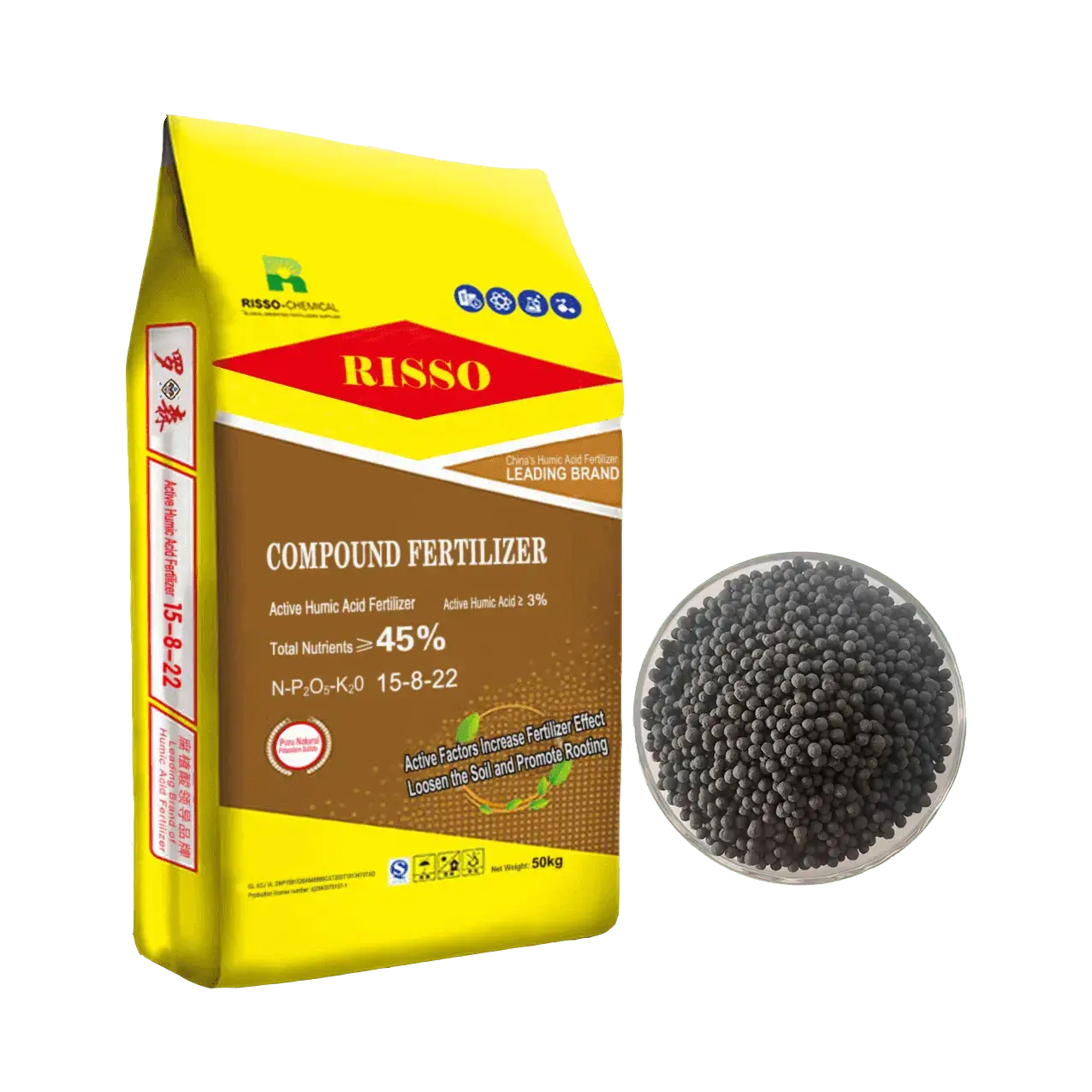
Because of these characteristics, humic acid fertilizer is frequently used in fertigation systems, compound fertilizers, and slow- or controlled-release fertilizer formulations.
Organic fertilizer is produced from plant residues, animal manure, compost, or biologically fermented materials. Unlike humic acid fertilizer, organic fertilizer contains measurable and usable amounts of nutrients, including nitrogen, phosphorus, potassium, and trace elements.
Its primary agronomic functions include:
Organic fertilizer plays a critical role in long-term soil fertility building, especially in organic farming systems and regenerative agriculture practices.

The key difference lies in how nutrients are delivered and utilized. Organic fertilizer supplies nutrients directly, while humic acid fertilizer improves the soil’s ability to retain, transport, and make those nutrients available to plant roots.
In soils with low nutrient efficiency, crops may show deficiencies even when fertilizers are applied. In such cases, humic acid fertilizer improves nutrient availability and root absorption, rather than increasing nutrient dosage.
Humic acid fertilizer improves soil aggregation and reduces compaction, making it particularly effective in sandy, saline, or degraded soils. Its effect on soil physical properties is often visible within a short period after application.
Organic fertilizer improves soil structure more gradually by increasing organic matter and stimulating biological activity. While slower, this improvement is cumulative and essential for sustainable soil health.
Humic acid fertilizer works quickly by enhancing nutrient mobility and chelation, especially for micronutrients such as iron, zinc, and calcium. Organic fertilizer relies on microbial decomposition, meaning nutrient release speed depends on soil temperature, moisture, and biological activity.
For this reason, humic acid fertilizer is often used to boost fertilizer efficiency, while organic fertilizer serves as a long-term nutrient reservoir.
At Risso, many fertilizer programs combine humic acid with organic or mineral fertilizers to balance immediate crop demand and long-term soil improvement.
In practical field applications, humic acid fertilizer often delivers faster visible crop responses, while organic fertilizer contributes to long-term soil resilience.
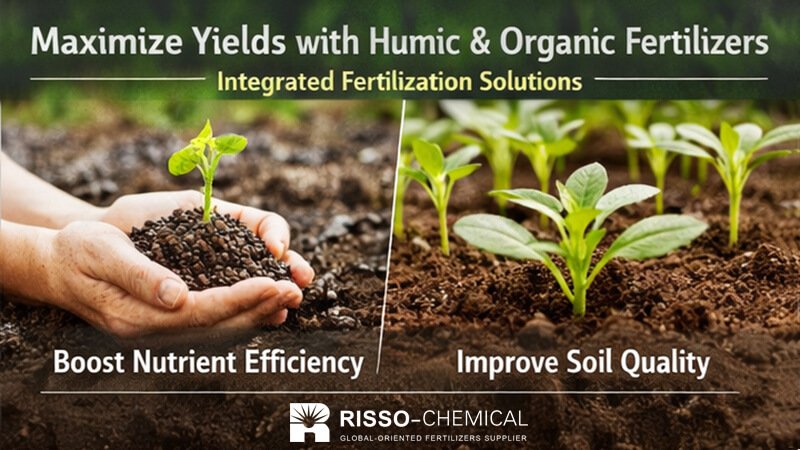
Rather than choosing between humic acid fertilizer and organic fertilizer, many advanced growers use them together. This integrated strategy improves both nutrient efficiency and soil sustainability.
A common and effective approach includes:This approach is widely adopted in high-efficiency fertilizer programs developed by Risso, particularly for vegetables, fruit trees, and high-value crops.
One common misconception is assuming humic acid fertilizer can replace organic fertilizer entirely. In reality, humic acid enhances nutrient utilization but does not supply sufficient nutrients on its own.
Another mistake is expecting organic fertilizer to produce immediate results. Organic fertilizers require time and microbial activity to release nutrients, making them unsuitable as a quick corrective solution.
Successful fertilization strategies are always based on soil testing, crop demand, and growth stage, rather than relying on a single fertilizer type.
When comparing humic acid fertilizer vs organic fertilizer, the correct choice depends on your agronomic goals.
For growers seeking balanced, efficient, and scalable fertilizer solutions, integrated programs developed by Risso offer a proven path toward improved soil health and crop productivity.
If you want to know other questions about humic acid fertilizer, please contact us and we will provide professional answers.
✔ Quick & helpful reply within 6 hours.
✔ Tailored solutions for your project.
✔ One-stop product, tech, market

Want to find a China fertilizer manufacturer?
Risso will be your best choice; send us your request for your fertilizer details requirement
© Copyright 2017 RISSO CHEMICAL. All Rights Reserved.