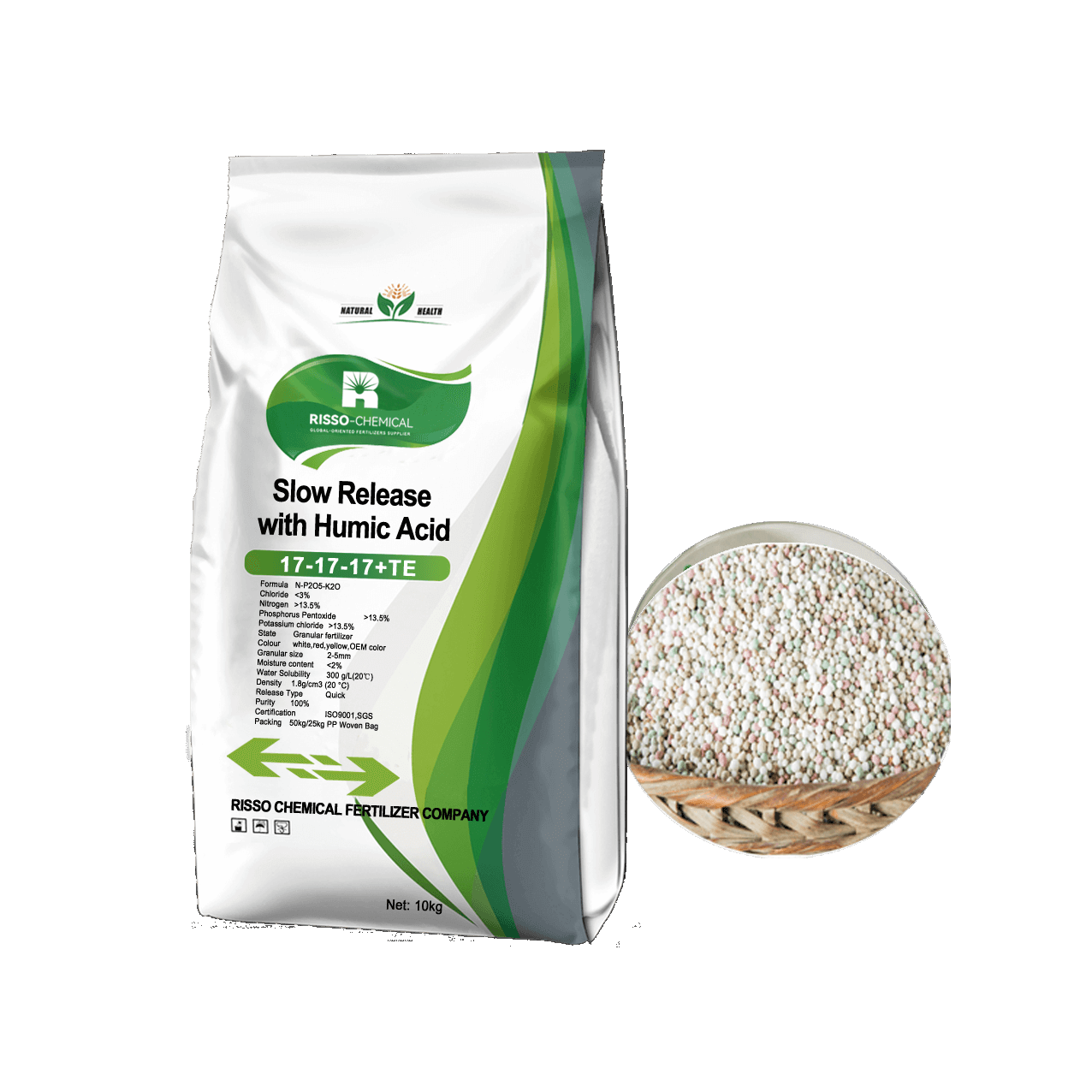
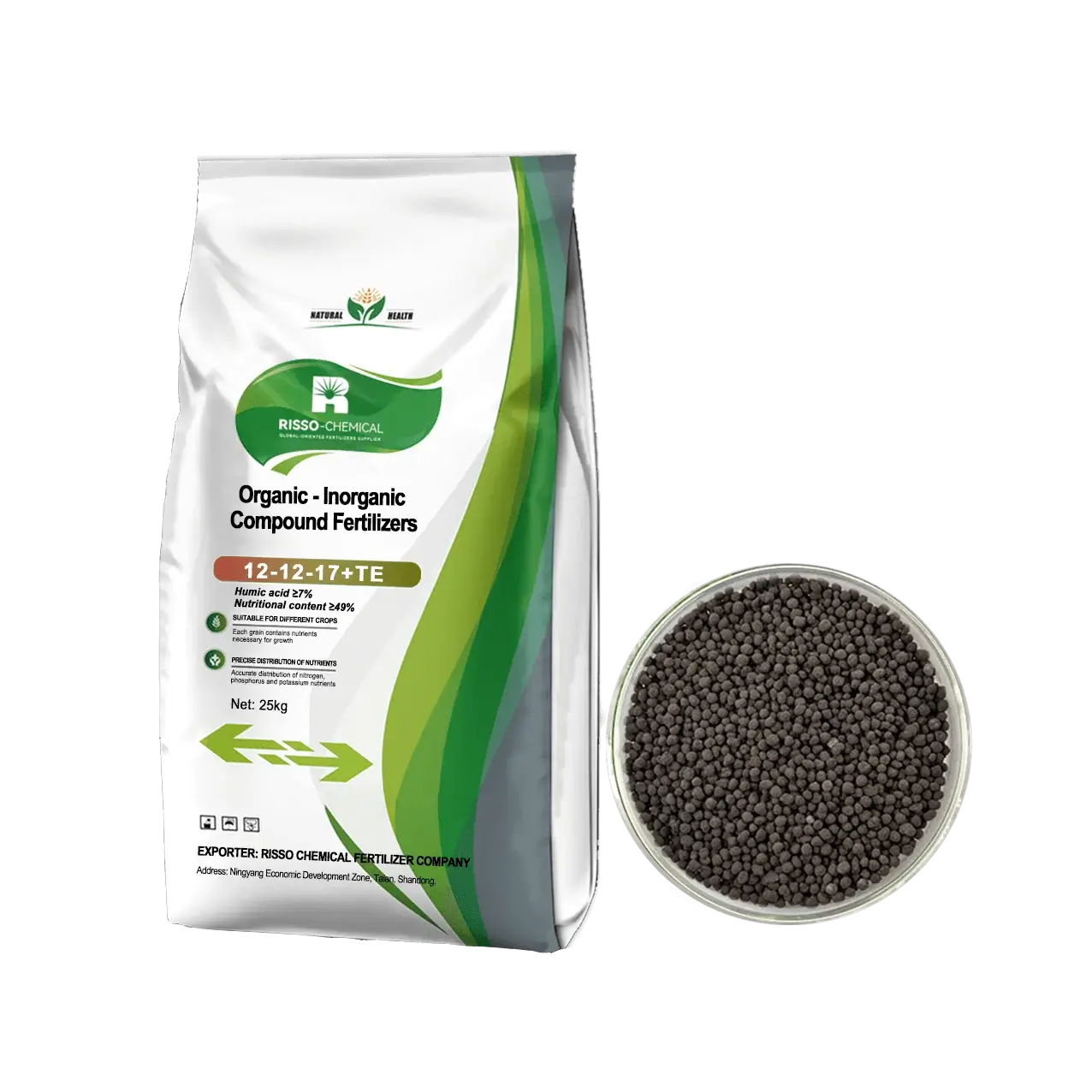
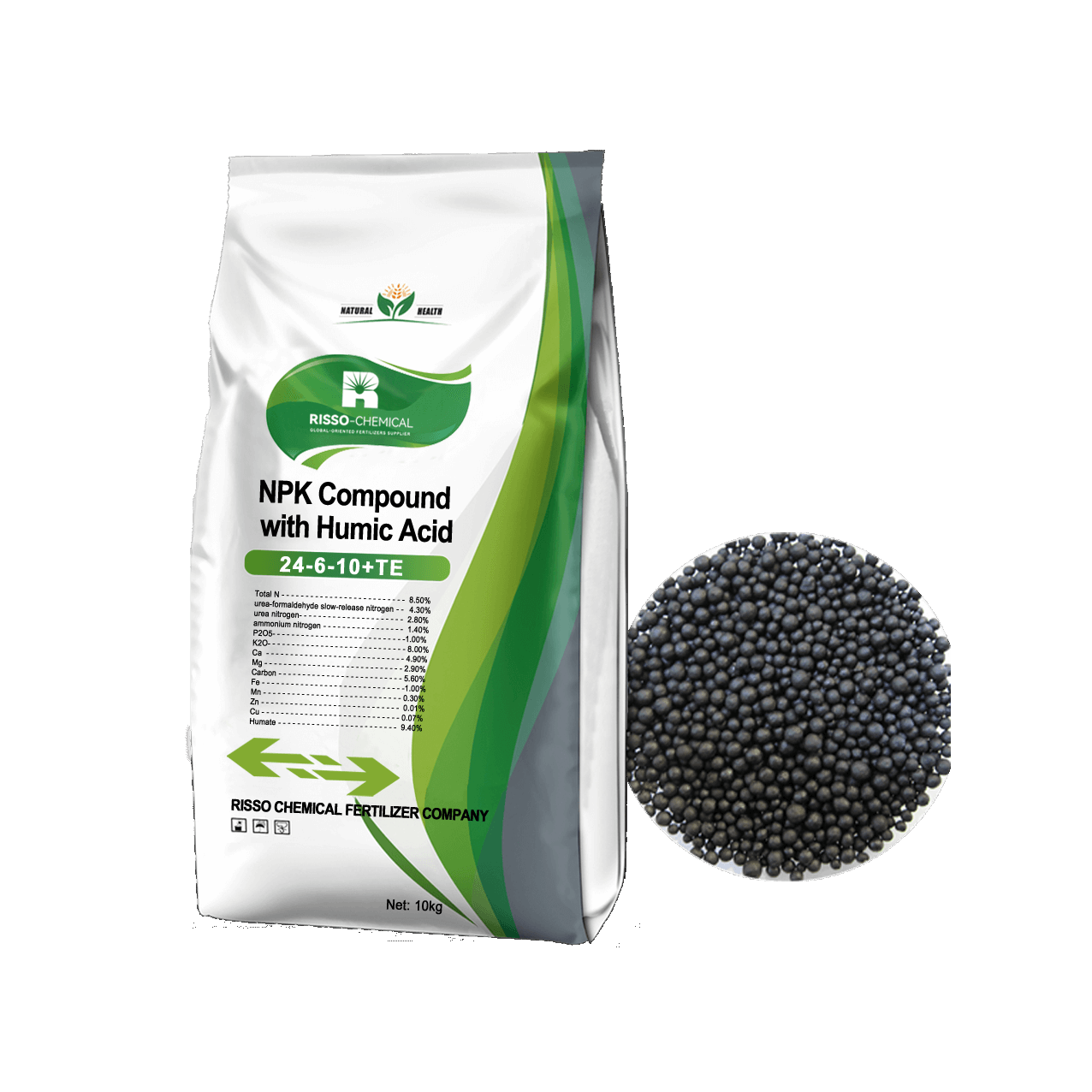
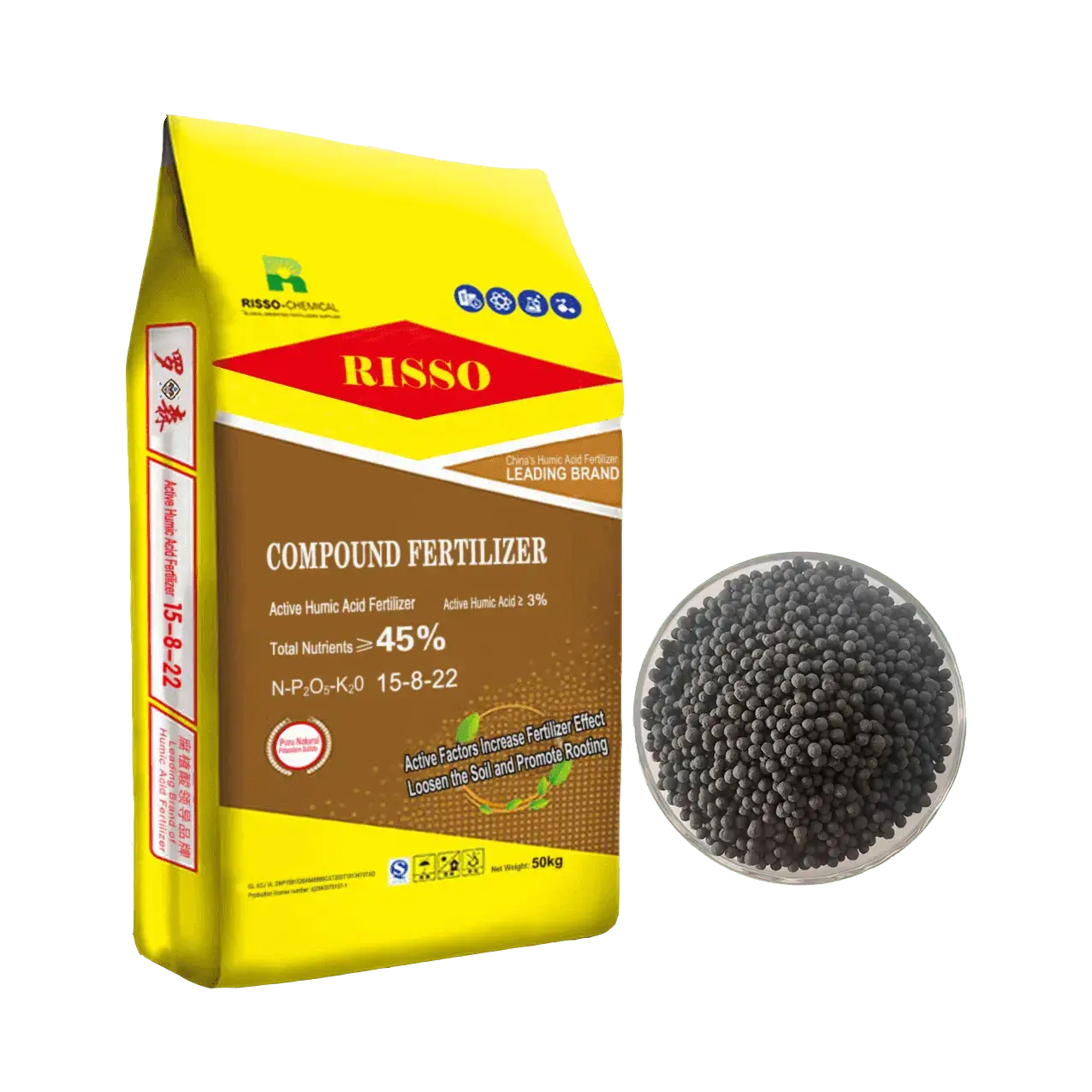
This guide compares humic acid NPK and amino acid NPK fertilizers from Risso, highlighting their roles in crop nutrition and soil management. Humic acid NPK enhances soil structure, water retention, and microbial activity, improving long-term fertility. Amino acid NPK promotes crop growth, stress tolerance, and fruit quality through foliar absorption and metabolic activation. Practical insights on soil improvement compound fertilizers, NPK efficiency, and amino acid foliar application help growers optimize fertilizer choices and maximize yield, quality, and soil health.
1. Why Fertilization Is Critical for Oil Palm Trees
NPK fertilizers are essential compound fertilizers labeled with their nitrogen (N), phosphorus (P), and potassium (K) content, addressing the primary nutrient requirements of crops:
Nitrogen (N): Promotes leaf growth, protein synthesis, and photosynthesis.
Phosphorus (P): Enhances root development, flowering, fruit set, and energy metabolism.
Potassium (K): Improves stress resistance, fruit quality, and storage performance.
Traditional NPK fertilizers focus on nutrient supply but have limited effects on soil health and crop stress resilience. Modern agricultural practices increasingly integrate NPK with functional organic additives, creating humic acid NPK fertilizers or amino acid foliar fertilizers, which provide both nutrient efficiency and soil improvement benefits.
2. Role of Humic Acid and Amino Acids in Compound Fertilizers
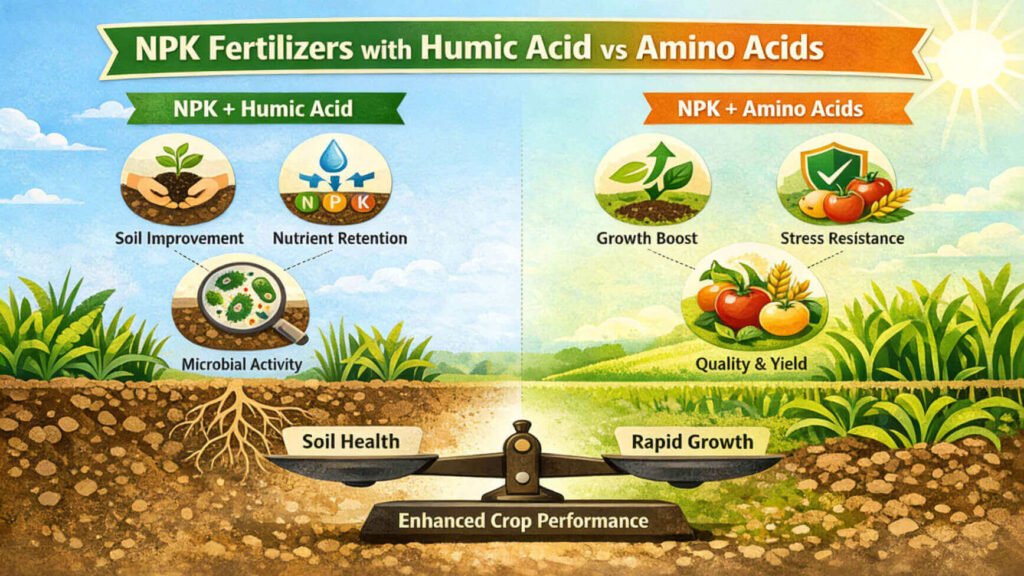
🟤 Humic Acid
Humic acid is a natural organic macromolecule derived from soil organic matter or decomposed plant residues. In fertilizer formulations, it primarily improves soil structure and microbial activity, indirectly enhancing nutrient absorption and crop growth.
Core functions of humic acid in fertilizers include:
- Enhancing soil structure and aggregation;
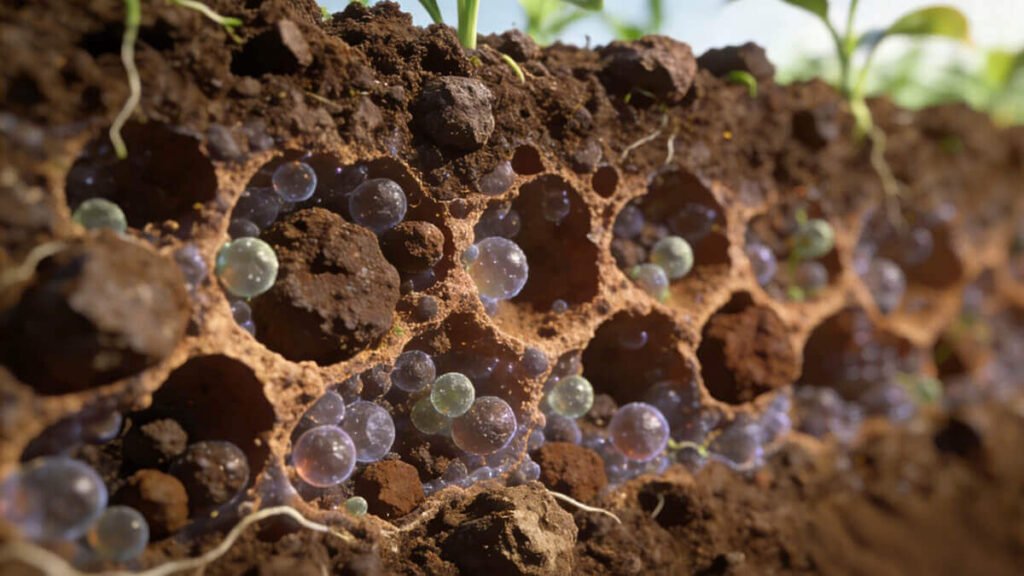
- Increasing water retention and nutrient holding capacity, reducing NPK loss;
- Activating beneficial soil microorganisms, improving nutrient cycling;
- Chelating micronutrients to increase their availability and maximize NPK utilization.
These mechanisms make humic acid NPK fertilizers especially valuable for improving saline-alkali soils, compacted soils, and low-fertility fields.
🧬 Amino Acids
Amino acids, as the building blocks of plant proteins, act as
growth activators when added to fertilizers. They provide organic nitrogen and directly participate in plant metabolic processes, boosting physiological activity.
Key benefits of amino acids in NPK fertilizers:-
Supply readily absorbable organic nitrogen, enhancing nutrient use efficiency;
-
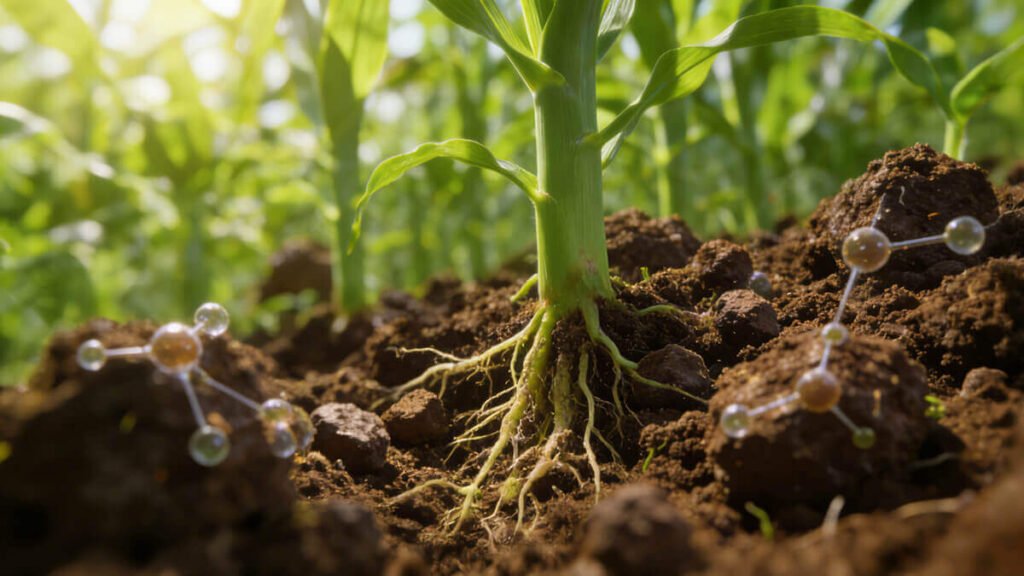
Stimulate photosynthesis, leaf expansion, and root development;
-
Improve stress tolerance, including drought, cold, and disease resistance;
-
Chelate trace elements, increasing foliar nutrient absorption efficiency.
Thus, amino acid NPK fertilizers are commonly applied during rapid growth stages or environmental stress periods to quickly improve crop yield and quality.
3. Characteristics, Advantages, and Applications of NPK Fertilizers with Humic Acid
Combining humic acid with NPK fertilizers results in soil-enhancing compound fertilizers, offering multiple agronomic benefits:
🌱 Soil Health and Long-Term Fertilizer Efficiency
Humic acid improves soil physical and chemical properties while activating microbial communities, leading to better nutrient cycling and long-term fertility. It is particularly effective for compacted soils, sandy soils, and fields with poor organic matter.
⚡ Enhanced Nutrient Absorption
Humic acid binds with nutrients to form chelated compounds, reducing nitrogen, phosphorus, and potassium loss while improving uptake efficiency. In NPK fertilizer efficiency improvement schemes, humic acid fertilizers ensure sustained nutrient availability throughout the crop cycle.
🌍 Long-Lasting Fertilizer Effect and Sustainability
Humic acid NPK fertilizers often exhibit slow-release properties, providing continuous nutrient supply while improving soil health, making them an ideal choice for sustainable agriculture. Application Tips:
- Suitable as basal or supplementary fertilizer for fruit trees, vegetables, and grain crops;
- Can be combined with bio-organic fertilizers to enhance microbial activity and overall nutrient efficiency;
- Recommended for low-fertility soils or fields with long-term cultivation to maintain productivity.
4. Characteristics, Advantages, and Applications of NPK Fertilizers with Amino Acids
Amino acid NPK fertilizers focus on enhancing nutrient uptake and stimulating plant growth activity. They are often applied as foliar fertilizers or root-applied compound fertilizers.
🚀 Improved Nutrient Absorption and Metabolic Activity
Amino acids chelate micronutrients into forms easily absorbed by plants, increasing fertilizer efficiency. For high-demand or high-yield crops, this approach accelerates nutrient uptake.
🌿 Growth Activation and Quality Enhancement
Amino acids stimulate photosynthesis, promote leaf and root development, and improve fruit sugar content, color, and storage quality.
💪 Enhanced Stress Tolerance
Amino acid fertilizers help maintain physiological activity under adverse conditions, improving drought, cold, and disease resistance, making them essential for modern high-yield agriculture.
Application Tips:- Ideal for fast-growing vegetables, fruit trees, and cash crops;
- Can be integrated into a foliar or top-dressing plan to boost yield and quality;
- Often combined with trace elements for maximum absorption efficiency.
For growers seeking effective crop nutrition solutions,
Risso Fertilizer offers tailored NPK formulas with either humic acid or amino acids, ensuring both soil improvement and rapid growth stimulation.
5. Comparison Between Humic Acid NPK and Amino Acid NPK Fertilizers
| Comparison Aspect | Humic Acid NPK | Amino Acid NPK |
|---|
| Primary Function | Soil improvement and long-term nutrient efficiency | Activates plant physiological processes and rapid growth |
| Nutrient Supply | NPK + soil functional enhancement | NPK + organic nitrogen and growth activators |
| Fertilizer Efficiency | Through soil adsorption and chelation | Through direct plant uptake and metabolic utilization |
| Stress Resistance | Moderate, indirectly improved | High, directly enhances metabolism and resistance |
| Recommended Application Stage | Basal or throughout crop cycle | Growth stage, foliar or top-dressing |
| Key Advantages | Long-term soil fertility, stable yield | Rapid growth, improved fruit quality |
The two types of fertilizers are complementary; combining humic acid NPK with amino acid NPK in an integrated fertilizer program can simultaneously enhance crop yield, quality, and soil health.
6. Application Strategies: Crop Type and Soil-Based Recommendations
🧑🌾 Soil Conditions
🌾 Crop Type and Growth Stage
Best Practice: Apply humic acid NPK as a basal fertilizer and use amino acid NPK or foliar fertilizers during critical growth stages to achieve the “soil improvement + high-efficiency yield” synergy.
7. Conclusion: Maximizing Yield, Quality, and Soil Health with Scientific Fertilization
Humic acid NPK fertilizers focus on long-term soil enhancement and stable nutrient release, while amino acid NPK fertilizers emphasize rapid physiological activation and crop quality improvement.
In modern agriculture, integrating humic acid and amino acid NPK fertilizers through an NPK fertilizer efficiency improvement scheme maximizes crop yield, enhances quality, and improves soil health simultaneously. By applying science-based fertilization strategies and selecting fertilizers based on soil type and crop growth stage, farmers can achieve sustainable, high-yield, and high-quality production.
Risso Fertilizer’s comprehensive NPK solutions combine scientific fertilization principles with practical field applications, providing growers with reliable strategies to optimize crop performance and maintain soil vitality.
8. Frequently Asked Questions (FAQs)
1. Can humic acid NPK fertilizers improve soil fertility for all soil types?
Humic acid NPK fertilizers are most effective in poor, compacted, or saline-alkali soils where natural organic matter is low. They enhance soil structure, microbial activity, and nutrient retention. While they benefit most soils, in very fertile soils, their effects may be more subtle, primarily maintaining long-term fertility.
2. How quickly do amino acid NPK fertilizers affect crop growth?
Amino acid NPK fertilizers act as growth activators. When applied during key growth stages or as a foliar spray, crops can show visible improvement in leaf development, root growth, and stress resistance within 7–14 days, depending on crop type and environmental conditions.
3. Are there any crops that should avoid amino acid foliar fertilizer application?
Most crops benefit from amino acid foliar application. However, over-application on young seedlings or very sensitive plants can cause leaf burn if concentrations are too high. Always follow the recommended dosage and conduct a small trial on new crops.
4. Can humic acid NPK fertilizers be combined with other organic fertilizers?
Yes, combining humic acid NPK with bio-organic fertilizers or compost can further enhance soil microbial activity, improve nutrient availability, and promote sustainable crop production. This combination is commonly used in integrated soil fertility management.
5. What is the difference between foliar and soil-applied amino acid NPK fertilizers?
Foliar application allows amino acids and micronutrients to be absorbed directly through leaves for rapid effect, ideal for stress periods or quick growth stimulation. Soil-applied amino acid NPK fertilizers provide nutrients through root uptake, supporting longer-term growth and nutrient balance.
6. How does the combination of humic acid and amino acid NPK fertilizers improve yield?
Integrating humic acid and amino acid NPK fertilizers creates a synergistic effect: humic acid improves soil fertility and nutrient retention, while amino acids enhance plant metabolic activity and stress resistance. This dual approach increases nutrient efficiency and results in higher yields and better crop quality.
Oil Palm Fertilizer related products
If you want to know other questions about NPK Fertilizer, please contact us and we will provide professional answers.