















2026-09-23
Select language:

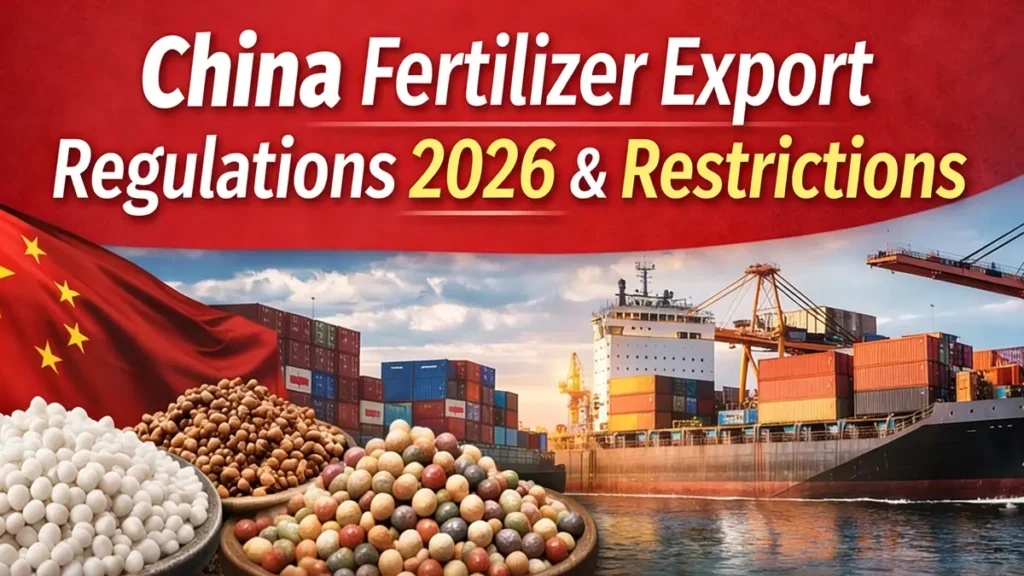
In 2026, China fertilizer export regulations have become significantly stricter, shaped not only by domestic agricultural priorities but also by ongoing global disruptions such as the Middle East tensions and the Russia-Ukraine conflict. These geopolitical factors have intensified volatility in the global fertilizer supply chain, particularly affecting nitrogen and phosphate fertilizer availability.
As energy prices remain unstable—especially natural gas, a key input for nitrogen fertilizer production—China has reinforced urea export restrictions and tightened control over multiple fertilizer categories to ensure domestic supply stability.
Risso Fertilizer continues to closely monitor global fertilizer policy developments to support customers with timely market insights and stable supply solutions.
The China fertilizer export policy 2026 is heavily influenced by:
Natural gas price fluctuations have directly impacted nitrogen fertilizer production costs, leading to tighter export control on urea fertilizer from China.

China has implemented stricter controls on key fertilizer exports, especially during peak agricultural seasons. These fertilizer export restrictions in China are dynamic and may vary monthly or quarterly.
The government continues to prioritize:
This reflects a clear policy direction: domestic supply takes precedence over exports.
Authorities have strengthened supervision through:
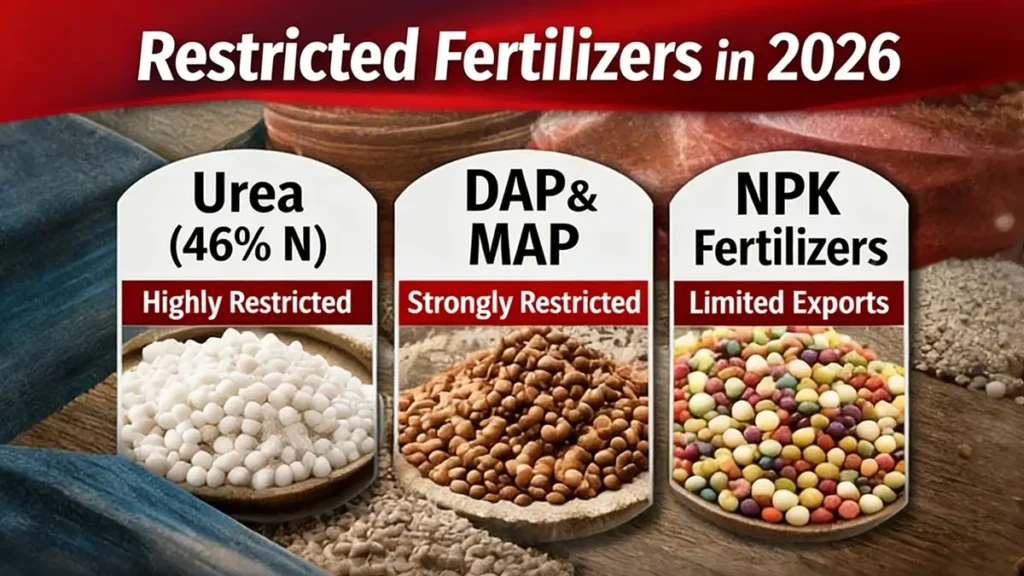
As of April 2026, the following fertilizers are subject to varying degrees of export restriction:
In response to these evolving regulations, Risso Fertilizer maintains flexible product strategies, focusing on compliant fertilizer categories to ensure continuity for international partners.
Although China does not officially publish strict export quotas, the system operates similarly to a controlled export quota framework:il fertility, and yield targets.
Typical application ranges include:
State-owned and large-scale producers are often prioritized in export approvals, ensuring policy compliance and market stability.
Exporters must strictly follow fertilizer export compliance requirements:
Efficient handling of documentation is critical in international fertilizer trade:
Frequent updates in China fertilizer export regulations
Export restrictions may delay shipments
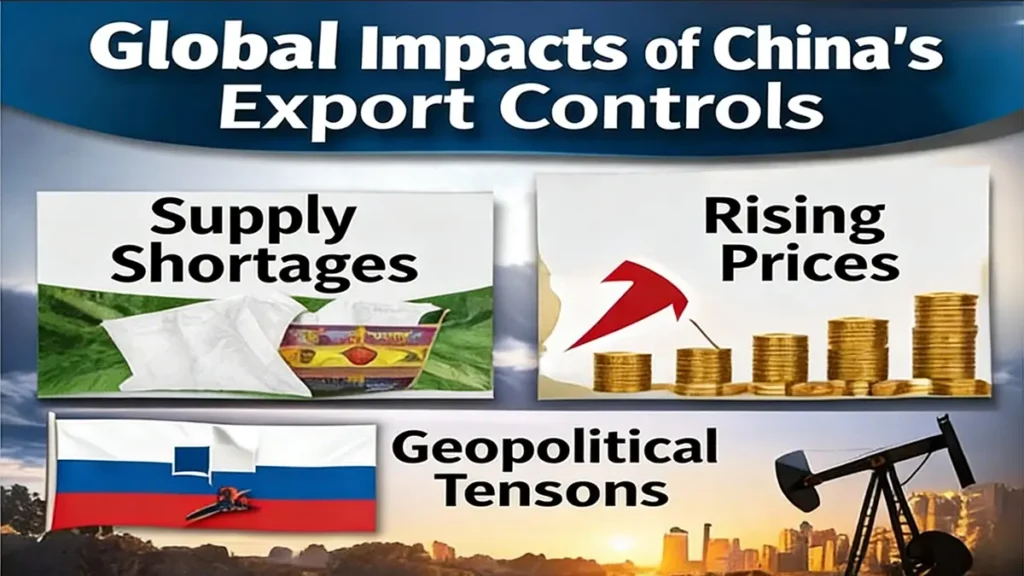
Strong correlation between China export policy and global fertilizer prices
Restrictions on urea exports from China and phosphate fertilizers have reduced global supply availability, especially in developing agricultural markets.
Combined effects of:
have significantly increased fertilizer prices worldwide.
Alternative suppliers gaining importance:
The China fertilizer export regulations 2026 are defined by:
Risso Fertilizer remains committed to delivering stable, compliant, and high-quality fertilizer solutions while adapting to global market changes and regulatory developments.
China fertilizer export regulations in 2026 focus on stricter controls, especially on urea, phosphate fertilizers, and certain NPK products, to ensure domestic supply and stabilize prices.
Highly restricted fertilizers include urea, DAP, MAP, and some NPK formulations, while ammonium sulfate remains relatively less restricted for export.
China is limiting fertilizer exports to protect domestic agriculture, stabilize fertilizer prices, and respond to global supply disruptions caused by geopolitical tensions and energy market volatility.
China’s export restrictions reduce global supply, especially for nitrogen and phosphate fertilizers, which often leads to higher international fertilizer prices.
Importers can reduce risks by diversifying suppliers, focusing on less-restricted fertilizers, securing flexible contracts, and closely monitoring policy updates.
If you want to know other questions about fertilizer, please contact us and we will provide professional answers.
✔ Quick & helpful reply within 6 hours.
✔ Tailored solutions for your project.
✔ One-stop product, tech, market

Want to find a China fertilizer manufacturer?
Risso will be your best choice; send us your request for your fertilizer details requirement
© Copyright 2017 RISSO CHEMICAL. All Rights Reserved.