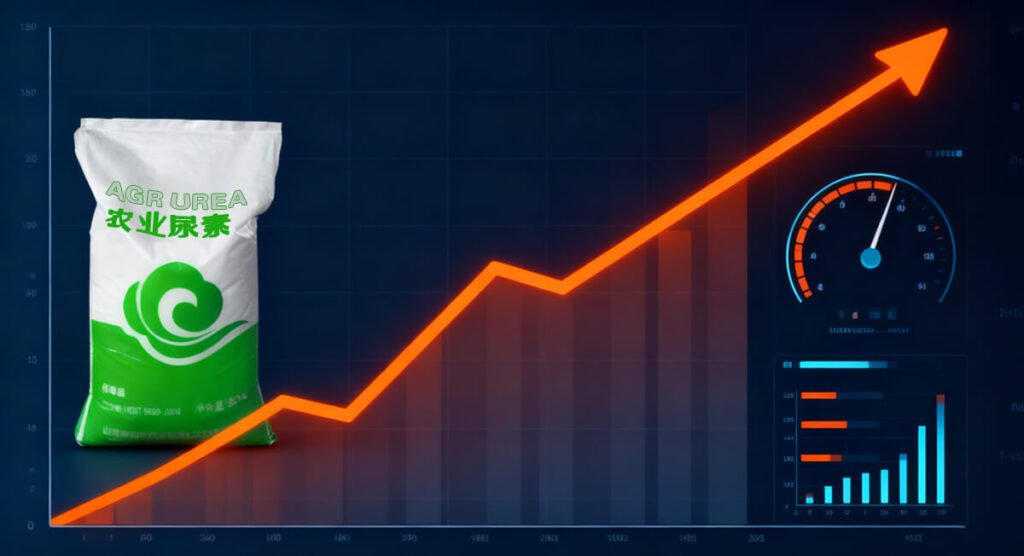
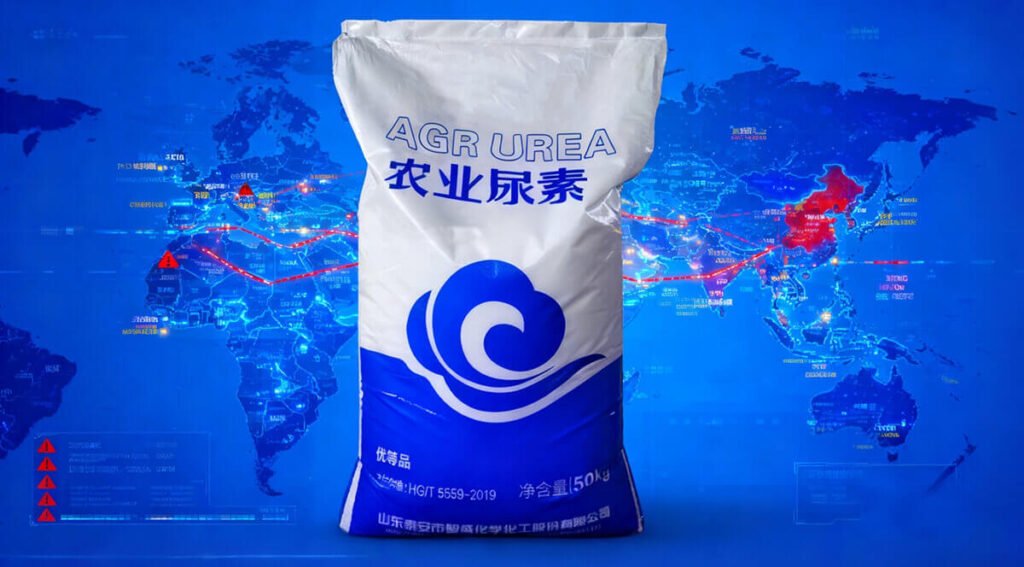
Urea prices surged sharply in 2025 due to rising natural gas costs, tighter export controls from major suppliers, geopolitical trade barriers on Russian and Belarusian fertilizers, and higher global logistics expenses. Combined with recovering fertilizer demand and delayed new production capacity, the market experienced a supply–demand imbalance that pushed international urea prices to multi-year highs.
In this analysis, Risso provides a clear breakdown of the key drivers behind the price spike and offers practical strategies for farmers, distributors, and procurement teams to manage risk and optimize fertilizer use during periods of high nitrogen prices.
The 2025 surge in urea prices is the result of multiple converging pressures: sharply higher natural gas costs, tighter export controls from key suppliers such as China, ongoing trade barriers affecting Russian and Belarusian fertilizer flows, a rebound in global fertilizer demand, and rising freight and insurance expenses.
Risso recommends early supply locking, diversification of nitrogen sources, and optimization of soil nutrient management to reduce dependency on high-cost urea during volatile periods.
Urea is one of the world’s most widely used nitrogen fertilizers, accounting for a significant share of global nitrogen consumption. Its price directly influences farming costs, food production economics, and upstream fertilizer industry margins.
A notable price spike in 2025 affects:
-
farm profitability,
-
fertilizer import bills,
-
supply chain dynamics, and
-
food security in developing markets.
Understanding the underlying drivers is critical for decision-makers across agriculture and agrochemical sectors.
3. Detailed Breakdown of Key Price Drivers
3.1 Energy Costs: Natural Gas & LNG (The Dominant Cost Driver)
-
Urea production depends heavily on ammonia synthesis, which requires large volumes of natural gas or methane-based feedstocks.
The 2025 increase in natural gas/LNG prices—driven by tight global supply, winter demand, and competitive LNG exports—directly elevated ammonia and urea production costs.
For most regions, energy accounts for 60–80% of ammonia production cost, making gas price volatility the single most influential driver.
3.2 China’s Export Policy & Supply Uncertainty
-
China, one of the world’s largest urea producers and exporters, tightened export controls in 2024–2025 to prioritize domestic food security and fertilizer availability.
Frequent shifts—such as temporary restrictions, quota adjustments, or export inspections—created global uncertainty, prompting buyers to build precautionary stocks and pushing international spot prices higher.
3.3 Russian & Belarusian Supply + Tariff Distortions
Russia remains a major global supplier of nitrogen fertilizers.
In 2025, heightened tariffs, compliance barriers, and financial restrictions targeting Russian and Belarusian fertilizer flows significantly disrupted trade patterns:
-
EU buyers shifted away from Russian-origin fertilizers due to increased duties.
-
This pushed demand toward other suppliers (Middle East, Africa, Southeast Asia), raising regional premiums.
-
Result: a tighter global supply matrix and higher price benchmarks.
3.4 Rebound in Global Fertilizer Demand
Global fertilizer demand increased moderately in 2024–2025, supported by:
-
recovery in crop prices,
-
expectations of stronger harvests,
-
inventory restocking after prior years of under-application, and
-
seasonal nitrogen demand peaks.
Institutions including IFA and the World Bank projected demand growth—strengthening price support in key markets.
3.5 Higher Shipping, Freight & Insurance Costs
Urea is heavily reliant on bulk maritime transport.
In 2025, freight rates, insurance premiums, port congestion, and vessel re-routing costs all rose due to geopolitical risks and global supply chain restructuring.
These costs directly inflated CIF prices, widening the gap between ex-plant and delivered prices.
3.6 Production-Side Issues: Shutdowns, Maintenance & Delayed New Capacity
Periodic maintenance shutdowns at large fertilizer complexes, unexpected equipment constraints, catalyst shortages, and delayed commissioning of new plants kept supply below expectations.
Since new urea capacity requires long development cycles, near-term supply shortages intensified price pressure.
4. The Amplification Effect — Why Prices Spiked So Rapidly
These factors interacted and amplified each other, producing a “chain reaction”:
-
Higher natural gas → higher production costs → reduced exports
-
Export restrictions (China) → global stockpiling → spot market premiums
-
Russian/Belarusian tariffs → buyers shift markets → regional supply tightness
-
Rising freight + insurance → higher CIF → increased retail fertilizer prices
The combination of cost-push, supply shock, and demand recovery created the perfect environment for
a sharp, synchronized global price surge in 2025.
5. Practical Strategies for Each Stakeholder (Risso Recommendations)
For Farmers / Growers
- Stagger Purchases: Hedge risk by splitting procurement across time periods.
- Optimize Fertilizer Use: Adopt precision fertilization or integrate Risso SRF (Slow-Release Fertilizer) to reduce peak-season nitrogen demand.
- Use Partial Substitutes: Balanced NPK, organic fertilizers, or controlled-release blends can reduce reliance on urea.
For Distributors / Traders
-
Diversified Sourcing: Avoid concentration in a single origin; combine long-term and spot contracts.
-
Inventory Efficiency: Improve turnover rates and utilize hedging or forward contracts.
-
Contract Clauses: Include fuel or freight surcharge terms in FOB/CIF contracts.
For Manufacturers / Corporate Procurement
-
Energy Efficiency Upgrades: Improve ammonia loop efficiency and heat recovery.
-
Secure Feedstock: Sign long-term natural gas contracts or explore hybrid/renewable hydrogen options.
-
Partner with Risso: Utilize Risso’s custom supply planning, SRF solutions, and technical advisory services to offset nitrogen cost volatility.
6. Conclusion — Risso’s Perspective & Commitment
The 2025 urea price surge exemplifies how cost inflation, supply constraints, geopolitical pressures, and demand cycles interact to create global fertilizer volatility.
At Risso, we recognize the challenges this poses to farmers, distributors, and manufacturers.
We commit to providing:
- transparent supply planning,
- SRF and fertilizer optimization strategies,
- tailored procurement and inventory solutions, and
- continuous market intelligence updates.
Our mission is to help clients maintain stable production and profitability in a highly volatile global fertilizer market.